Quick answer
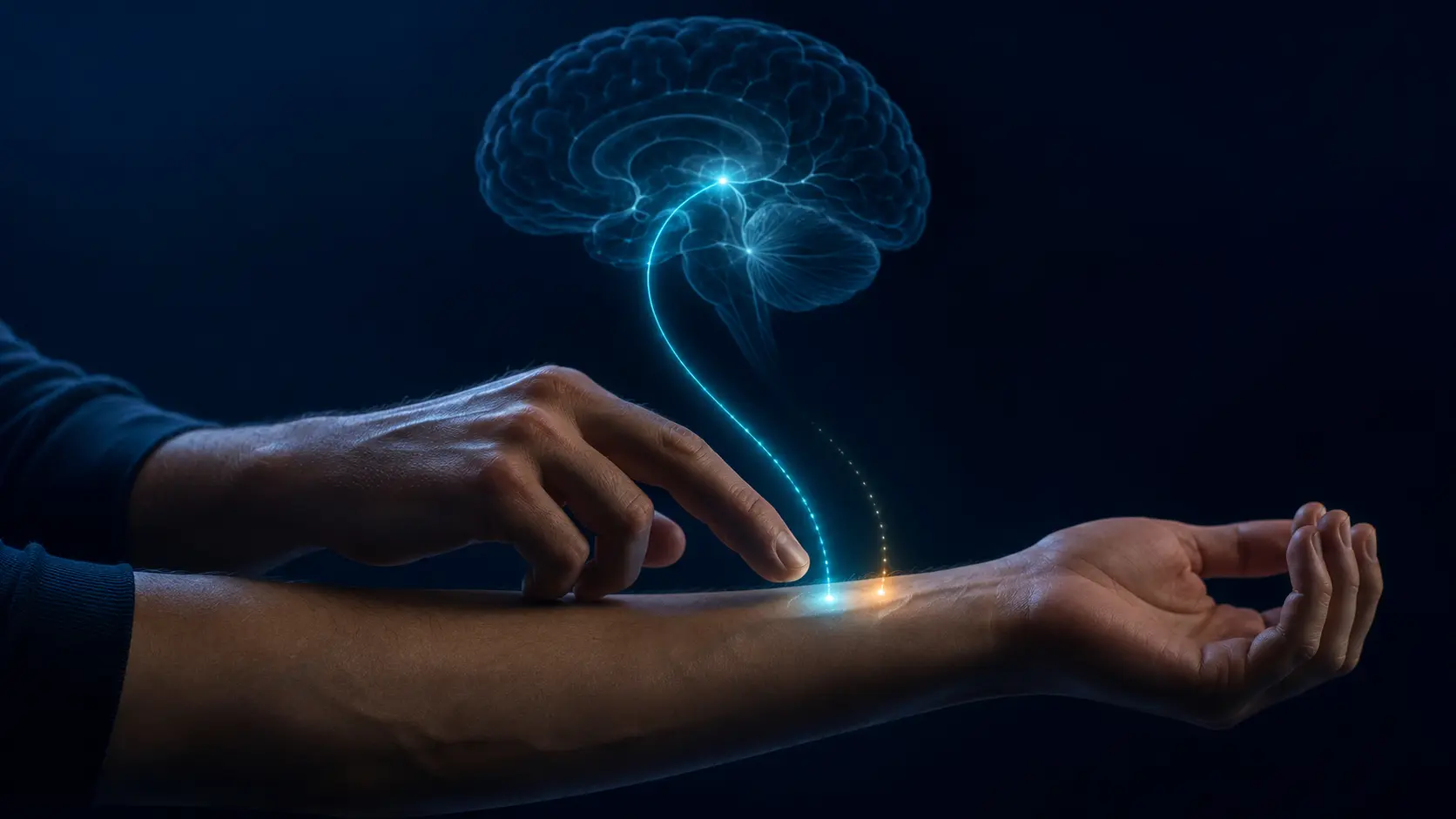
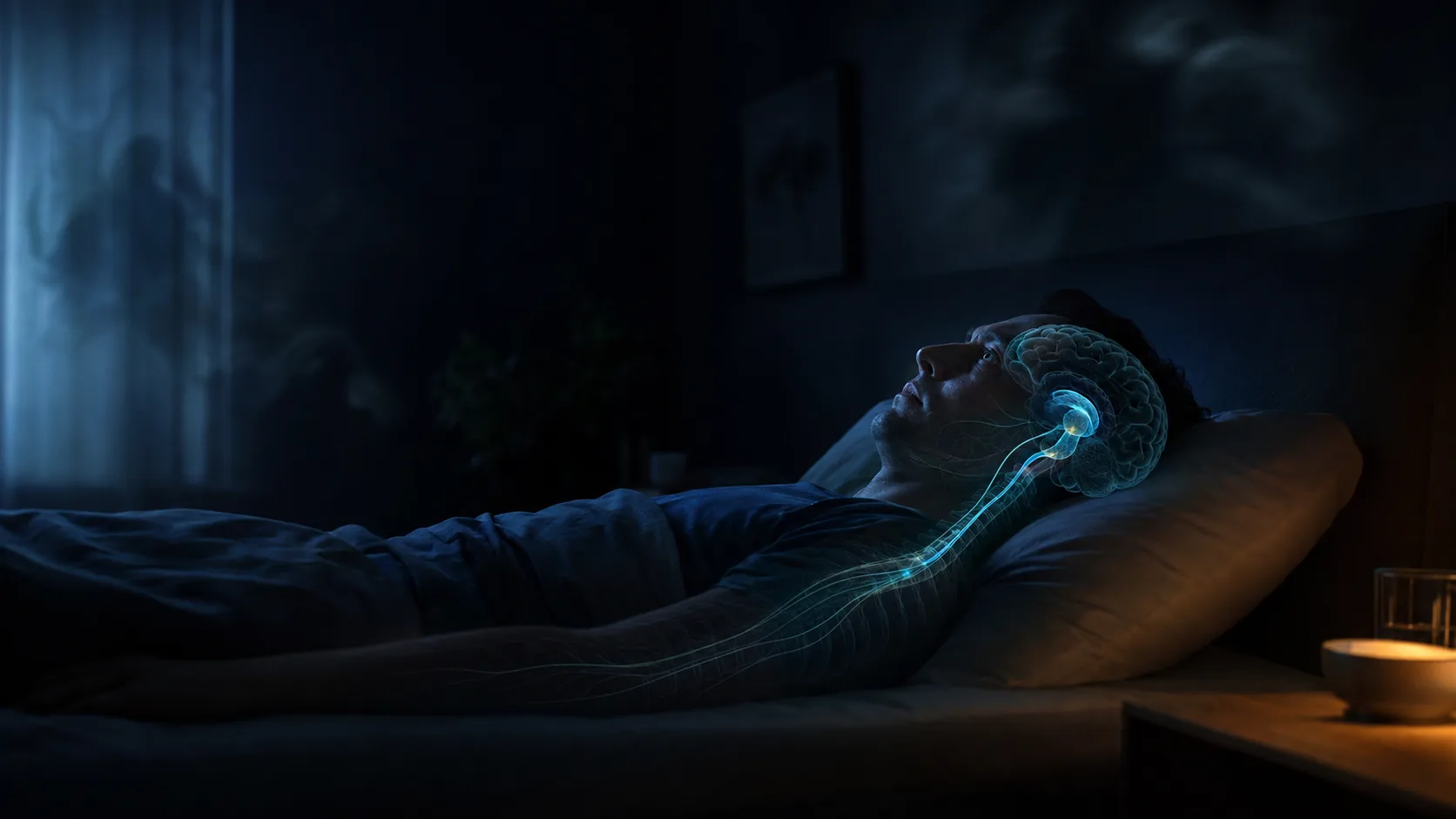
Sleep paralysis happens when consciousness returns while the muscle atonia of REM sleep is still active. During REM, brainstem circuits suppress most skeletal-muscle movement so vivid dreams are not normally acted out. If waking awareness and motor control restart at slightly different times, you may be unable to move or speak for seconds or minutes. Dream imagery can also intrude into perception, producing a sensed presence, sounds, visual figures, floating sensations or chest pressure. Isolated episodes are usually harmless, but frequent or distressing events—especially with severe daytime sleepiness or sudden muscle weakness—deserve medical assessment.
You wake, recognize the room and try to move—but nothing happens. A few seconds can feel much longer when the chest feels heavy or a presence seems to stand just beyond the bed.
The experience has generated supernatural explanations across cultures because it combines wake-like awareness, paralysis and vivid perception. Sleep physiology offers a more testable account: parts of rapid eye movement sleep can persist into awakening, creating a temporary mixed state.
REM sleep turns down skeletal movement
REM sleep contains intense brain activity, rapid eye movements and vivid dreaming, but most skeletal muscles are strongly inhibited. Brainstem networks reduce motor-neuron activity, producing atonia. Breathing continues because the diaphragm and essential respiratory control remain active, although breathing patterns change during REM.
This inhibition is protective. Without it, dream-related motor commands could become full movement. REM sleep behavior disorder illustrates the opposite problem: REM atonia is reduced and a person may physically act out dream content.
In sleep paralysis, atonia itself is not abnormal; its timing is. Awareness returns before the motor system has fully crossed into wakefulness. The eyes and breathing muscles can work while larger voluntary movements and speech remain temporarily blocked.
Why the room can fill with a presence
REM dreaming can generate vivid visual, auditory and bodily imagery. When that activity overlaps with awareness of the real bedroom, the brain may combine internal imagery with external perception. Researchers describe intruder experiences, chest-pressure or incubus sensations, and vestibular-motor experiences such as floating or leaving the body.
Paralysis creates a powerful prediction error: the brain issues a movement command but receives no expected feedback. Threat-monitoring systems can become highly active, and ambiguous shadows or sounds may be interpreted as an agent. Fear then strengthens the sense that something external is causing the paralysis.
Chest pressure does not mean breathing has stopped. REM changes respiratory muscle activity, lying position and panic can make breathing feel effortful, while inability to take a voluntary deep breath intensifies the sensation. Genuine breathing difficulty outside the brief episode needs separate medical attention.
Why episodes cluster around disrupted sleep
Sleep paralysis is associated with sleep deprivation, irregular schedules, stress, poor sleep quality and sleeping on the back, although an association does not guarantee an episode. These factors can fragment sleep or increase transitions into and out of REM.
It can occur as an isolated phenomenon in otherwise healthy people. It is also more common with narcolepsy and can coexist with insomnia, obstructive sleep apnea, trauma-related symptoms or other sleep disorders. A single episode does not diagnose any of them.
Students, shift workers and people with frequently changing sleep schedules may be more exposed to the timing conditions that produce mixed states. Reducing irregularity may lower recurrence for some people, but there is no universal switch that prevents every episode.
What can help during and after an episode
Recognizing the state can reduce panic: the episode is temporary, breathing continues and motor control returns. Some people focus on slow breathing or attempt a small movement such as a finger or toe rather than fighting with the whole body. Evidence for any single interruption technique remains limited.
A regular sleep schedule and adequate sleep are common first steps for recurrent isolated sleep paralysis. Frequent episodes that cause fear of sleep, injury risk or substantial daytime impairment deserve discussion with a clinician or sleep specialist.
Severe daytime sleepiness, sudden loss of muscle tone triggered by emotion, repeated dreamlike hallucinations at sleep transitions or loud snoring with breathing pauses can point toward conditions that require evaluation. The label isolated matters only after the wider context is considered.
How a REM rule survives into waking
REM circuits suppress motor neurons while dream-generating and emotional systems remain active. Sensory awareness of the bedroom returns, but the motor inhibition and fragments of dream imagery lag behind.
The mismatch produces paralysis, failed movement feedback and sometimes hallucinations. As the sleep-wake transition completes, motor control returns and the mixed state dissolves.
A clinical review describes sleep paralysis as a REM-wake dissociation with persistent atonia.
A systematic clinical guide reviews hallucinations, risk factors and recurrent isolated episodes.
Try it yourself
Reduce the threat signal.
- Remind yourself that this is a temporary REM-wake overlap.
- Focus on steady breathing rather than forcing a large movement.
- Afterward, note sleep timing and recurrence instead of treating the hallucination as an external event.
This is general education, not treatment. Recurrent, distressing episodes or symptoms of another sleep disorder need qualified assessment.
Why it matters
Sleep paralysis shows that sleep and wakefulness are not single switches. Perception, awareness, muscle control and dream imagery can cross the boundary on slightly different schedules.
The mechanism also makes a terrifying experience less mysterious without dismissing it. The sensed presence can feel completely real while still arising from a measurable mixed state.
Sleep paralysis is REM atonia arriving late to waking.
Awareness returns before voluntary movement, and dream imagery may overlap the real room until the transition finishes.
Research behind this story
We link to the primary study or an authoritative indexed review wherever possible. Caveats in the text reflect the limits of that evidence.
01