Metabolism & Energy
How stored molecules are mobilized, oxidized and exchanged with the outside world.
A living network of signals, structures and exchanges—most of them running beyond your awareness.
 STRUCTURE / SIGNAL / RESPONSE
Choose a system, then follow a focused set of published stories. Topics overlap because organs, nerves, blood and immune cells do not work in isolation.
How stored molecules are mobilized, oxidized and exchanged with the outside world.
How pressure moves air, alveoli exchange gases and exposed lung surfaces defend themselves.
How electrical and chemical signals coordinate sensation, movement, sleep and automatic responses.
The changing pressures, rhythms and transport routes that keep oxygen and nutrients moving.
How the body learns what belongs, recognizes threats and remembers earlier encounters.
Movement, chemistry and nerve signals that turn food into usable material and information.
How the nervous system turns light, pressure, vibration and chemicals into experience.
A responsive boundary that regulates temperature, detects contact and repairs itself.
Living tissues that adapt to force, repair damage and constantly rebuild structure.
A heartbeat changes breathing. Nerves alter blood flow. Immune cells learn inside an organ that becomes less obvious with age. Human biology rarely stays inside a single category, so this hub follows connections as well as parts.
Deep Structure uses clear explainers, visual stories and simple experiments to show what happens beneath familiar experiences. The goal is not to turn every sensation into a medical concern. It is to explain the mechanisms that make the body work, using careful language and sources readers can inspect.
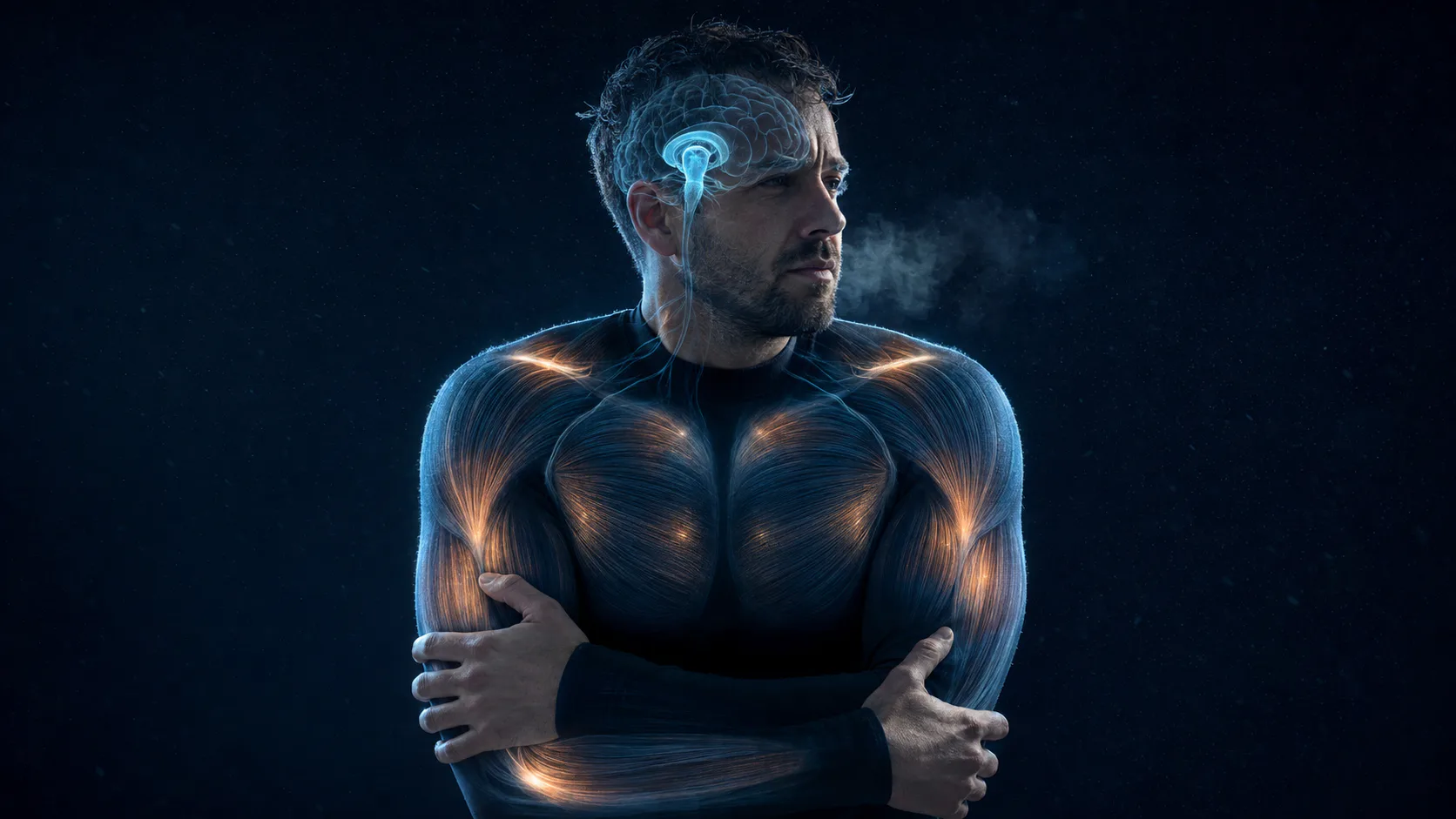
Follow a cold-defense response in muscle, then test a sensory gap the brain hides from view.
The ridges that appear after immersion are not simply swollen skin. Small blood vessels constrict, tissue volume shifts and the tethered surface folds.
Read the sourced explanationA two-minute blind spot experiment with an explanation of what your visual system fills in.
Follow Deep Structure for new visual explainers, experiments and carefully sourced discoveries.
Follow on Facebook