Quick answer
Blushing is an involuntary increase in blood flow near the surface of the face, often triggered when you become acutely aware of how other people see you. Emotional arousal engages autonomic control of facial blood vessels, producing warmth and visible redness that cannot simply be switched off.
You misspeak, someone notices, and the reaction arrives before a reply. Heat moves into your cheeks and ears. Knowing that you are blushing can make the feeling stronger, turning a brief social error into a feedback loop you can feel on your skin.
Blushing is unusual among emotional expressions because it is difficult to perform deliberately and equally difficult to hide. It converts a private shift in self-awareness into a visible change in circulation.
A local change in skin blood flow
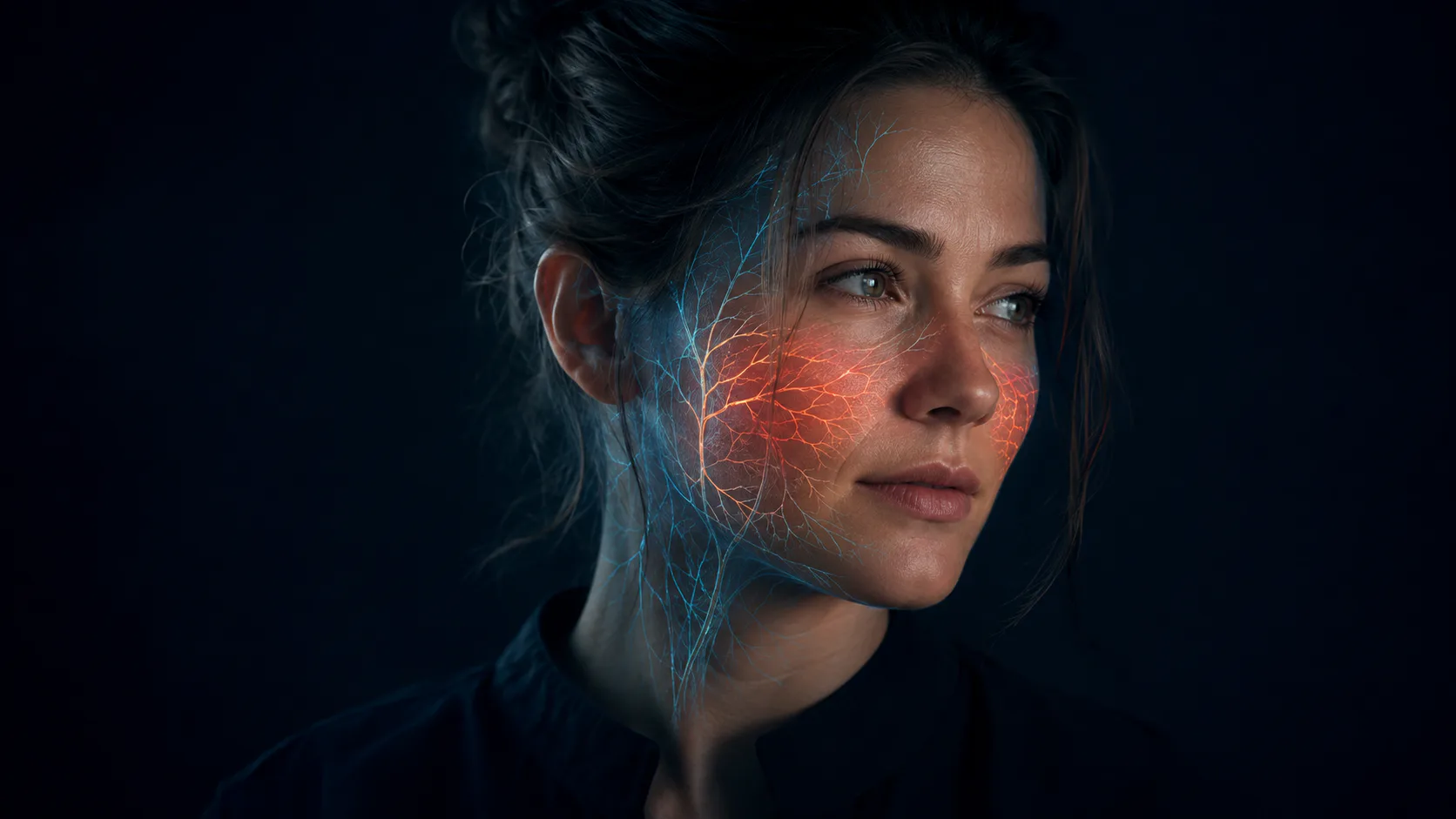
Skin color changes when the amount and oxygenation of blood in vessels near the surface change. During a blush, blood flow rises in parts of the face, particularly the cheeks. The skin may feel hot because warm blood from the body core is moving through a superficial vascular network.
The response is not simply a whole-body surge. Research using thermal imaging, laser Doppler measurements and other techniques suggests that emotional blushing has a distinctive facial pattern, although the exact vessels and autonomic pathways remain more complex than the familiar shorthand that adrenaline makes you red.
Why embarrassment is such a reliable trigger
Embarrassment, shame, unwanted praise and being watched can all create self-conscious arousal. The common feature is social evaluation: your attention shifts toward how you appear in another person’s mind.
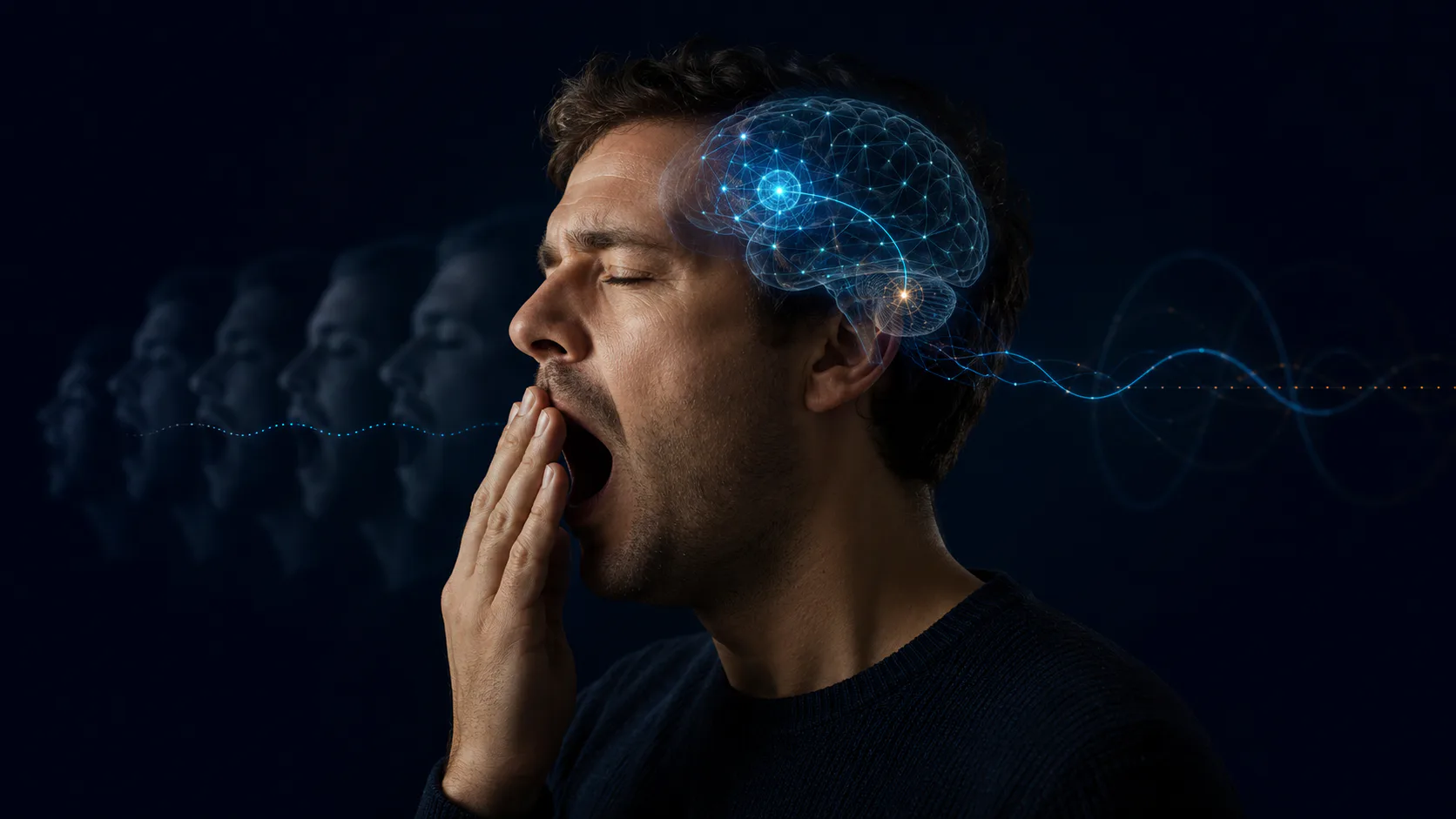
Brain-imaging work links blushing with networks involved in emotional arousal, attention and the representation of the self. The autonomic nervous system then changes vascular tone without waiting for a deliberate decision.
No single evolutionary explanation has been proved. One influential idea is that a blush acts as a credible social signal. Because it is involuntary, it may communicate awareness of a mistake or concern about social rules. That interpretation fits some experiments, but it should not be mistaken for a settled origin story.
Blushing can also follow positive attention. Being praised, singled out or reunited with someone can create the same uncomfortable self-focus even when nothing went wrong. The trigger is often exposure rather than guilt: a moment when you become aware that your internal state may be visible to other people.
Once warmth is noticed, prediction can feed the response. Worrying that the face is turning red increases attention to heat and to other people’s expressions. That extra arousal may sustain blood-flow changes, which helps explain why commands such as just relax are ineffective. Voluntary control arrives downstream of an automatic circuit.
From self-awareness to visible warmth
A socially charged event captures attention. Emotional and autonomic networks raise arousal. Vascular control in facial skin shifts, increasing local blood flow and temperature. You then feel or see the response, which can intensify self-focus and prolong it.
The final color varies with baseline skin tone, lighting and where blood vessels sit beneath the skin. Darker skin can make redness less visually obvious without making the underlying vascular response smaller or less real.
Facial flushing has many non-emotional causes, including exercise, heat, alcohol, medication and some medical conditions. A single blush during embarrassment is easy to interpret from context; recurrent unexplained flushing belongs to a different clinical question and should not be diagnosed from appearance alone.
Thermal-imaging research has linked cheek temperature increases with brain systems for emotional arousal.
Why it matters
Blushing shows that emotion is not confined to the brain. It is a coordinated state involving attention, circulation, temperature and social interpretation.
Occasional blushing is ordinary. When fear of blushing drives avoidance or distress, the larger issue may be social anxiety rather than the color change itself, and a qualified professional can help assess it.
A blush is self-conscious emotion written in blood flow.
The response is automatic, local and socially tuned. Your face changes because the body has already reacted to being seen.
Research behind this story
We link to the primary study or an authoritative indexed review wherever possible. Caveats in the text reflect the limits of that evidence.
01