Quick answer
Spinning accelerates fluid called endolymph inside the semicircular canals. The fluid bends a sensory structure called the cupula, changing the firing of vestibular nerve cells. During steady rotation the signal gradually adapts. When you stop suddenly, the canals stop with your skull but fluid inertia briefly deflects the cupula in the opposite direction. The brain receives a short-lived signal of rotation that conflicts with vision and body position, producing dizziness and post-rotatory eye movements called nystagmus.
You stop turning, plant both feet and wait for the room to agree. Instead, the walls seem to drift and your eyes make small movements you did not choose. The body is still, but one part of the balance system is reporting the final moments of motion.
The explanation begins inside three tiny loops in each inner ear. Their fluid does not act like loose water sloshing around a bottle. It pushes against a flexible sensory structure when the head accelerates, and that mechanical delay is enough to create the after-effect.
Three canals measure turning in three dimensions
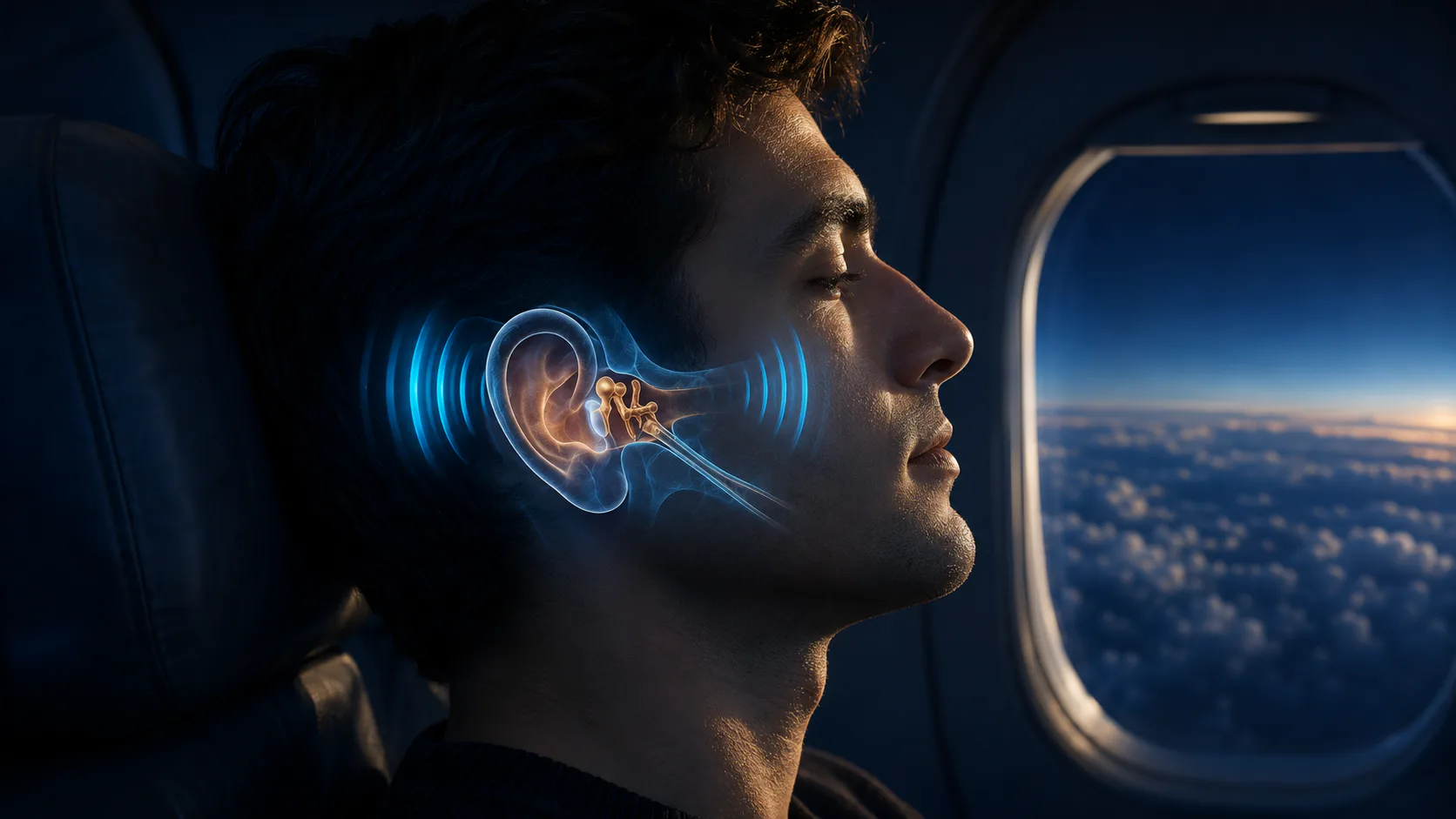
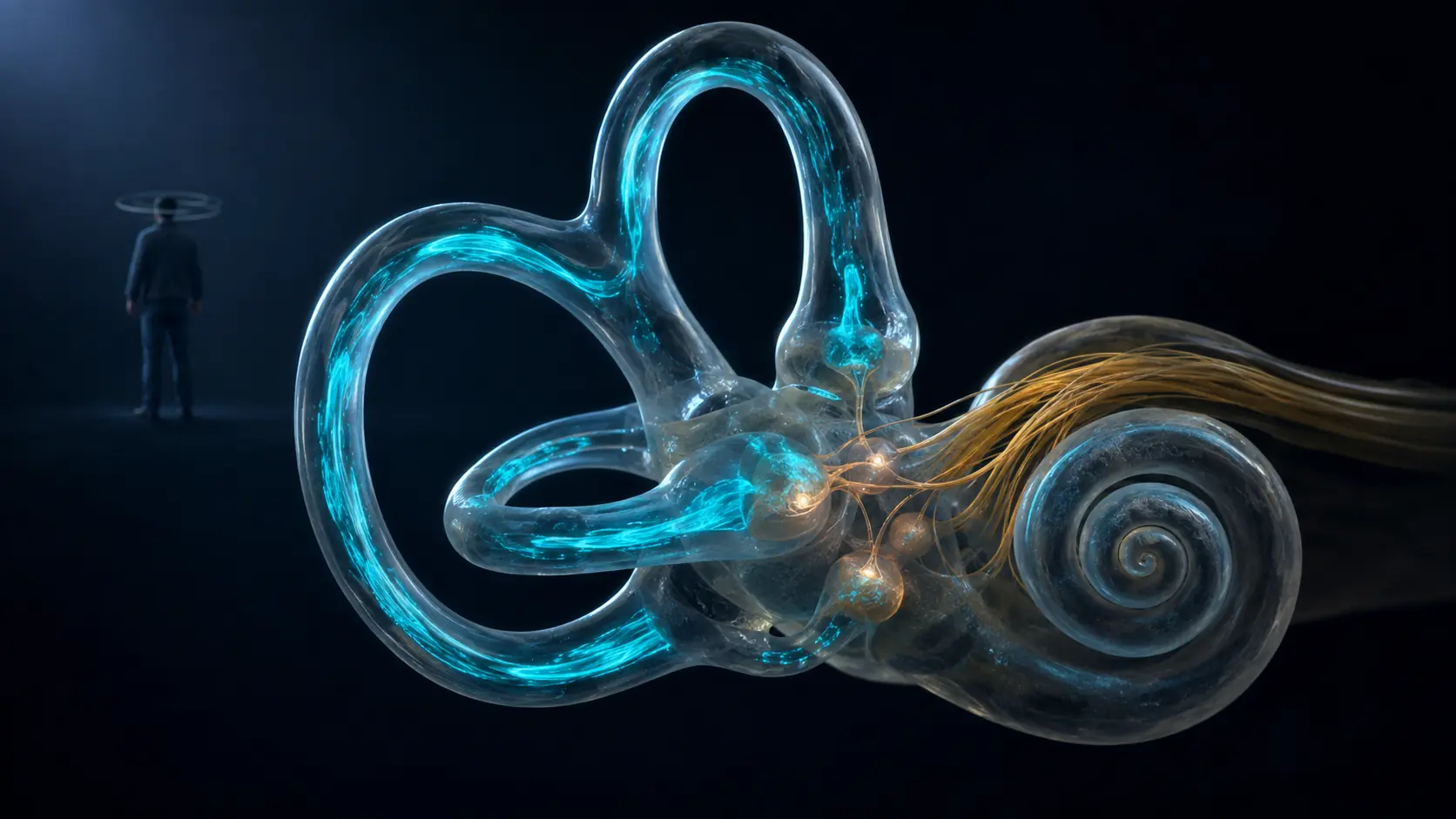
Each inner ear contains three semicircular canals arranged in roughly different planes. This geometry lets the vestibular system respond to nodding, tilting and turning. A widened region of each canal contains hair cells whose delicate bundles project into the gelatinous cupula.
When the head begins to rotate, the bony canal moves immediately while the endolymph resists the change because of inertia. The relative movement deflects the cupula and bends the hair-cell bundles. Depending on direction, nerve firing increases on one side and decreases on the other. The brain compares the paired signals to estimate the direction and speed of rotation.
The canals are acceleration sensors rather than perfect speedometers. During a long, steady spin, fluid gradually catches up and the cupula moves back toward rest. The sensation of turning can weaken even though rotation continues.
Stopping reverses the message
A sudden stop creates a second acceleration in the opposite direction. The skull and canals halt, while endolymph briefly continues. The cupula bends the other way and the vestibular nerves report a turn opposite to the original spin.
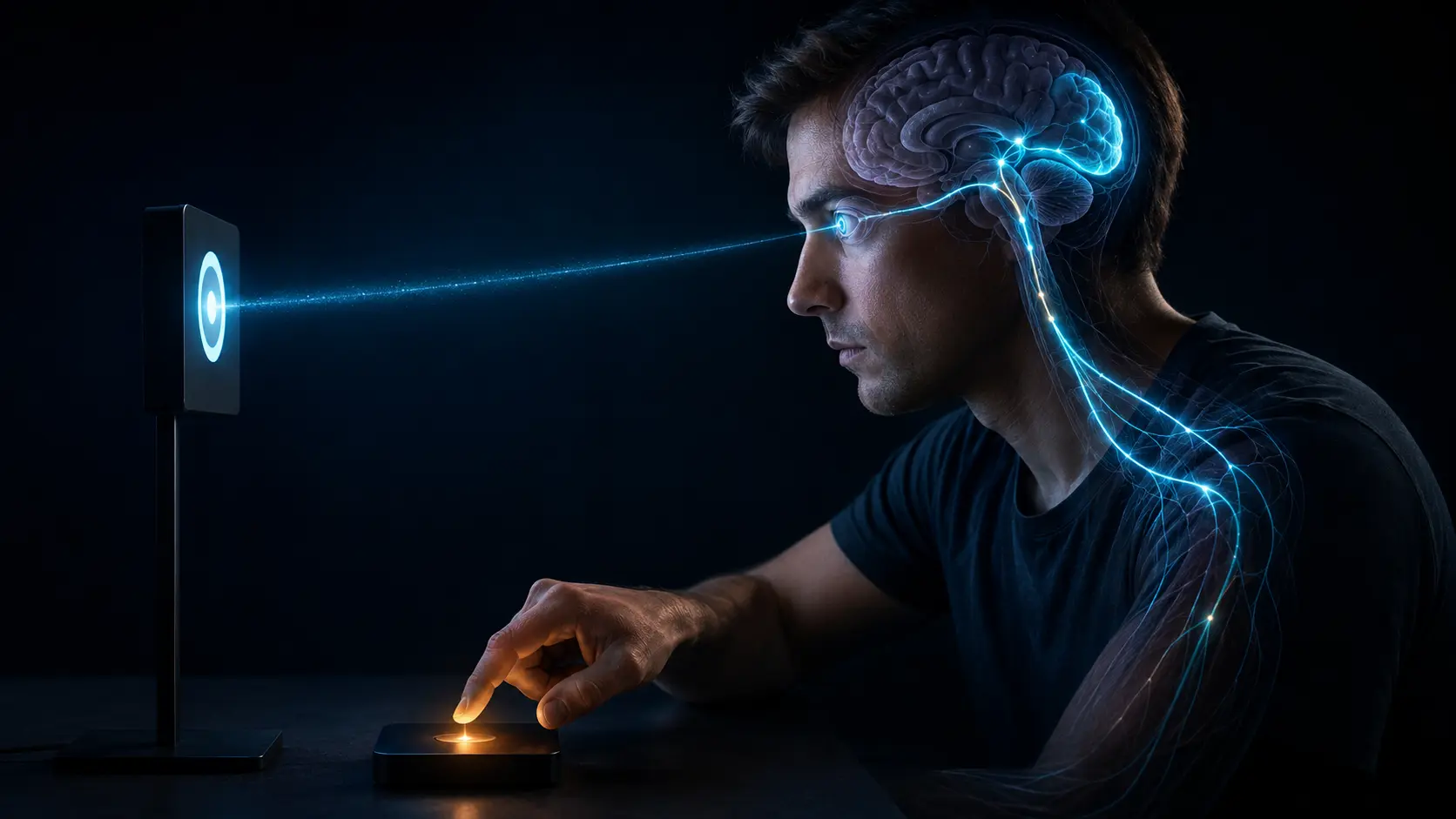
The vestibular system is tightly linked to eye muscles through the vestibulo-ocular reflex. During normal head movement this reflex moves the eyes in the opposite direction, helping a visual target stay stable on the retina. After spinning, the false rotation signal drives rhythmic slow and fast eye movements—post-rotatory nystagmus—which can make the visual scene appear unstable.
Vision and touch now say that the room and floor are still. The canals briefly disagree. That sensory conflict contributes to vertigo, nausea and unsteadiness until the cupula returns toward its neutral position and the signals converge again.
Not every dizzy feeling comes from spinning
Dizziness is a broad word. It can mean a rotating sensation, light-headedness, imbalance or visual instability, and those experiences can have different causes. The short after-effect of deliberate rotation usually fades as vestibular signals settle.
Dizziness that starts without spinning, keeps returning, lasts, follows a head injury or comes with hearing loss deserves medical evaluation. Sudden dizziness with weakness, facial droop, trouble speaking, severe headache, fainting, chest pain or inability to walk needs urgent assessment. A familiar mechanism after a playground turn should not be used to explain a new or severe symptom.
Motion sensitivity also varies. Migraine, inner-ear disorders, medications, illness and prior exposure can change how the nervous system combines balance information. Variation does not mean someone has weak balance; it means the same physical input can be weighted differently.
From rotation to the illusion of continued motion
Rotation creates a brief lag between the canal wall and its fluid. Hair cells translate cupula deflection into nerve activity, and paired canals tell the brain which way the head is accelerating. Adaptation reduces the signal during a steady spin.
Stopping reverses the relative fluid movement. For a few moments the vestibular system reports rotation while the eyes, joints and feet report stillness. As the mechanics settle, the conflict fades and stable orientation returns.
A biomechanical review explains how endolymph and the cupula shape semicircular-canal responses in health and disease.
Experiments in healthy adults measure the characteristic post-rotatory nystagmus after rotation.
Try it yourself
Notice natural recovery without provoking dizziness.
- If mild dizziness occurs naturally after a normal turn, stop in a safe place and hold a stable support.
- Look at one stationary object and notice when it stops appearing to drift.
- Wait until balance feels completely normal before walking, cycling or using stairs.
Do not deliberately spin to the point of nausea or falling. Persistent, unexplained or severe dizziness is a medical symptom, not a home experiment.
Why it matters
The after-effect shows that balance is constructed from several senses. Vision, the vestibular organs and receptors in muscles and joints must agree well enough for the world to feel stable.
The same system stabilizes every glance made while walking. Without the vestibulo-ocular reflex, ordinary head movement would smear the visual world across the retina instead of keeping a face or sign readable.
Your body stops before the inner-ear signal does.
Fluid inertia briefly deflects the semicircular-canal sensors after rotation ends. The resulting mismatch with vision and body position makes stillness feel like motion.
Research behind this story
We link to the primary study or an authoritative indexed review wherever possible. Caveats in the text reflect the limits of that evidence.
01