
Quick answer
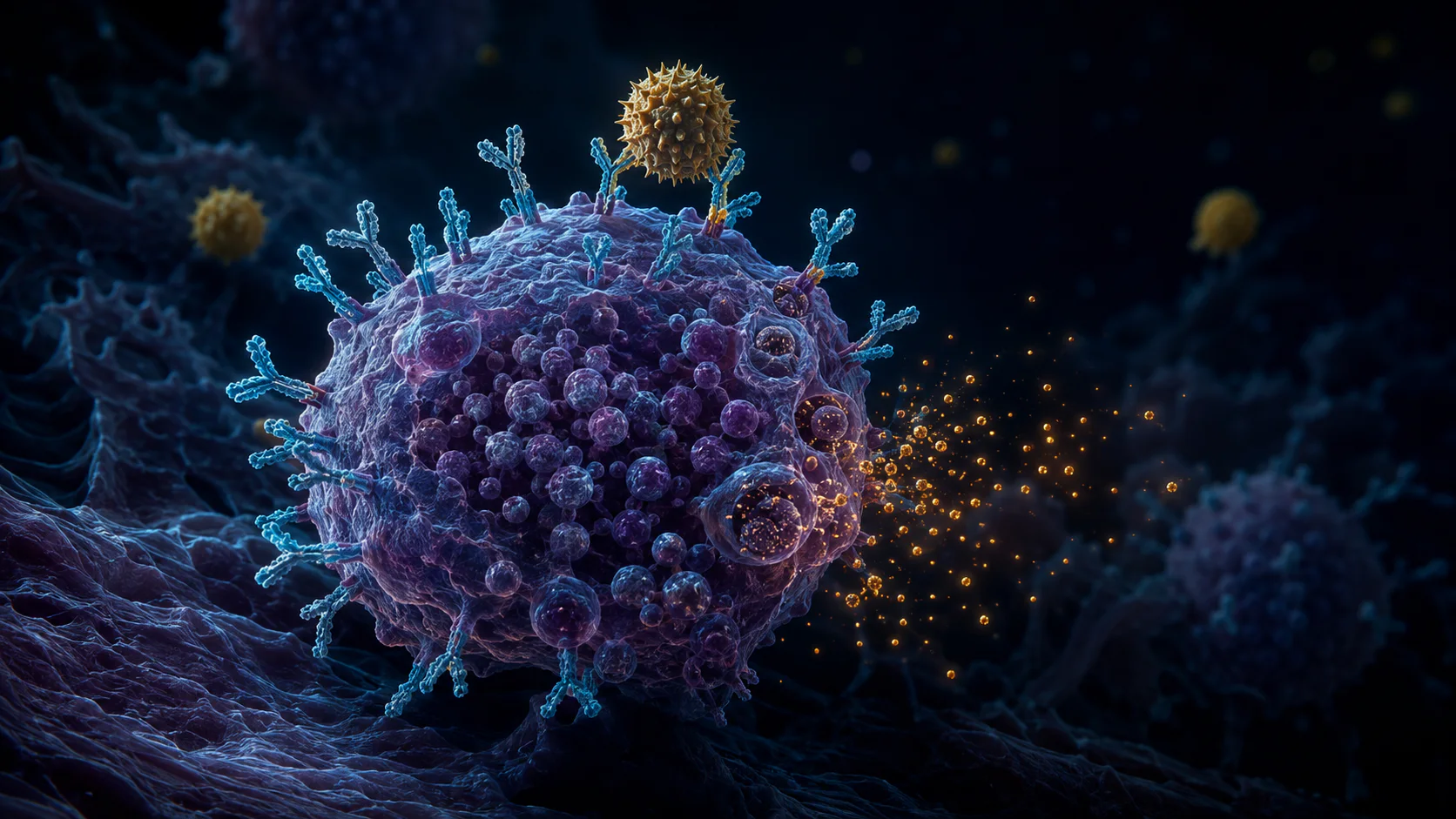
Allergies happen when the immune system becomes sensitized to an otherwise harmless substance called an allergen. In many immediate allergies, B cells produce allergen-specific immunoglobulin E, or IgE. That IgE attaches to mast cells and basophils. When the allergen appears again and links neighboring IgE molecules, those cells can release histamine and other mediators. The result may be itching, swelling, mucus, wheezing or, in severe cases, anaphylaxis. Not every allergy uses exactly the same pathway, and a positive IgE test alone does not prove that exposure causes symptoms.
A grain of pollen can land in two noses and produce two very different events. One person clears it without noticing. The other begins sneezing, itching and tearing as though the airway has detected a dangerous intruder.
The pollen did not become poisonous. The difference lies in immune recognition. Allergy is a form of hypersensitivity: a protective system builds a response that is disproportionate to a substance that is usually harmless. The familiar symptoms are the visible end of immune memory, antibodies, tissue cells and chemical mediators acting together.
The first step can happen before the first obvious reaction
An immediate IgE-mediated allergy usually begins with sensitization. Cells at a barrier such as the skin, airway or gut encounter a protein and present parts of it to the adaptive immune system. In a person who is susceptible, the surrounding signals can steer helper T cells and B cells toward an allergic response rather than tolerance.
Selected B cells then make IgE antibodies shaped to recognize that allergen. IgE circulates at low concentrations, but it binds very strongly to Fc epsilon receptors on mast cells in tissues and basophils in blood. The cells are now armed with a molecular memory of the substance even when the person feels completely normal.
Genes influence susceptibility, but exposure, barrier health, age and environment also matter. Sensitization is not identical to clinical allergy: someone may have detectable allergen-specific IgE yet tolerate the substance. A diagnosis connects a convincing history with appropriate testing and, when needed, supervised challenge—not a laboratory number by itself.
A returning allergen can open the mast cell's chemical stores
On a later exposure, one allergen can bind and cross-link multiple IgE antibodies on a mast cell. That clustering sends signals through the cell and can trigger degranulation: preformed mediators stored in granules are released, while other inflammatory molecules are produced over minutes and hours.
Histamine increases blood-vessel permeability, stimulates sensory nerves and changes smooth muscle and gland activity. In the nose, those effects can produce itching, sneezing, swelling and watery mucus. In the skin they can contribute to a raised itchy wheal. Different tissues contain different mast-cell populations, so the same broad pathway can look different depending on where exposure occurs.
The early reaction may be followed by a later inflammatory phase involving eosinophils, T cells and additional mediators. That helps explain why symptoms can persist after the first burst of histamine. It also explains why allergy is more than one chemical and why antihistamines do not control every component of every allergic disease.
Allergy is a family of mechanisms, not one universal switch
IgE is central to many reactions involving foods, insect venom, medicines, pollen and animal proteins, but not all hypersensitivity is IgE-mediated. Contact dermatitis, for example, is mainly driven by T cells and usually develops more slowly. Some reactions that resemble allergy have nonallergic causes altogether.
The label also says nothing about severity. One person may have seasonal nasal symptoms, another may develop asthma symptoms, and a susceptible person exposed to a particular allergen may experience anaphylaxis involving more than one body system. Past mild reactions cannot guarantee that every future reaction will remain mild.
Because the mechanisms overlap but are not interchangeable, broad online rules are unreliable. Skin tests and blood tests detect sensitization in context; they do not grade every future reaction or identify an allergen without a compatible history. Evaluation belongs with a qualified clinician when symptoms are recurrent, unclear or potentially serious.
When an allergic reaction becomes an emergency
Rapid trouble breathing, throat or tongue swelling, faintness, collapse, or symptoms affecting several systems after a likely exposure can indicate anaphylaxis. That is an emergency. Epinephrine is the first-line treatment for anaphylaxis; antihistamines do not replace it because they do not reliably reverse airway narrowing or dangerous circulatory changes.
People with a diagnosed severe allergy should follow their individual emergency plan and carry prescribed medication as directed. This article explains the biology of allergy, but it cannot identify the cause of a reaction or decide whether a particular food, medicine or environmental exposure is safe for one person.
The central idea is measured rather than mysterious: the immune system is learning all the time. Usually it learns tolerance toward harmless material and defense against threats. Allergy is what happens when that classification and the response attached to it become mismatched.
From harmless protein to allergic symptoms
Sensitization produces allergen-specific IgE, which binds receptors on mast cells. On re-exposure, the allergen can cross-link that IgE and activate the cell.
Histamine and other mediators then act on vessels, nerves, glands and smooth muscle. The symptoms depend on the tissue involved, the dose and route of exposure, and the person's underlying susceptibility.
NIAID describes how IgE against an allergen can initiate food allergy.
A major review follows IgE binding, mast-cell activation and mediator release.
Try it yourself
Build a symptom-and-exposure timeline.
- Record what happened, when it began and which body systems were involved.
- Note the suspected exposure without deliberately repeating it.
- Bring the timeline to a qualified clinician if reactions recur or the trigger is uncertain.
Never test a suspected food, medicine or venom allergy on yourself. Severe or rapidly worsening symptoms need emergency care.
Why it matters
Allergy reveals a basic rule of immunity: recognition is powerful, but it is not automatically accurate. The same memory system that speeds defense can also preserve a mistaken target.
Understanding sensitization also separates allergy from intolerance and irritation. Similar symptoms can begin through different mechanisms and therefore need different evaluation.
An allergy is immune memory aimed at the wrong kind of target.
In many immediate allergies, allergen-specific IgE primes mast cells, and a later exposure releases mediators that create the reaction.
Research behind this story
We link to the primary study or an authoritative indexed review wherever possible. Caveats in the text reflect the limits of that evidence.
01