Quick answer
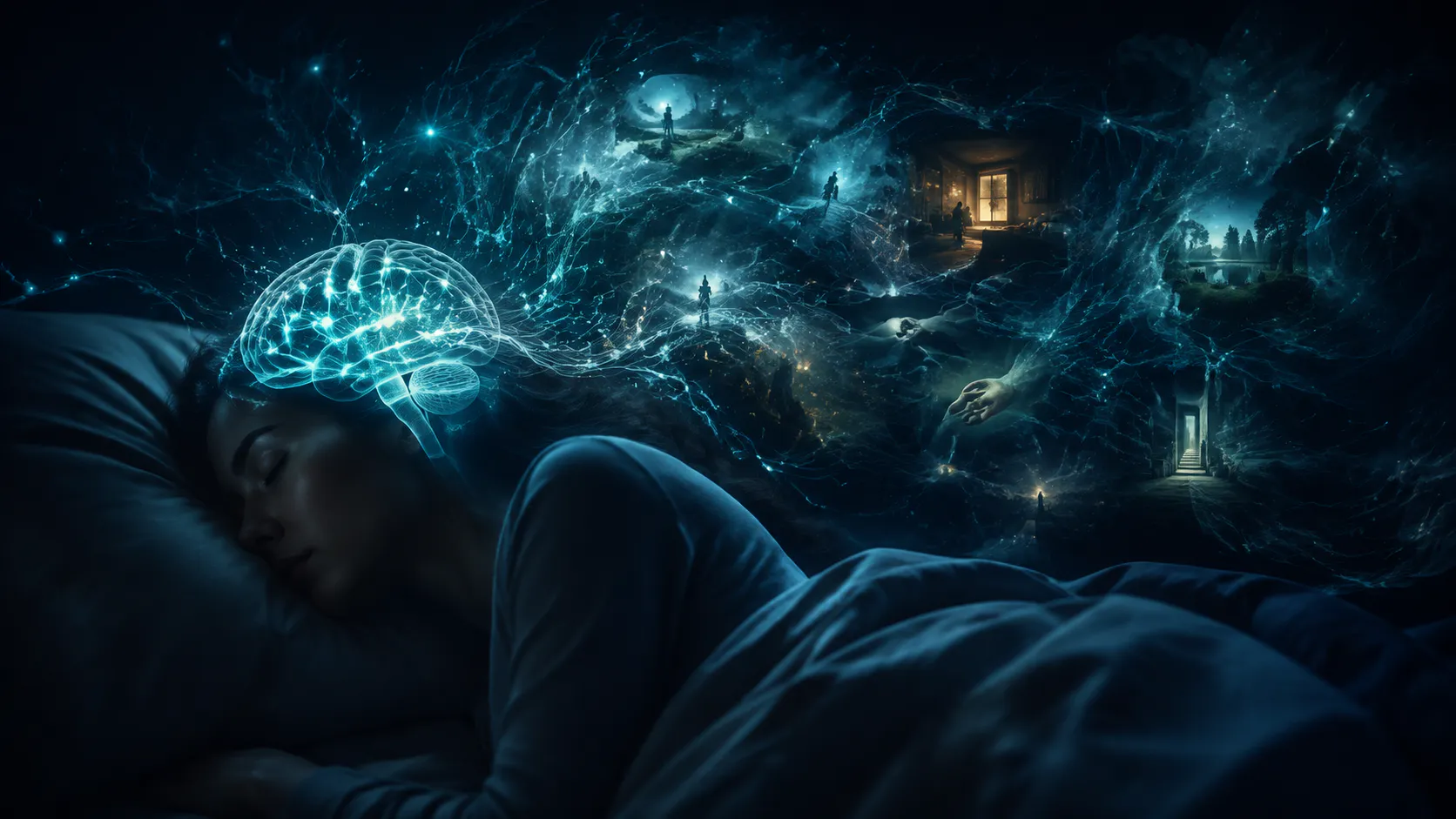
People sleepwalk when an arousal emerges incompletely from deep non-REM sleep, usually stage N3. Motor and basic arousal systems activate enough for sitting, walking or routine actions, while awareness, judgment and memory formation remain impaired. Episodes often occur in the first third of the night, when deep sleep is concentrated. Genetic susceptibility matters, and sleep loss, stress, fever, alcohol, some medicines, noise or another sleep disorder can increase episodes in susceptible people. Sleepwalking is commoner in children and often fades, but dangerous, frequent or new adult episodes warrant clinical assessment.
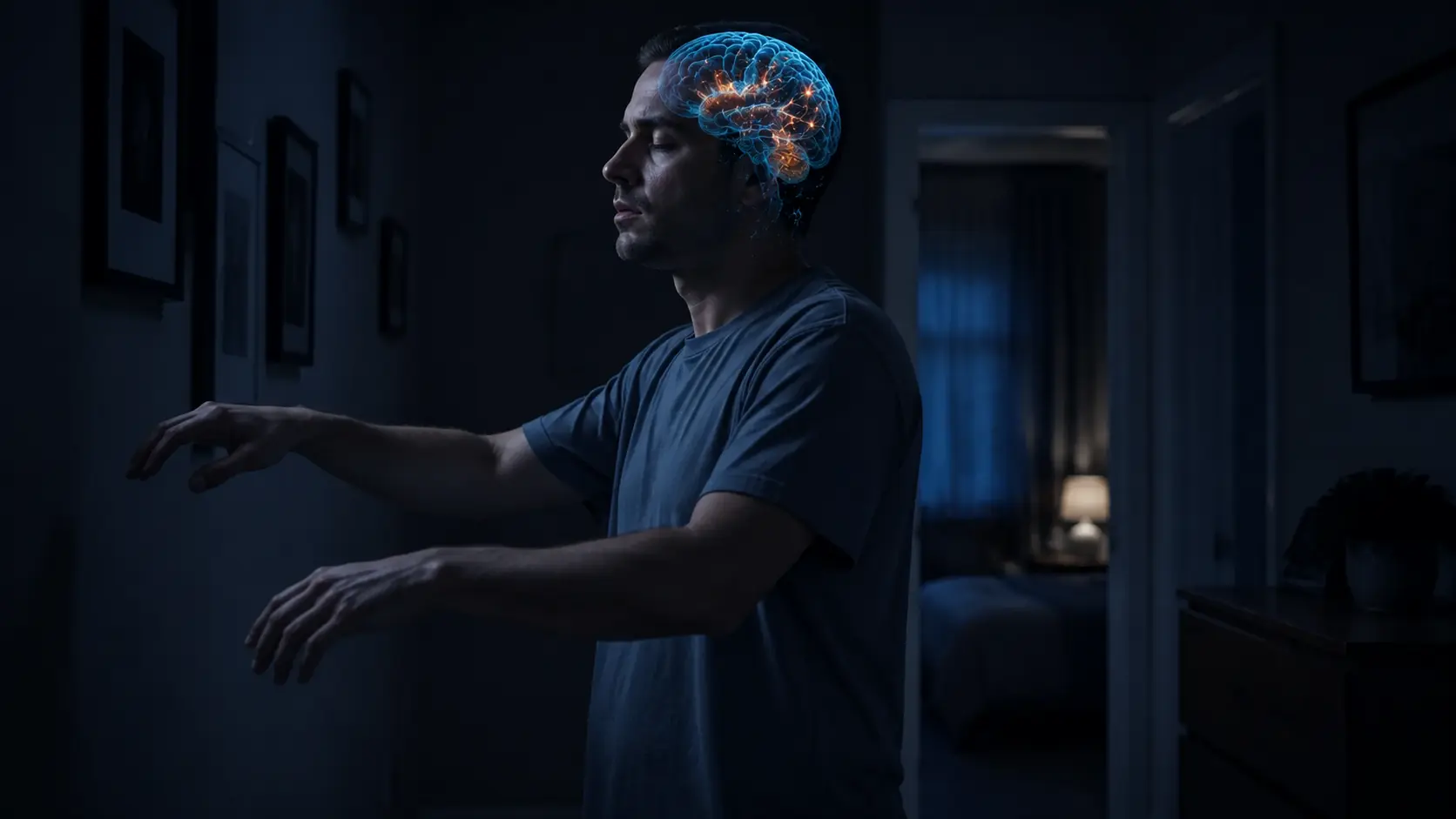
A person sits up, walks into the hallway and moves around obstacles, yet gives confused answers and remembers nothing the next morning. The behavior looks awake because the body is moving. The mental state is not ordinary wakefulness.
Sleepwalking belongs to non-REM disorders of arousal. The leading explanation is an incomplete state transition: some neural systems support movement while others retain deep-sleep features. Researchers can measure the mixture but cannot predict every episode from one trigger.
Sleep and wake can overlap in one brain
During normal N3 sleep, synchronized slow waves dominate much of the cortex, responsiveness falls and waking is difficult. An arousal normally coordinates a transition across networks. During a disorder-of-arousal episode, that coordination is incomplete.
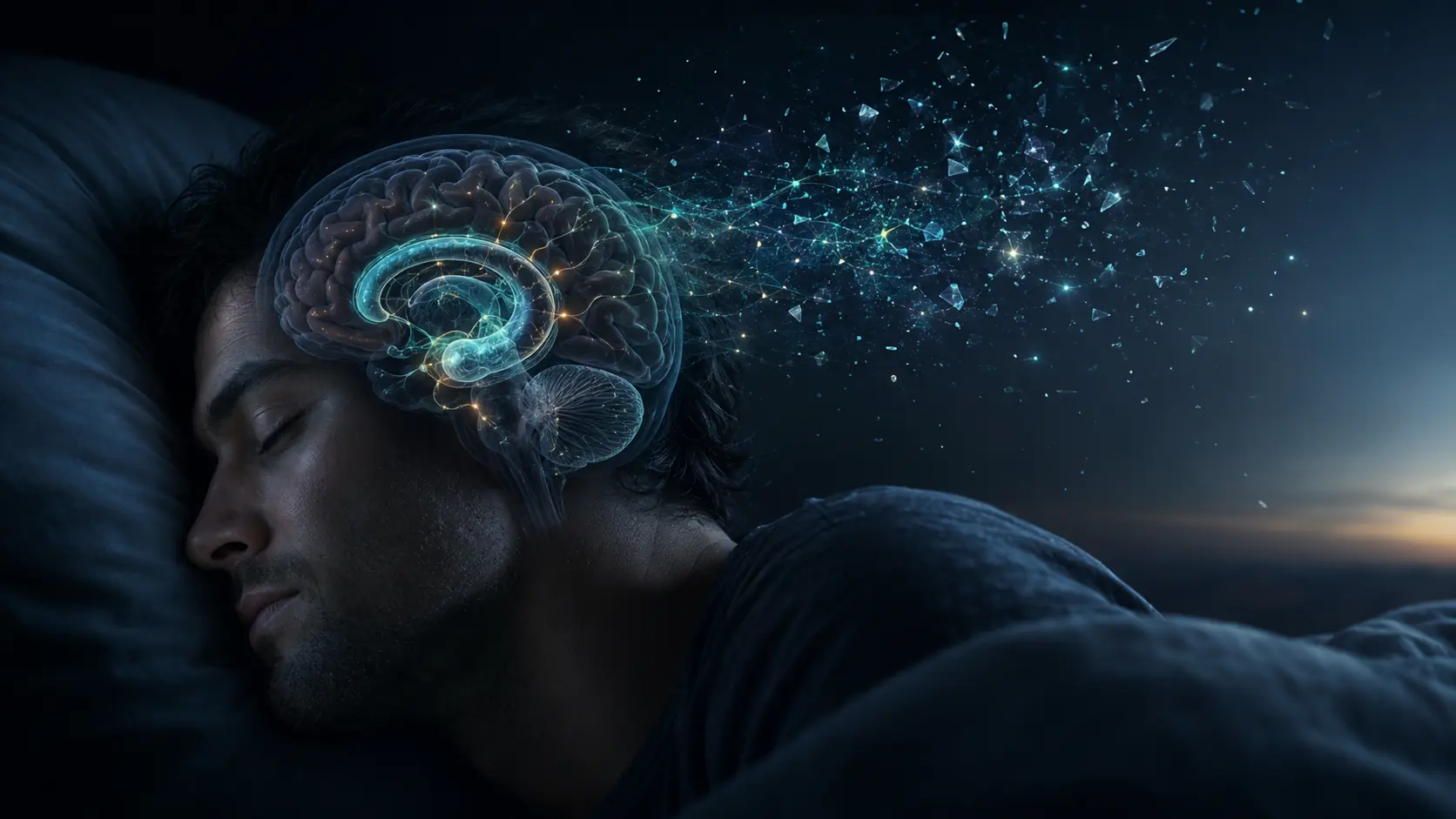
Scalp and intracranial recordings support local differences: motor and cingulate regions may look more wake-like while frontoparietal association areas retain sleep-like slow activity. This supports a mixed-state model rather than a brain switching on everywhere.
The model explains the paradox. A sleepwalker can open a door or follow a familiar route but respond slowly, behave oddly and form little memory. Complex movement does not prove full conscious planning.
Deep-sleep timing shapes the episode
Episodes usually arise from N3 and cluster early in the night, when slow-wave sleep is abundant. That differs from REM sleep behavior disorder, where dream enactment arises from REM after the normal paralysis of that stage is lost.
Sleepwalking can include sitting, staring, walking, manipulating objects or brief speech. Eyes may be open, but the person is difficult to engage and confused if awakened. Most episodes are short, though duration and complexity vary.
The idea that sleepwalkers perform a vivid dream is too simple. Fragmentary mental content can occur, but classic sleepwalking is categorized by non-REM origin and incomplete arousal, not a universal dream script.
Predisposition meets an unstable night
Sleepwalking runs in families, and childhood prevalence is higher when a parent has a history. That genetic contribution is well supported, although no single gene explains every case. The developing sleep system may help explain its frequency in children.
Sleep deprivation, irregular schedules, fever, stress, alcohol, unfamiliar environments and some medicines can increase episodes. Obstructive sleep apnea and restless legs can repeatedly disturb deep sleep as well.
A trigger is not a complete cause. Many tired people never sleepwalk, and the same person may not react consistently. Current models combine susceptibility, slow-wave pressure and an arousal stimulus.
Safety matters more than reasoning mid-episode
Risk comes from stairs, windows, traffic, sharp objects or leaving home. Quietly guide the person away from danger and toward bed. Waking is not inherently medically dangerous, but sudden confrontation can increase confusion or defensive behavior.
Prevention includes sufficient regular sleep, reducing alcohol, securing doors and windows, clearing trip hazards and protecting stairs. Scheduled awakenings before a predictable episode may help selected children under professional guidance.
Seek clinical review for injury, frequent episodes, first onset in adulthood, violent behavior, seizure-like events, loud snoring or breathing pauses. Evaluation distinguishes parasomnias from other sleep, neurological or medication-related conditions.
A partial arousal from deep sleep
A disturbance raises arousal during N3, but the transition does not recruit every network equally.
Movement becomes possible while executive monitoring, flexible awareness and stable memory remain impaired.
A 2025 review summarizes the mixed-state model and treatment evidence.
Why it matters
The mixed-state model replaces folklore with a testable explanation for movement without normal awareness.
It shifts the response from startling the person to reducing risk and investigating persistent triggers.
The sleeping brain can wake unevenly.
Enough of the brain activates for movement while systems for judgment, awareness and memory remain partly in deep sleep.
Research behind this story
We link to the primary study or an authoritative indexed review wherever possible. Caveats in the text reflect the limits of that evidence.
01