Quick answer
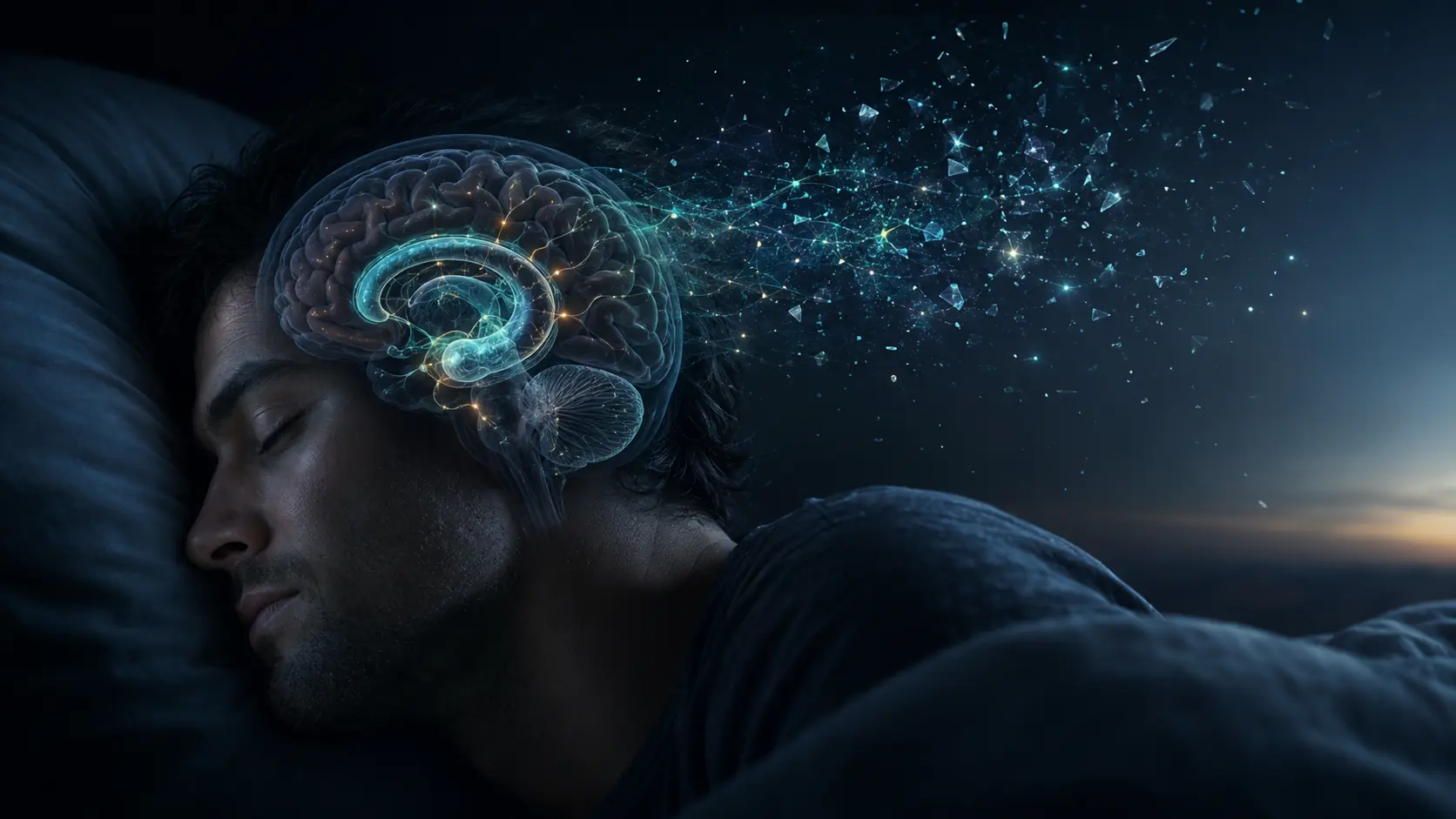
Nightmares are extended, vividly recalled dreams dominated by fear, anxiety, disgust or other negative emotion, often ending in awakening. They occur most commonly during REM sleep, when internally generated imagery is vivid and emotional networks are active, though disturbing dreams can occur in other stages. Stress, trauma, sleep loss, fever, alcohol withdrawal, medicines and some sleep or mental-health conditions can increase them. Theories include threat simulation, emotional-memory processing and failures of fear extinction, but none explains every episode. Occasional nightmares are common; recurrent distress or daytime impairment can be treated clinically.
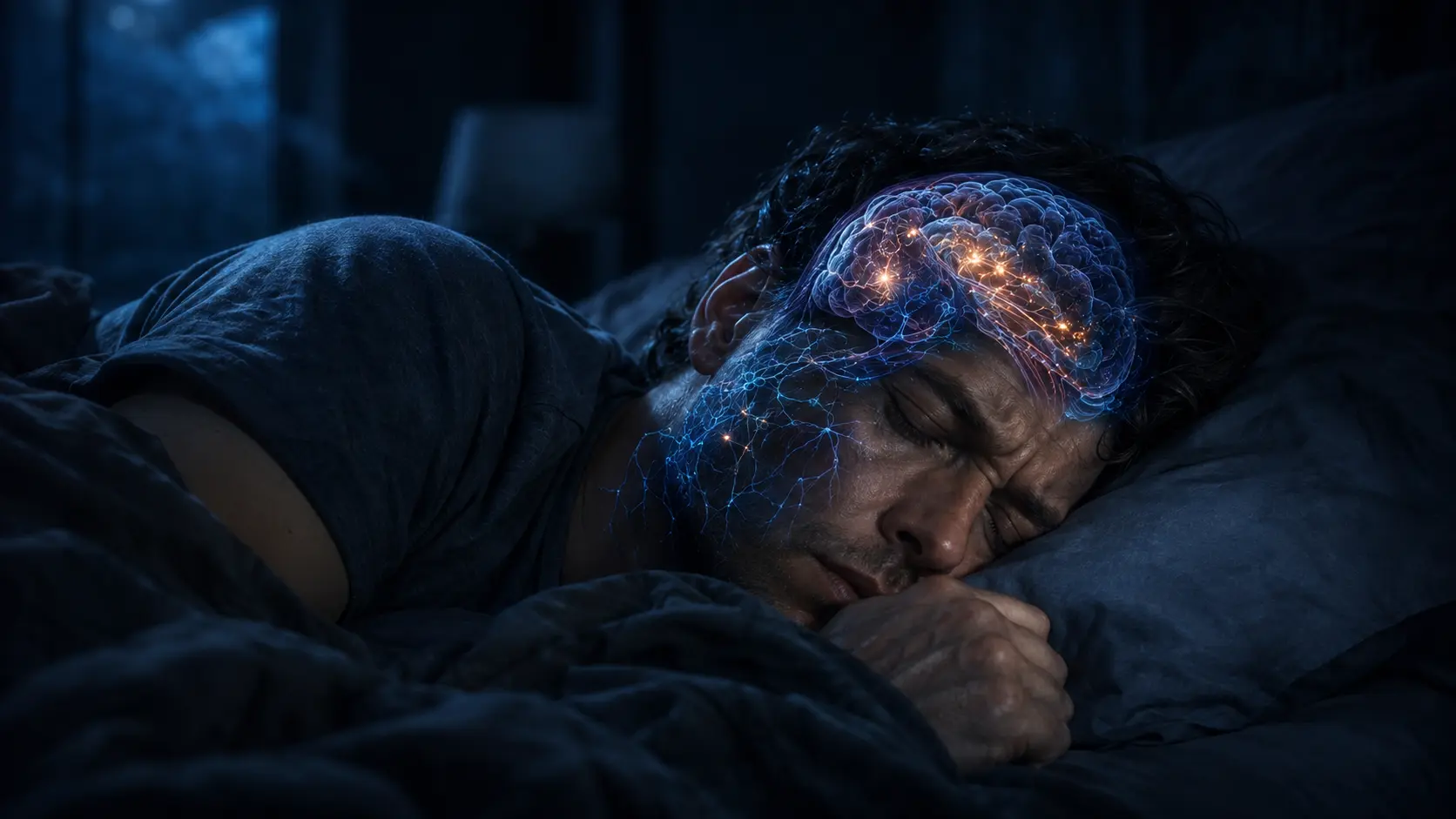
A nightmare does something many dreams do not: it crosses the boundary into waking. The sleeper opens their eyes with a racing heart and a scene that can still be narrated—being chased, trapped, injured or unable to protect someone.
Sleep research can describe when nightmares occur, which brain systems are active and which conditions make them more likely. It cannot decode one universal meaning from the story, and it has not settled on a single adaptive reason that covers every nightmare.
A nightmare is more than an unpleasant dream
Clinical definitions emphasize intense negative emotion, detailed recall and awakening. A bad dream may be disturbing without waking the sleeper. A night terror is different again: it usually arises from deep non-REM sleep with abrupt arousal, limited responsiveness and little story recall.
Nightmares tend to become more frequent toward morning because REM periods lengthen across the night. That timing is common, not absolute. Medication, sleep disorders and individual sleep architecture can change it.
The remembered narrative can feel precise, but recall is reconstructed after waking. Confidence in a dream detail does not establish that it carries a fixed symbolic message.
REM sleep supplies vivid imagery and emotional intensity
During REM sleep, visual-association and emotion-related networks can be active while sensory input from the room is reduced and skeletal muscles are largely inhibited. Prefrontal systems involved in reflective checking do not operate exactly as they do during wakefulness.
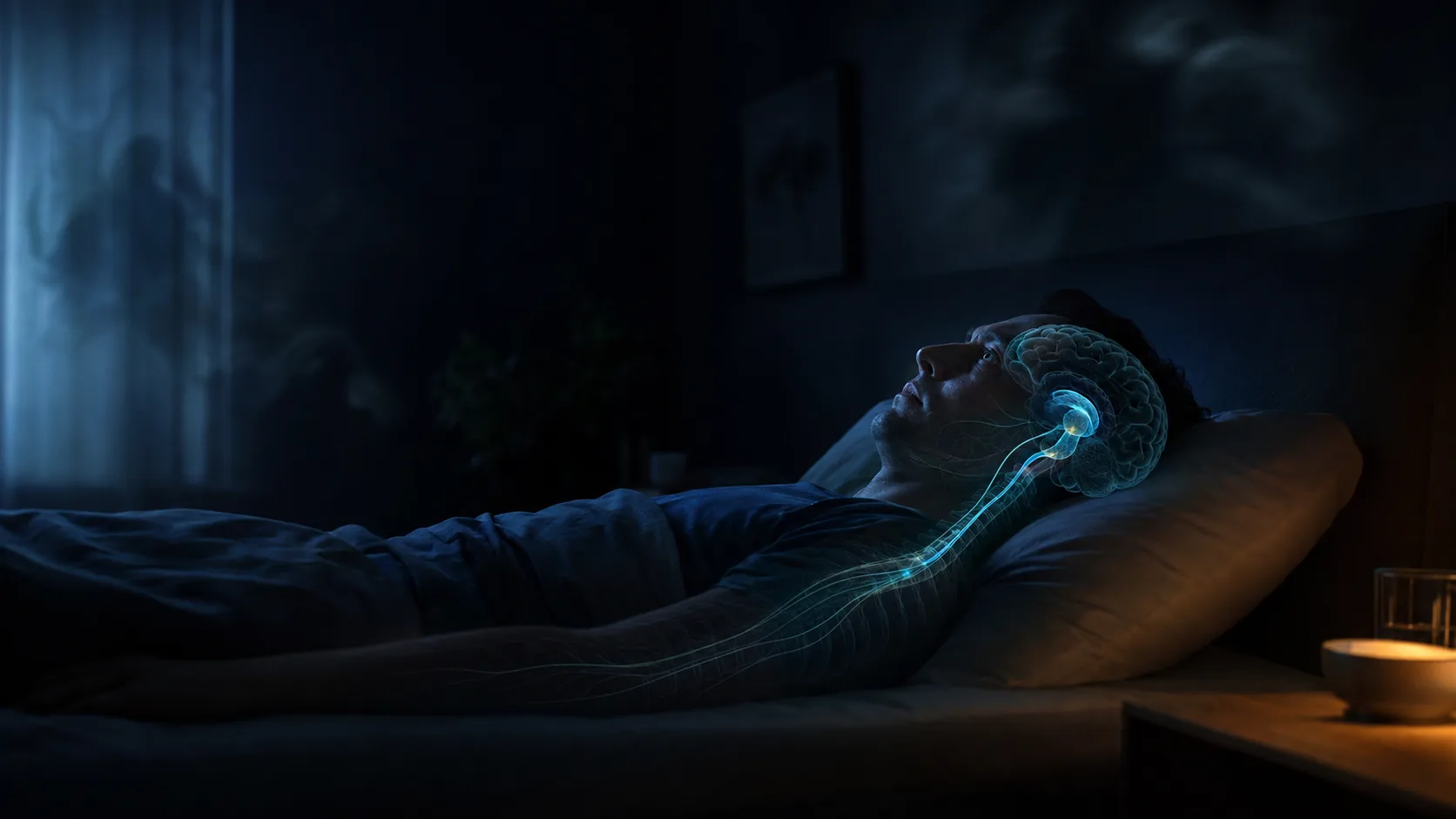
That state can support immersive scenes with weak reality testing. Autonomic activity also fluctuates, so awakening may bring rapid heartbeat, sweating or faster breathing. The body response is real even though the threat was internally generated.
Nightmares are not simply a sign of too much REM. Their frequency and distress reflect interactions among sleep state, waking stress, memory, temperament and learned responses.
Threat rehearsal is plausible, not a settled purpose
Threat-simulation theory proposes that dreaming rehearses perception and avoidance of danger. Nightmares often contain threats, but a frequent theme does not prove that every episode improves survival or emotional adaptation.
Other models focus on emotional-memory processing. Ordinary dreaming may integrate experiences while reducing emotional charge; a nightmare may represent an overloaded or unsuccessful version in which fear remains high and the dream ends in awakening.
These explanations overlap and remain under study. Researchers can test patterns across groups, but they cannot infer one cause from one person's dream content.
Stress changes risk, and recurrent nightmares are treatable
Acute stress, trauma reminders and sleep deprivation can raise nightmare frequency. Fever, irregular schedules, withdrawal from alcohol and some medicines may also contribute. A trigger can change arousal or dream content without becoming the sole cause.
Imagery rehearsal therapy asks a person to rewrite a recurring nightmare while awake and repeatedly practice the new version. Clinical guidance supports it for nightmare disorder and trauma-associated nightmares; treatment is more specific than generic dream interpretation.
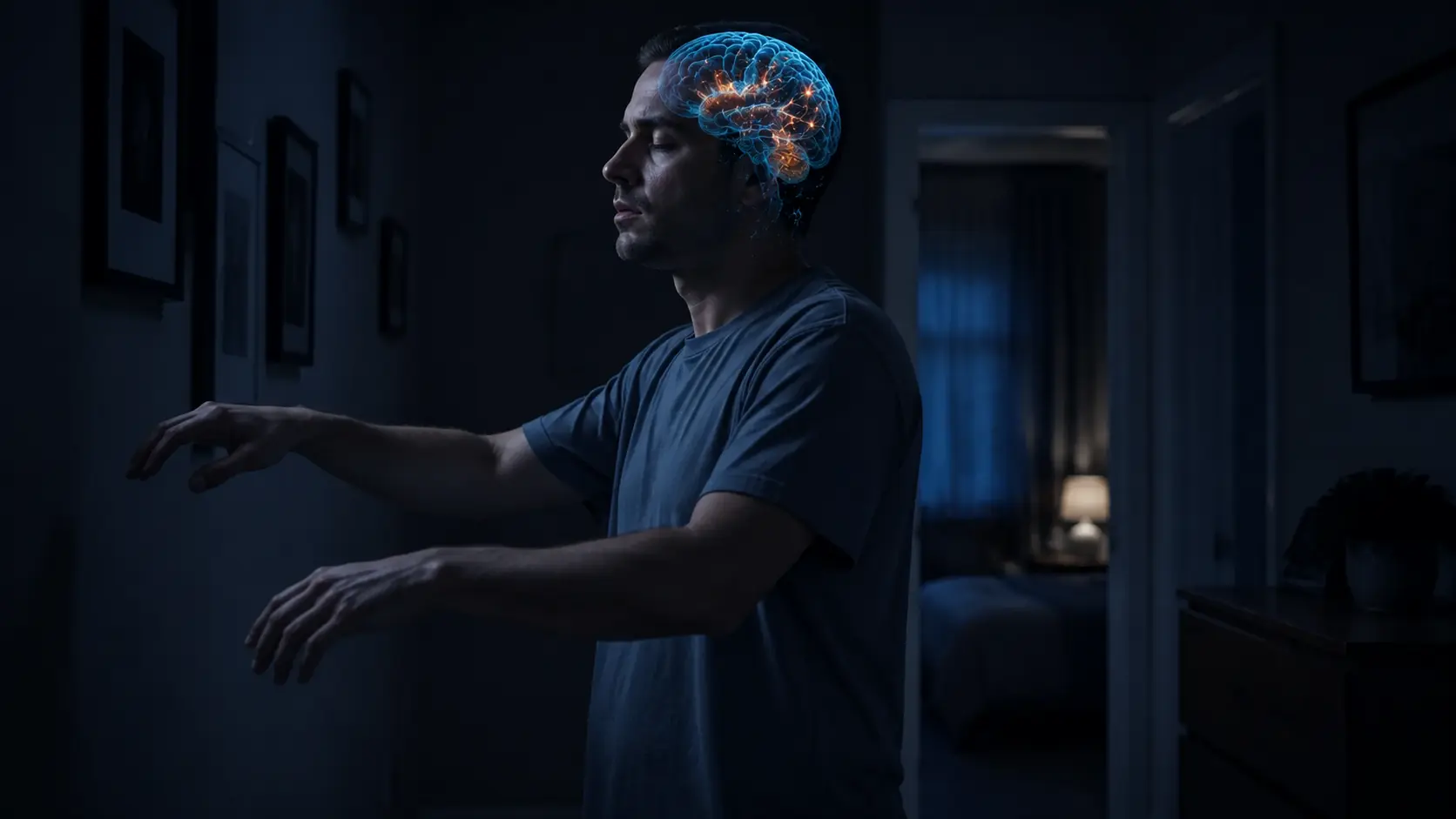
Professional assessment is appropriate when nightmares recur, create fear of sleep, cause major daytime impairment, begin after a medication change or involve dangerous movements. Acting out dreams can indicate a different sleep disorder and should not be assumed to be an ordinary nightmare.
How a nightmare reaches waking memory
A sleeping brain constructs a vivid scene from memory and prediction while emotional and autonomic systems assign high threat value.
Arousal rises until sleep breaks. Waking immediately after the event makes the narrative more available to memory than a dream followed by uninterrupted sleep.
The American Academy of Sleep Medicine reviews evidence-based treatments for nightmare disorder.
Why it matters
Separating nightmares from night terrors and dream acting prevents distinct sleep phenomena from being collapsed into one label.
The evidence supports mechanisms and treatments without pretending that science can translate a dream dictionary.
A nightmare is a distressing dream that succeeds at waking you.
REM imagery, emotional memory and arousal interact, but stress and threat theories explain risk rather than one universal hidden meaning.
Research behind this story
We link to the primary study or an authoritative indexed review wherever possible. Caveats in the text reflect the limits of that evidence.
01