
Quick answer
One nostril often feels more blocked because soft, blood-filled tissue inside the nose naturally changes volume. Autonomic nerves adjust blood flow through venous spaces around the turbinates, narrowing one passage as the other becomes roomier. This nasal cycle is variable rather than clockwork, and both sides usually continue passing air. Lying on one side tends to increase congestion in the lower nostril, while allergies, infection or cold air can exaggerate the difference. A fixed one-sided blockage, especially with bleeding, foul or persistent discharge, facial pain, swelling or vision changes, is not something to dismiss as a normal cycle.
Close one nostril, breathe through the other, then switch. Even without a cold, one side often feels clearer. Hours later the balance may reverse. The sensation is common because the nose is not built as two rigid, equally open pipes.
Inside each nasal passage, blood-rich tissue around the turbinates can swell and shrink. The two sides often change out of phase in a pattern called the nasal cycle, while posture, irritation and anatomy can make the contrast easier to notice.
The turbinates behave like living airflow valves
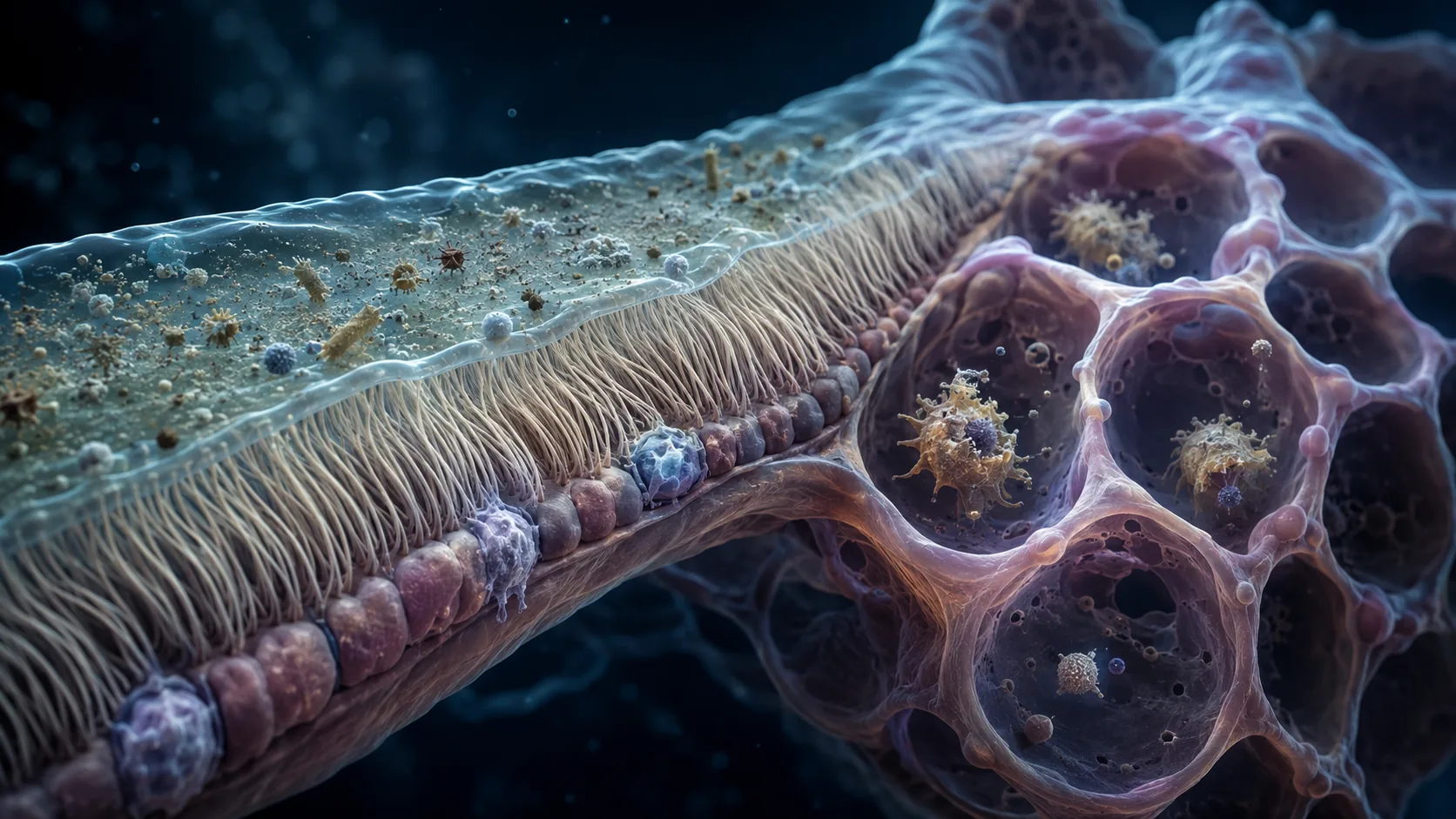
Three curved structures called turbinates project from the side wall of each nasal cavity. Their shape increases surface area and directs air close to a moist, warm lining. This helps filter particles and condition each breath before it reaches the lower airway.
The lining contains extensive venous sinusoids—expandable blood spaces sometimes described as erectile tissue. When these spaces fill, the mucosa thickens and the available airway narrows. When they empty, the passage becomes roomier. The change can be large enough to feel like congestion even though no mucus plug seals the nostril.
Airflow sensation is also not a perfect ruler. Cooling receptors in the lining contribute to the feeling of openness, so a passage can feel freer when moving air cools it more strongly. Perceived blockage and measured resistance often relate, but they are not identical.
Autonomic control creates an uneven, shifting pattern
The autonomic nervous system regulates vessels and glands in the nasal lining without conscious effort. Changes in sympathetic and parasympathetic activity alter vascular tone, allowing one side to become more congested while the other decongests.
Researchers call the recurring asymmetry the nasal cycle. It is not a metronome: cycle length and strength vary widely within and between people, and some measurements show irregular, partly synchronized or barely detectable patterns rather than clean alternation.
Both nostrils usually remain open enough to move air. The more congested side contributes less while the roomier side contributes more, so total nasal resistance can remain reasonably stable. Switching may happen over hours, but a single fixed timetable does not describe every healthy nose.
Gravity can make the lower nostril feel stuffier
Roll onto your right side and the right nasal passage often becomes more congested; turn left and the left may follow. Studies of posture show that the dependent, lower side tends to narrow, while the upper side may become more patent.
Gravity changes venous pressure and blood distribution, but the response is not merely liquid sloshing downward. Autonomic reflexes and the pre-existing phase of the nasal cycle interact with posture. The effect can therefore be obvious one night and subtle the next.
Lying flat can raise resistance on both sides compared with sitting or standing. That helps explain why ordinary nasal stuffiness may become more noticeable at bedtime, even when the underlying trigger has not suddenly worsened.
Irritation and anatomy can amplify the difference
Allergic inflammation can swell the lining and increase secretion. A viral infection can do the same through a different immune pathway. Cold, dry air makes the nose work harder to warm and humidify each breath and can trigger a watery neural response. Any of these leaves less spare room, so the normally narrower side feels much more blocked.
Structure matters too. A deviated septum, enlarged turbinates or a nasal polyp can create a persistent asymmetry. The normal cycle may then alternate on top of that fixed difference, making symptoms fluctuate without fully disappearing from the same side.
Decongestant sprays can temporarily shrink vascular tissue, but using some of them for longer than directed can produce rebound congestion. Persistent symptoms need the cause identified rather than repeated self-treatment based on one mechanism.
The cycle is real; its exact purpose remains uncertain
Alternating airflow may give the more congested side time for humidification, mucociliary clearance or recovery of the surface lining. Different airflow rates might also change how odor molecules reach receptors. These are plausible functional explanations, not a settled proof that the cycle evolved for one specific job.
Measurements also depend on method, posture, time of day, temperature and whether a person is awake or asleep. A neat animation of one side switching every few hours is therefore a teaching model, not a universal recording of human physiology.
The safest conclusion is modest: changing asymmetry is a normal feature of many noses, produced largely by vascular tissue under neural control. It does not explain every case of unilateral obstruction.
A blockage that stays on one side deserves attention
A sensation that alternates, changes with posture and improves again fits the ordinary cycle better than obstruction that remains fixed. Seek medical advice for persistent one-sided blockage, especially if it is worsening or does not behave like a temporary cold or allergy.
Bleeding, blood-stained or foul discharge, facial swelling or numbness, severe pain, a visible mass, eye symptoms or new neurological symptoms warrant prompt assessment. These signs have many possible causes, but they should not be assigned to the nasal cycle online.
This explanation is educational, not a diagnosis. A clinician can inspect the nasal passages and distinguish swollen lining from structural narrowing, infection and less common causes.
How one side becomes the tighter passage
Autonomic signals alter the tone of expandable venous tissue around the turbinates. As blood volume rises on one side, its mucosa thickens and airflow resistance increases.
The opposite side often decongests, carrying a larger share of the airflow. Later the balance may reverse, while gravity, inflammation and structural anatomy reshape the pattern.
A physiological study used continuous airflow measurements to characterize the variable patterns of the human nasal cycle.
Clinical measurements also show how body position changes nasal patency.
Why it matters
The nasal cycle shows that airway resistance is actively regulated rather than set by fixed plumbing.
Recognizing a fluctuating normal pattern is useful, but so is its limit: persistent unilateral obstruction needs a different explanation.
Your nose naturally breathes unevenly.
Blood-rich turbinate tissue changes size under autonomic control, often alternating the more open side; posture and inflammation can make the difference stronger.
Research behind this story
We link to the primary study or an authoritative indexed review wherever possible. Caveats in the text reflect the limits of that evidence.
01