
Quick answer
A leg usually falls asleep because a position compresses one or more peripheral nerves and may also reduce their local blood supply. Sensory signals become weaker or disorganized, creating numbness. When you move and the nerve resumes normal signaling, recovering fibers can fire irregularly, producing tingling or pins and needles. Brief episodes that resolve with a change of position are common; persistent or unexplained numbness deserves medical assessment.
You stand after sitting with one leg folded underneath you. For a moment the foot feels strangely absent, then a wave of prickling arrives so sharply that taking a step becomes awkward. We call the limb asleep, but consciousness has nothing to do with it.
The sensation comes from peripheral nerves whose signals have been temporarily disrupted by position and pressure. As the pressure changes, different nerve fibers recover at different rates, which is why numbness can turn into a busy field of pins and needles instead of normal feeling returning all at once.
The signal changes before the tissue goes silent
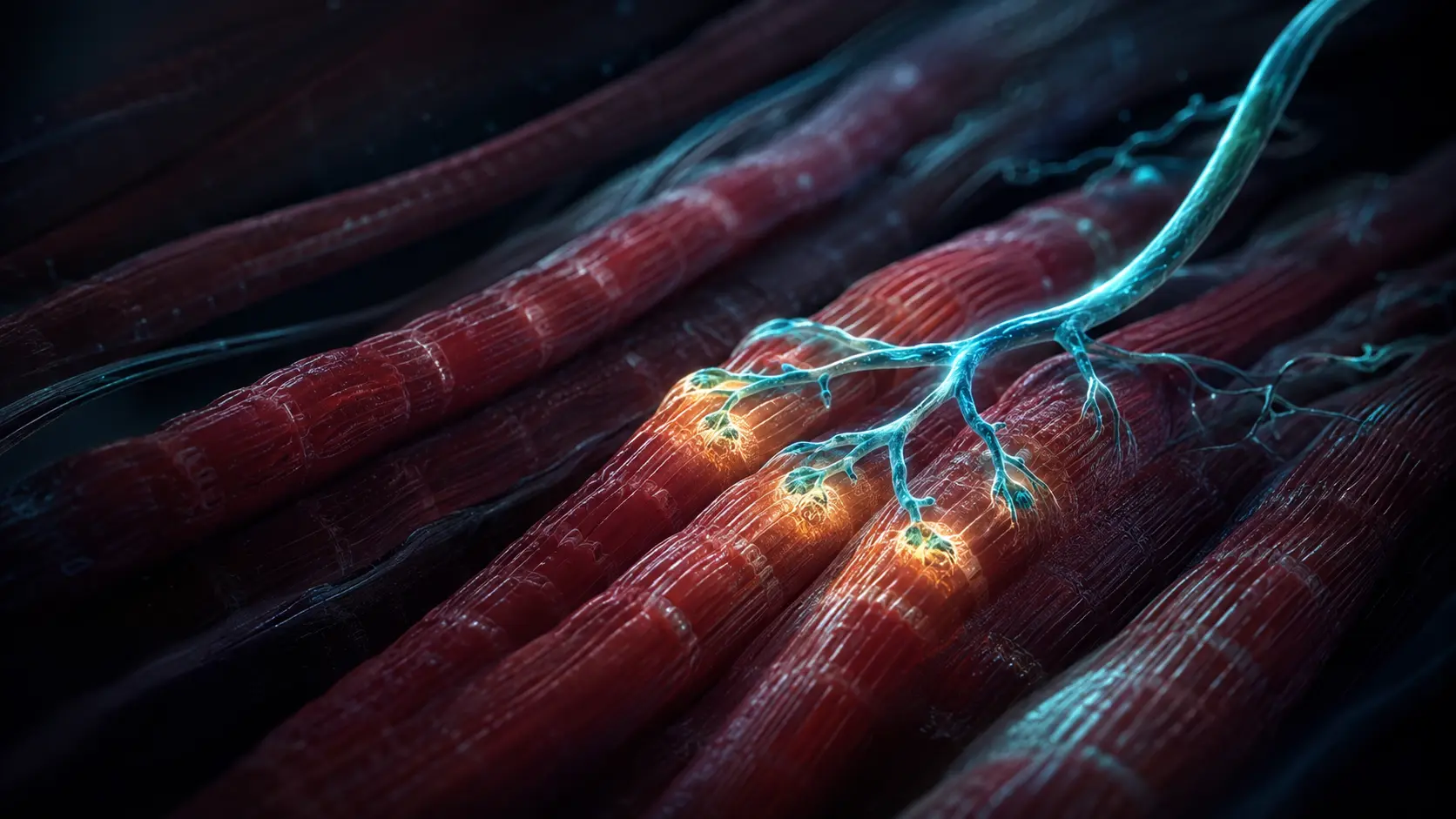
Peripheral nerves are bundles of axons carrying electrical impulses between the spinal cord and the skin, muscles and joints. Many axons are wrapped in myelin, which helps impulses travel quickly. Mechanical pressure can deform the nerve and disturb the ion movements that allow those impulses to propagate.
Large sensory fibers that report touch and position can be affected before fibers carrying slow pain. The result may be a patch of dull skin, a foot that feels poorly located in space, or the odd sense that the limb belongs to someone else. Because motor fibers can also be disturbed, the ankle may briefly feel clumsy.
People often blame the entire event on blocked circulation. Blood flow matters because nerves need oxygen and energy, but ordinary position-related tingling is primarily a nerve-signaling problem. Complete loss of arterial blood supply would be far more serious and would not be a harmless version of the same experience.
Why the tingling arrives when you move
Changing position removes the mechanical stress and restores normal conditions around the nerve. Conducting fibers do not necessarily recover in perfect synchrony. Some resume firing while neighboring fibers remain suppressed, and spontaneous discharges can be interpreted by the brain as tiny points of touch, buzzing or electric prickles.
The location depends on which nerve was compressed. Pressure near the outside of the knee can affect the common fibular nerve and change sensation over the lower leg or top of the foot. Leaning on an elbow can irritate the ulnar nerve and send tingling toward the little finger. The feeling appears at the nerve's destination, not only where the pressure occurred.
Most short episodes fade within minutes. Repeated numbness in the same position can be a clue to change posture, but numbness that begins without pressure, lasts, spreads, comes with weakness, or affects one side of the body requires a different explanation and should not be dismissed as a sleeping limb.
From pressure to pins and needles
A bent joint or body weight narrows the space around a peripheral nerve. Electrical conduction becomes less reliable, so the brain receives reduced or distorted sensory input. Moving relieves the pressure, but the returning signal is briefly uneven.
The brain can only interpret the pattern it receives. Scattered activity across touch fibers becomes prickling; reduced activity becomes numbness. When conduction stabilizes, the strange sensations disappear and ordinary touch returns.
Clinical reviews describe how peripheral nerve compression produces numbness and paresthesia.
Anatomical reviews also document familiar positional injuries such as pressure-related radial nerve palsy.
Try it yourself
Map where normal feeling returns.
- If a brief position-related episode happens naturally, change position without stamping or striking the limb.
- Notice whether numbness, balance and tingling recover at the same speed.
- Observe the skin area involved; it often follows a nerve territory rather than covering the limb evenly.
Do not deliberately compress a limb. Seek urgent help for sudden numbness with weakness, facial droop, speech trouble, severe headache or loss of coordination.
Why it matters
This ordinary sensation reveals that touch is not located in the skin alone. It depends on intact electrical traffic, spinal pathways and a brain that continuously maps where signals came from.
It also marks an important boundary between a transient positional event and a symptom. Duration, recurrence, weakness and context matter more than the familiar phrase pins and needles.
The limb wakes as its nerve signals reorganize.
Temporary pressure disrupts peripheral nerve conduction. When that pressure lifts, uneven recovery creates the prickling rush that precedes normal sensation.
Research behind this story
We link to the primary study or an authoritative indexed review wherever possible. Caveats in the text reflect the limits of that evidence.
01