
Quick answer
When temperature sensors detect enough cooling, the brain’s thermoregulatory circuits recruit repeated, involuntary skeletal-muscle activity. Muscle metabolism releases heat, helping defend core temperature. Shivering usually begins after earlier responses such as skin vasoconstriction and behavioral changes are not sufficient.
Cold reaches the body in stages. First you pull your sleeves down and your fingers cool. Then the jaw quivers, the shoulders tighten, and muscles begin contracting without permission.
Those movements look wasteful because they do not take you anywhere. Thermally, that is the point. Shivering spends chemical energy in muscle and releases much of it as heat.
The body defends a narrow thermal range
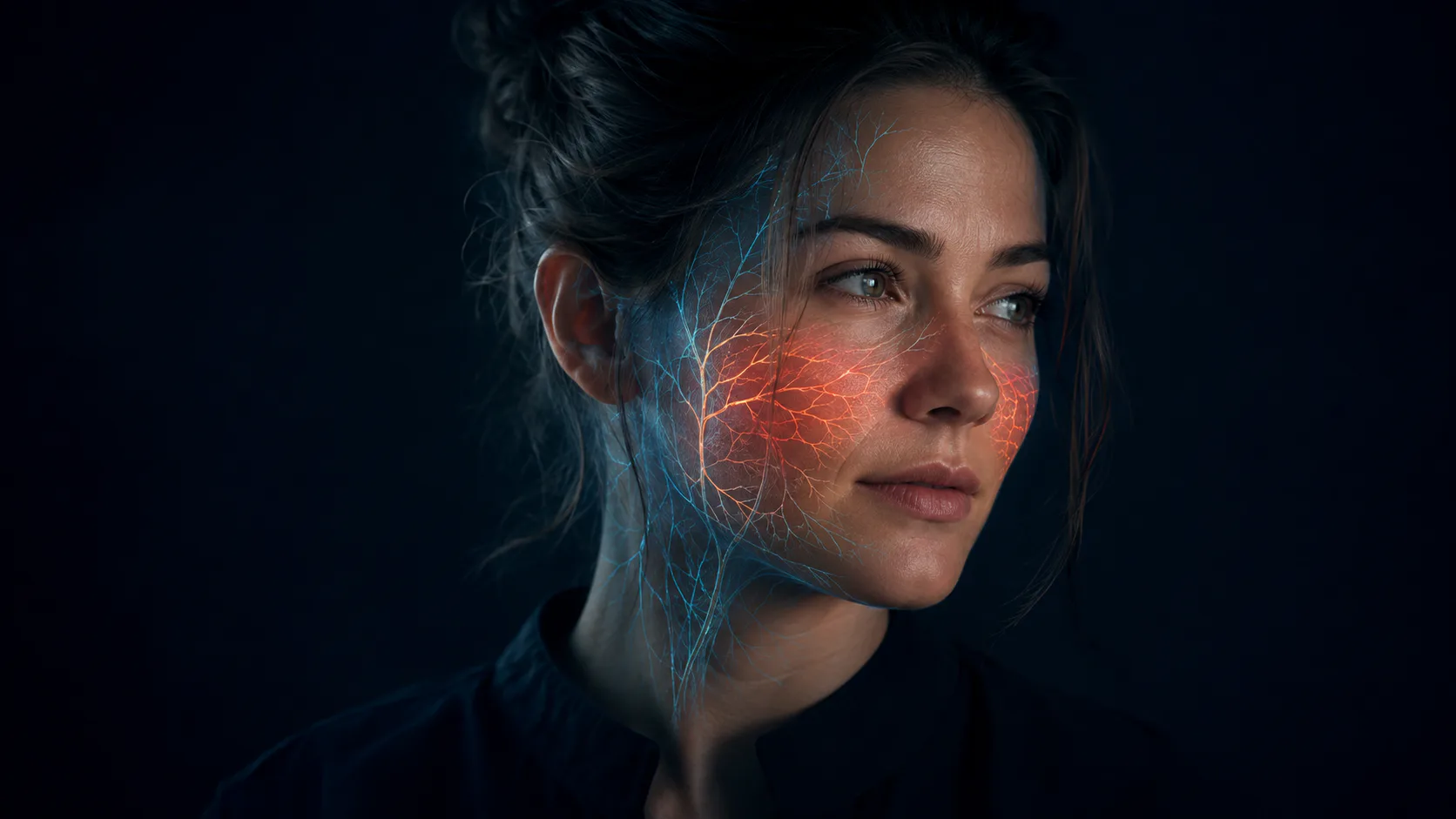
Temperature-sensitive nerve endings in the skin report cooling before the body core changes much. Sensors within the body and brain contribute as well. These signals converge on neural circuits that compare current thermal conditions with the range the body is trying to defend.
The first response is often conservation. Sympathetic nerves constrict blood vessels near the skin, reducing warm blood flow to the surface. You also change posture, seek shelter or add clothing. Shivering is recruited when more heat production is needed.
How muscle becomes a heater
Muscle contraction uses ATP, a molecule that transfers chemical energy inside cells. Only part of that energy becomes mechanical work; much becomes heat. During shivering, motor pathways recruit rapid activity across multiple muscle groups without coordinating it into purposeful movement.
Early shivering may appear as increased muscle tone and small, irregular contractions. Stronger cold produces more obvious rhythmic bursts. The pattern can raise metabolic heat production severalfold, although the contribution varies with body size, muscle mass, acclimation and the severity of exposure.
Humans can also increase heat production without visible shivering. Brown adipose tissue and processes within skeletal muscle contribute to non-shivering thermogenesis. Repeated cold exposure can shift the balance, but it does not make severe cold safe.
Large muscles in the trunk, shoulders and thighs can contribute substantial heat, while the jaw may make the response especially obvious because small alternating contractions move the teeth against one another. The exact recruitment pattern changes over time; shivering is not a single metronome commanding every muscle at once.
It also competes with useful movement. Fine hand control and speech become harder when motor systems are generating involuntary bursts. Walking or deliberate exercise can make heat, but in dangerous cold those actions also spend energy and may increase exposure. The safest defense is usually environmental: insulation, shelter and a return to warmth.
The cold-defense circuit
Cool-sensitive pathways send information through the spinal cord and brainstem to the hypothalamic network. Output then reaches motor systems, increasing muscle tone and producing alternating bursts of activity across the body.
Fever chills use related machinery for a different reason. During fever, immune signals raise the defended temperature. You can shiver in a warm room because the body now interprets its current temperature as too low relative to that temporary target.
A comprehensive human review explains the origin and metabolic contribution of shivering thermogenesis.
Try it yourself
Notice the defenses that come first.
- On a cool—not dangerously cold—day, notice changes in fingers, posture and skin before shivering.
- Move into warmth as soon as shivering begins rather than treating it as a challenge.
- Observe how the shaking fades only after the body has begun to regain heat.
Persistent or violent shivering, confusion, slurred speech or unusual drowsiness can signal hypothermia. Seek urgent local medical help.
Why it matters
Shivering is effective but expensive. It consumes fuel, interferes with fine movement and cannot indefinitely match heat loss in severe conditions.
Its disappearance is not always reassurance. In advanced hypothermia, a person may stop shivering as physiology fails. Context and mental status matter more than the presence of shaking alone.
Shivering is emergency heat from skeletal muscle.
When heat conservation is not enough, thermoregulatory circuits recruit involuntary contractions and turn stored chemical energy into warmth.
Research behind this story
We link to the primary study or an authoritative indexed review wherever possible. Caveats in the text reflect the limits of that evidence.
01