
Quick answer
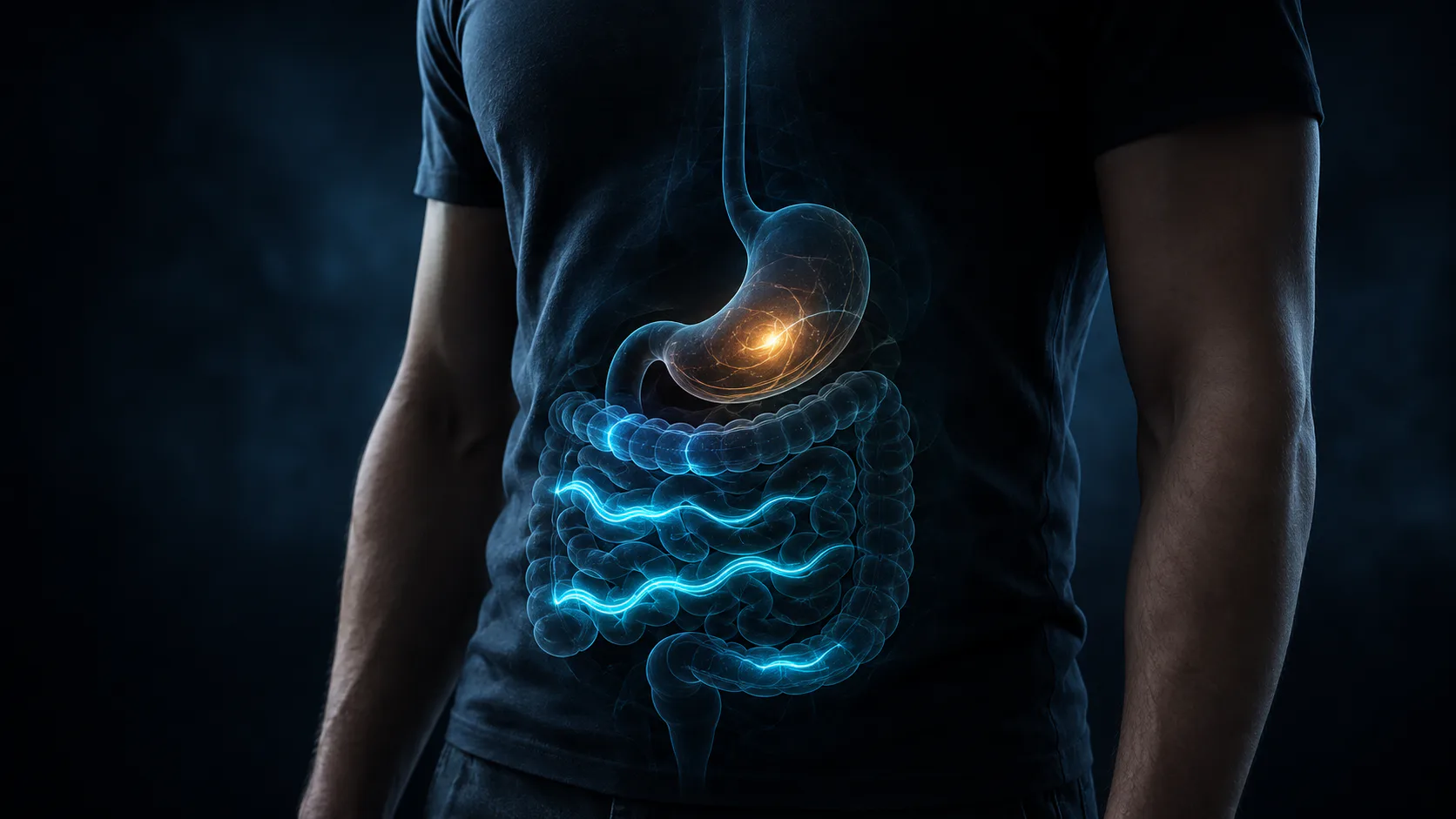
Your stomach and intestines make sound when their muscles move gas and liquid. Between meals, a recurring pattern called the migrating motor complex sends stronger waves through the upper gut. With less food present to damp the vibration, those movements can become the familiar growl.
A quiet room is often all it takes. The meeting pauses, your abdomen produces a long rolling complaint, and everyone interprets it the same way: hunger has found a microphone.
The association is real, but the sound is not a hunger alarm in the simple sense. Your digestive tract makes noise when it is full as well as empty. Fasting just changes the pattern of movement—and removes some of the material that would otherwise soften the sound.
The sound comes from moving contents
The walls of the stomach and intestines contain smooth muscle. Coordinated contractions mix contents and push them along. When those moving walls shift pockets of gas and fluid, the gut can vibrate and produce gurgles known medically as borborygmi.
Despite the phrase stomach growl, the noise may come from the stomach, the small intestine or both. You cannot reliably locate the source by where the sound seems loudest; sound travels through fluid-filled tissues and across the abdominal cavity.
What changes between meals
During fasting, the upper digestive tract enters a repeating cycle called the migrating motor complex. It includes quiet periods, irregular contractions and a short phase of strong, organized contractions that travels down the stomach and small intestine.
Researchers sometimes describe this as housekeeping because it helps move leftover material, secretions and bacteria toward the lower gut before the next meal. In humans, the cycle often repeats roughly every 80 to 120 minutes, although timing varies and eating interrupts it.
The strongest phase can coincide with a hunger pang. Hormones including motilin and ghrelin participate in the wider fasting-and-appetite system, but a rumble by itself is not a precise readout of calorie need.
A growl after eating is not a contradiction. Digestive contractions continue as a meal is mixed and moved, and swallowed air or carbonated drinks add gas that can make the movement audible. What changes after a meal is the motor program, not the basic fact that the gut contains moving fluid and flexible walls.
Sound also depends on position and the surrounding room. A small internal vibration can seem dramatic when you are lying down or sitting quietly, while stronger activity may pass unnoticed during conversation or exercise. Loudness therefore tells you more about acoustics and attention than it does about how hard the stomach is working.
Why an empty gut can sound louder
A meal changes the movement pattern and adds a dense mixture that can muffle vibration. Several hours later, stronger fasting contractions move through a relatively open space containing gas and fluid. The conditions are better for an audible slosh or rumble.
That is why growling can happen when you do not feel hungry, and why hunger can arrive without a sound. Sensation, hormone signals, learned meal times and gut movement overlap, but they are not the same thing.
Human physiology studies show that strong fasting contractions can coincide with hunger sensations.
Try it yourself
Separate the sound from the sensation.
- When you notice a growl, rate your hunger from zero to ten before deciding what it means.
- Note the time since your last meal and whether you recently drank a fizzy beverage.
- Compare several episodes. The loudest sound will not always match the strongest hunger.
This is an observation, not a diagnostic test. Persistent pain, vomiting, marked bloating or other concerning symptoms deserve medical advice.
Why it matters
Normal bowel sounds are a reminder that digestion is mechanical as well as chemical. The gut is continuously mixing, clearing and coordinating material, even when you are not eating.
Noise alone usually says very little about health. Clinicians interpret bowel sounds alongside symptoms and examination findings, not as a standalone diagnosis.
The growl is movement made audible.
Fasting contractions push gas and liquid through an emptier digestive tract. Hunger and the sound often meet, but one does not directly translate the other.
Research behind this story
We link to the primary study or an authoritative indexed review wherever possible. Caveats in the text reflect the limits of that evidence.
01