Quick answer
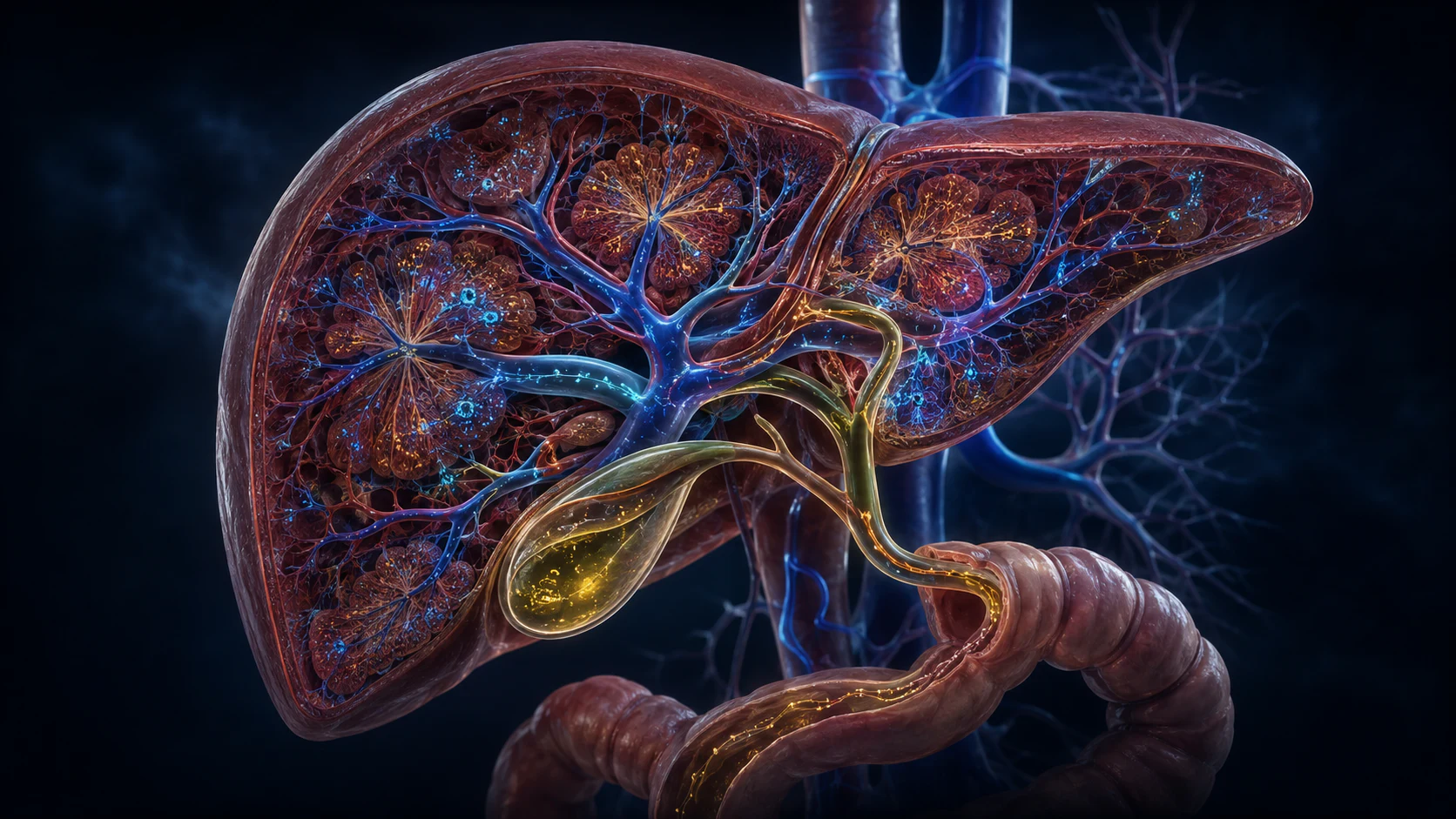
The gallbladder stores and concentrates bile made by the liver. After a meal, especially one containing fat or protein, the intestine releases cholecystokinin and neural signals help the gallbladder contract. Bile then moves through the cystic and common bile ducts into the duodenum. Bile salts disperse dietary fat into smaller droplets and help form micelles, which support absorption of fats and fat-soluble vitamins. The gallbladder improves the timing and concentration of bile delivery, but it is not essential: after removal, liver-made bile can still flow directly into the intestine.
The liver does not wait for lunch to make bile. It secretes the fluid throughout the day, while a small pear-shaped sac beneath it stores part of that flow between meals.
When fat and protein enter the first part of the small intestine, digestive signals make the gallbladder contract and a muscular valve relax. The result is a concentrated pulse of bile arriving when it is most useful.
The liver makes bile; the gallbladder manages delivery
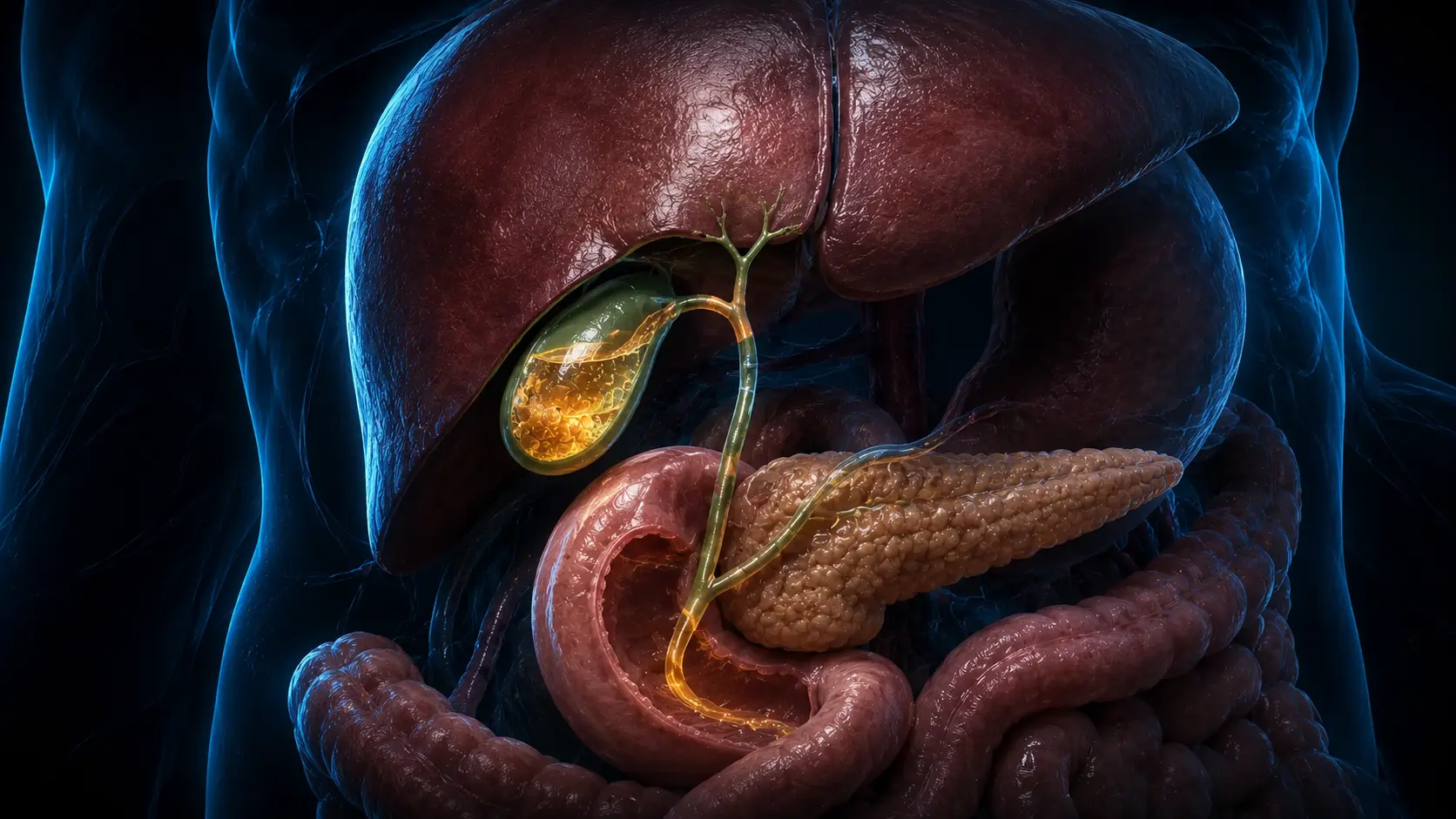
Liver cells secrete bile into microscopic canaliculi that join progressively larger ducts. Some bile continues toward the intestine, while some travels through the cystic duct into the gallbladder when the outlet toward the duodenum is relatively closed.
The gallbladder lining absorbs water and electrolytes, concentrating bile salts, phospholipids, cholesterol and bilirubin. This does not create new digestive enzymes. It makes a smaller stored volume carry a larger amount of bile solute.
The cystic duct joins the common hepatic duct to form the common bile duct. Near the intestine, this route often meets the pancreatic duct, placing bile and pancreatic secretions at the same digestive junction.
A meal triggers a coordinated squeeze
Fatty acids and amino acids reaching the duodenum stimulate intestinal cells to release cholecystokinin, commonly shortened to CCK. CCK promotes gallbladder contraction and helps relax the sphincter of Oddi, the muscular gateway near the duct opening.
Vagal nerve activity and other gut hormones contribute, so the response is a coordinated digestive program rather than one isolated switch. The gallbladder may begin responding before nutrients have traveled far into the intestine.
Its contraction is not all-or-none. Meal composition, fasting duration and individual physiology affect how much bile is released and how quickly the organ refills.
Bile helps fat mix with watery digestive fluid
Dietary fat naturally gathers into large droplets in the watery intestine. Bile salts have water-friendly and fat-friendly surfaces, allowing them to coat and disperse those droplets. That increases the surface available to pancreatic lipase.
Products of fat digestion then join bile salts in tiny structures called mixed micelles. Micelles bring fatty acids, cholesterol and fat-soluble vitamins A, D, E and K close to the intestinal surface for absorption.
Most bile acids are reclaimed in the terminal ileum and returned to the liver through portal blood. This enterohepatic circulation reuses the same molecular pool many times instead of discarding it after one meal.
Digestion continues without a gallbladder
After gallbladder removal, the liver still makes bile and ducts still carry it to the intestine. What changes is storage: bile flows more continuously and is less concentrated than a gallbladder-timed pulse.
Many people digest an ordinary diet after recovery, although individual symptoms and medical instructions vary. That clinical fact clarifies the organ's role without making it useless—the gallbladder improves delivery efficiency but does not create the bile itself.
Persistent upper-right abdominal pain, fever, vomiting or jaundice needs medical evaluation because several organs share this region. Normal anatomy cannot diagnose a gallstone or blocked duct from symptoms alone.
How bile reaches a meal
The liver secretes bile continuously. Between meals, part of the flow enters the gallbladder, where water is absorbed and bile becomes concentrated.
Nutrients in the duodenum trigger hormonal and neural signals. The gallbladder contracts, the duct outlet relaxes and bile joins pancreatic fluid in the intestine.
NIDDK maps how the gallbladder and bile ducts release liver-made bile.
Why it matters
Separating production from storage prevents the common misconception that removing the gallbladder stops bile production.
The duct map also explains why liver, gallbladder, pancreas and duodenum function as one connected digestive neighborhood.
The gallbladder turns steady bile production into a meal-timed pulse.
It stores and concentrates liver-made bile, then contracts so bile salts can support fat digestion and absorption in the small intestine.
Research behind this story
We link to the primary study or an authoritative indexed review wherever possible. Caveats in the text reflect the limits of that evidence.
01