Quick answer
The pancreas has two main functions. Its exocrine cells make digestive enzymes for proteins, fats and carbohydrates plus bicarbonate that helps neutralize stomach acid; ducts carry this fluid into the duodenum. Its endocrine islets release hormones into blood. Beta cells make insulin, alpha cells make glucagon, and other islet cells release hormones including somatostatin and pancreatic polypeptide. Together these signals help keep circulating fuel within a usable range between meals and after eating. The two compartments interact, but digestive enzymes and insulin travel through different routes.
Behind the stomach lies a gland that works in two directions. Most of its cells send fluid through ducts toward the small intestine. Scattered clusters called islets release hormones into capillaries instead.
Those exocrine and endocrine systems are often taught separately—digestion on one page, blood glucose on another—but they share one organ, blood supply and local signals. The pancreas is best understood as a coordinated gland rather than an insulin container.
Its position connects stomach, intestine, liver and spleen
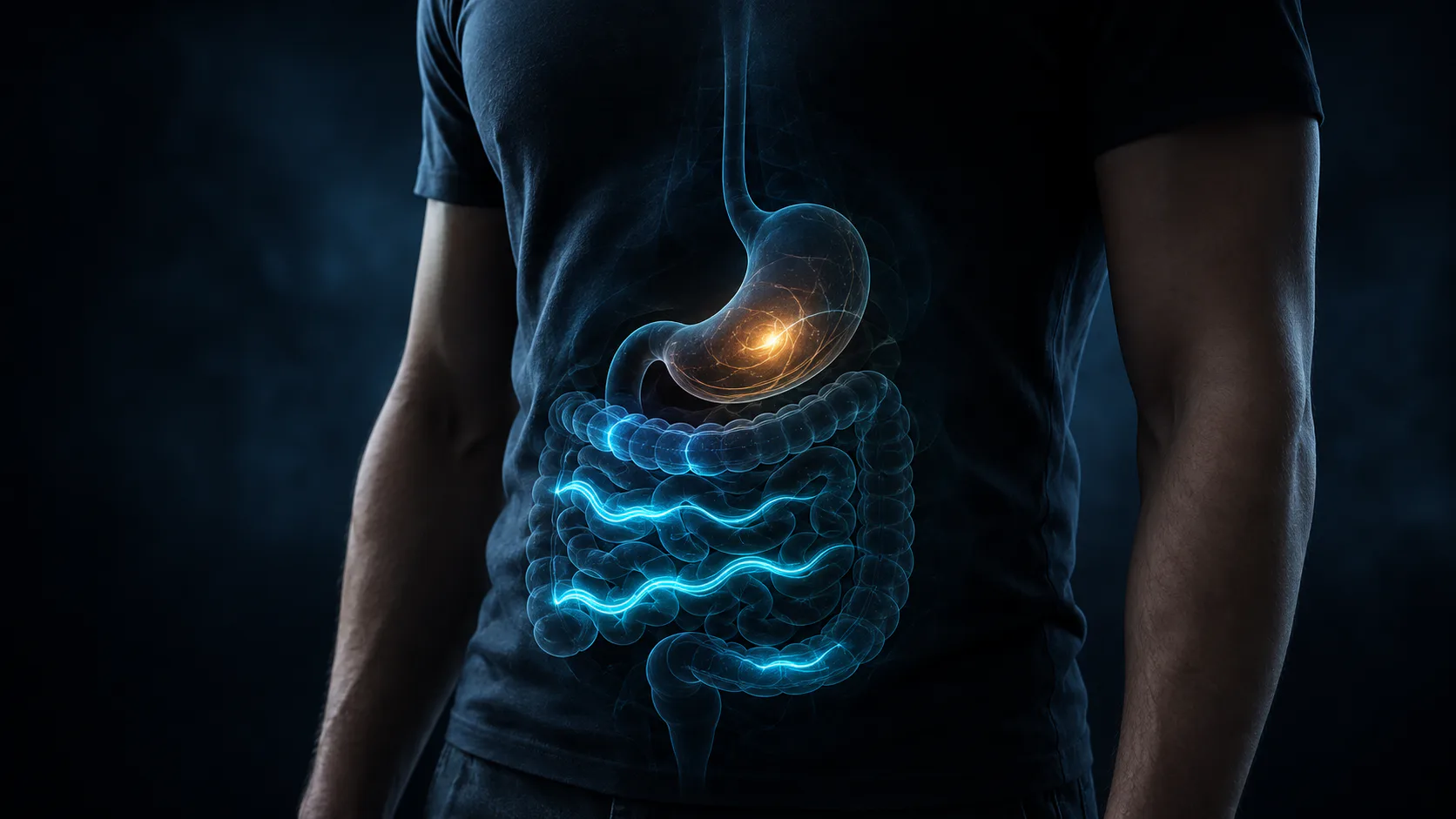
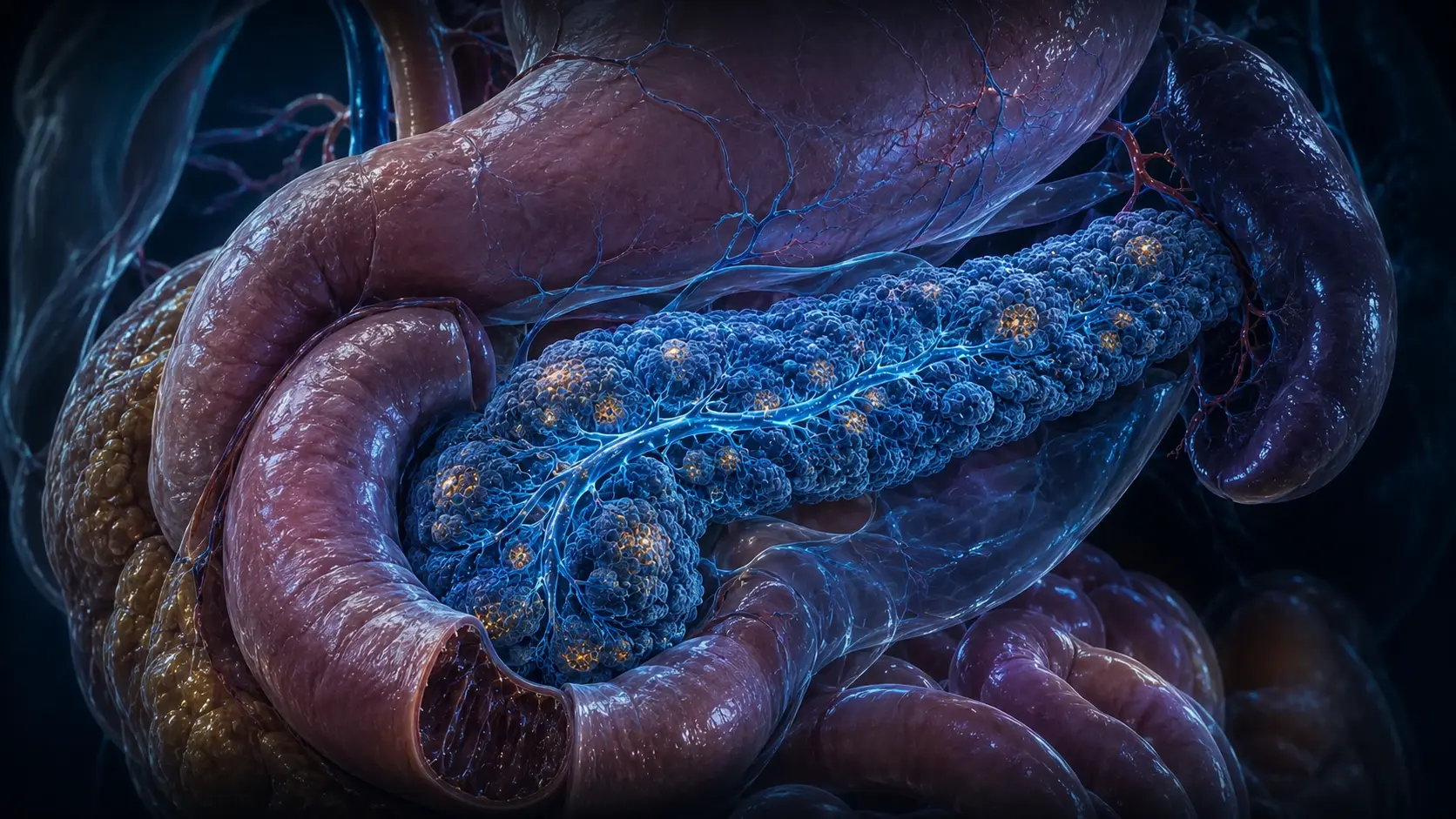
The pancreatic head sits in the curve of the duodenum, the body crosses the upper abdomen and the tail approaches the spleen. A branching duct system joins a main pancreatic duct that usually empties near the bile duct.
That placement lets secretions arrive just after acidic stomach contents enter the small intestine. It also puts the gland close to major vessels supplying the liver, intestine and spleen, relationships that matter clinically and surgically.
Food does not pass through the pancreas. The organ changes a meal by manufacturing fluid and delivering it into the digestive route from the side.
Acinar and duct cells build digestive fluid
Acinar cells produce enzyme precursors and enzymes including proteases, lipase and amylase. Many protein-digesting enzymes leave as inactive precursors, reducing the chance that they digest the cells that made them.
Duct cells add bicarbonate-rich fluid. In the duodenum, bicarbonate raises the pH of acidic chyme, protecting the lining and creating conditions in which pancreatic and intestinal enzymes can work.
Neural and hormonal signals coordinate secretion with a meal. Secretin strongly promotes bicarbonate, while cholecystokinin and vagal pathways help stimulate enzyme release. The established control system overlaps rather than operating as isolated switches.
Tiny islets regulate fuel through the bloodstream
Islets make up only a small fraction of pancreatic mass. Beta cells respond to rising glucose and other meal signals by releasing insulin, which supports glucose uptake and storage while restraining liver glucose output.
Alpha-cell glucagon becomes especially important when glucose is falling, signaling the liver to release or make fuel. Delta-cell somatostatin modifies neighboring secretion, and pancreatic-polypeptide cells add further regulation.
Insulin lowers blood glucose and glucagon tends to raise it, but they are not a simple on–off pair. Amino acids, nerves, gut hormones, exercise and the timing of a meal all change the response.
The two pancreatic systems influence each other
Islets are richly supplied with blood, exposing nearby exocrine tissue to high local hormone concentrations. Acinar, duct and islet cells exchange signals—the basis of the islet–acinar axis now being studied in greater detail.
Disease in one compartment can therefore coexist with changes in the other, but the relationship is not identical in every condition. Diabetes does not mean digestive enzymes have automatically stopped, and pancreatic pain cannot be diagnosed from organ function alone.
Severe upper-abdominal pain, persistent vomiting, jaundice or unexplained weight loss needs medical evaluation. This anatomy explains normal function; it cannot identify pancreatitis, diabetes or cancer in an individual.
A meal activates two output routes
Acid and nutrients reaching the intestine trigger neural and hormonal signals. Acinar and duct cells send enzyme- and bicarbonate-rich fluid through pancreatic ducts.
At the same time, islet cells sense circulating nutrients and release hormones into capillaries, coordinating storage, use and release of fuel.
NIDDK summarizes the gland's digestive and insulin-producing functions.
Why it matters
The two-route model prevents digestive enzymes and insulin from being treated as one secretion.
It also connects pancreatic anatomy to the stomach, intestine, liver and bloodstream rather than presenting an isolated organ.
The pancreas links a meal to digestion and metabolism.
Ducts deliver enzymes and bicarbonate to the intestine; islets release hormones into blood, with local crosstalk between the systems.
Research behind this story
We link to the primary study or an authoritative indexed review wherever possible. Caveats in the text reflect the limits of that evidence.
01