Quick answer
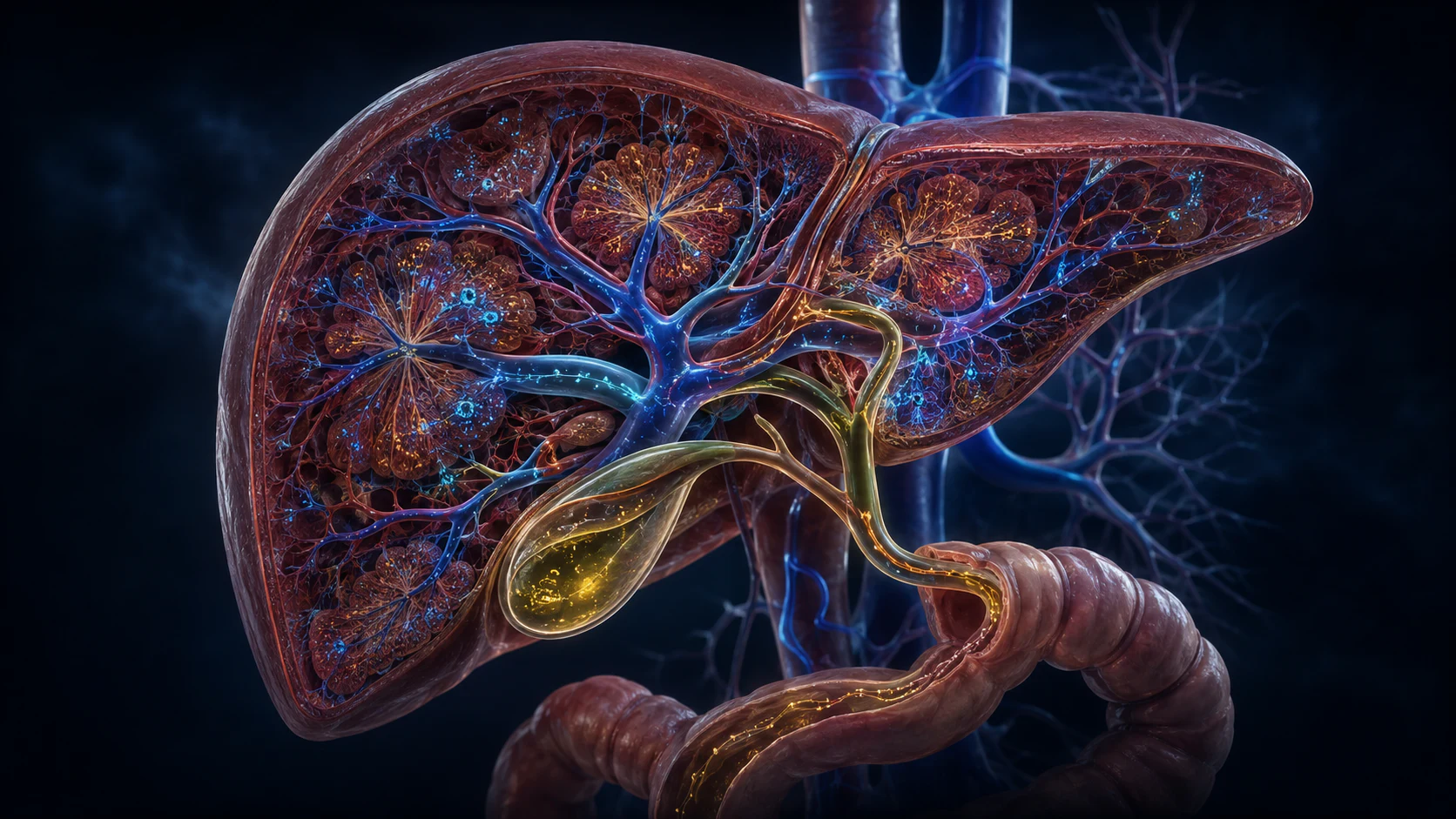
The liver is a metabolic control center. It receives nutrient-rich blood from the digestive tract through the portal vein and oxygenated blood through the hepatic artery. Hepatocytes regulate glucose, process fats and amino acids, make bile, convert toxic ammonia into urea, transform many drugs and hormones, and package or excrete waste. The liver also produces albumin and many clotting proteins, stores glycogen, iron and vitamins, and works with immune cells that monitor portal blood. These jobs overlap across microscopic lobules, so liver injury can affect energy balance, digestion, bleeding, fluid distribution and waste removal at the same time.
Almost everything absorbed from a meal enters a circulation that leads toward the liver. There, nutrients are stored, rebuilt, released or redirected. At the same time, liver cells produce bile, manage nitrogen waste, synthesize blood proteins and modify many medicines.
Calling this work detoxification is not exactly wrong, but it is too vague. The liver does not strain blood like a kitchen filter, and no drink can simply rinse it clean. Its power comes from living cells running selective chemical reactions while blood flows through a precisely organized tissue.
The liver sits where digestion meets circulation
Most liver blood flow arrives through the portal vein after passing through the stomach, intestines, pancreas and spleen. This blood may be relatively low in oxygen but rich in recently absorbed nutrients and molecules from the gut. The hepatic artery supplies additional oxygenated blood.
The two supplies mix in low-pressure channels called sinusoids. Hepatocytes line the route and exchange molecules with the passing plasma. Resident macrophages called Kupffer cells sample particles and microbes that arrive from the intestinal circulation.
This position lets the liver inspect and process absorbed material before much of it reaches the wider circulation. It also exposes liver tissue to infections, alcohol, medicines and metabolic overload, which is why many different problems can injure the same organ.
It turns meals into a stable fuel supply
After a meal, the liver can remove glucose from portal blood and store it as glycogen. Between meals, it can break glycogen down and make new glucose from substrates such as lactate and certain amino acids. Hormones including insulin and glucagon help coordinate those shifts.
Liver cells also process fatty acids, make triglycerides and cholesterol, package lipids into lipoproteins and generate ketone bodies during longer fasting. Amino-acid metabolism produces ammonia, which is toxic at high levels; the liver converts much of it into urea for the kidneys to excrete.
These pathways are responsive rather than unlimited. Chronic energy excess can drive fat accumulation in liver cells, while severe liver dysfunction can make blood-glucose and protein balance difficult to maintain.
Bile and blood proteins leave by different routes
Hepatocytes make bile acids from cholesterol and secrete them into tiny canaliculi. Bile travels through ducts, may be stored and concentrated in the gallbladder, then enters the small intestine where bile salts help fats and fat-soluble vitamins become absorbable.
The liver also processes bilirubin, a pigment generated during red-blood-cell turnover. It makes bilirubin water-compatible and sends it into bile. Blocked bile flow or impaired processing can contribute to jaundice, though bilirubin changes have many possible causes.
Proteins such as albumin and many clotting factors are released into blood instead. Albumin helps maintain fluid distribution and carries numerous molecules. Reduced synthesis in advanced liver disease can therefore contribute to swelling and abnormal bleeding.
Detoxification means transformation, not a cleanse
Enzyme systems alter many drugs, hormones and foreign chemicals. Some reactions make a compound easier to eliminate; others activate a medicine or create a reactive intermediate that must be handled by another pathway. Dose, genetics, other drugs and liver health all influence the result.
The liver also changes substances produced inside the body. It inactivates some hormones, converts ammonia to urea and routes cholesterol or bilirubin into bile. The kidneys, lungs, gut and immune system share the broader work of handling waste.
No routine juice or supplement has been shown to flush these pathways clean. Some concentrated herbal products can injure the liver or interact with medicines. Persistent jaundice, dark urine, pale stool, abdominal swelling, confusion, vomiting blood or severe right-upper-abdominal pain needs medical attention rather than a detox product.
From portal blood to organized chemical decisions
Portal and arterial blood flow through liver sinusoids. Hepatocytes take up nutrients and chemicals, then use enzymes to store, rebuild, transform or release them.
Useful products enter blood; bile-bound products enter canaliculi and ducts. Immune cells monitor the flow while the lobule maintains direction between blood and bile.
NCBI's liver physiology reference summarizes its roles in metabolism, bile production, protein synthesis and chemical transformation.
NIDDK describes the liver as central to processing and distributing nutrients.
Why it matters
The liver connects digestion to every tissue by deciding how absorbed material enters the body's shared circulation.
Its many roles explain why liver disease can appear as fatigue, jaundice, swelling, confusion or bleeding rather than one liver-specific symptom.
Your liver is a living chemical router, not a disposable filter.
It stabilizes fuel, builds proteins and bile, transforms chemicals and directs waste through tightly organized cellular pathways.
Research behind this story
We link to the primary study or an authoritative indexed review wherever possible. Caveats in the text reflect the limits of that evidence.
01