Quick answer
The thyroid is an endocrine gland that makes the iodine-containing hormones T4 and T3. These hormones enter cells throughout the body and alter gene activity, helping regulate resting energy use, heat production, heart function, digestion, growth and brain development. The hypothalamus releases TRH, the pituitary releases TSH and TSH stimulates thyroid follicles. Rising thyroid hormone feeds back to reduce that drive. The gland secretes mostly T4; enzymes in tissues convert some T4 into active T3 or inactive metabolites. Thyroid hormone sets metabolic conditions rather than acting as a simple on/off switch, and symptoms alone cannot show whether levels are abnormal.
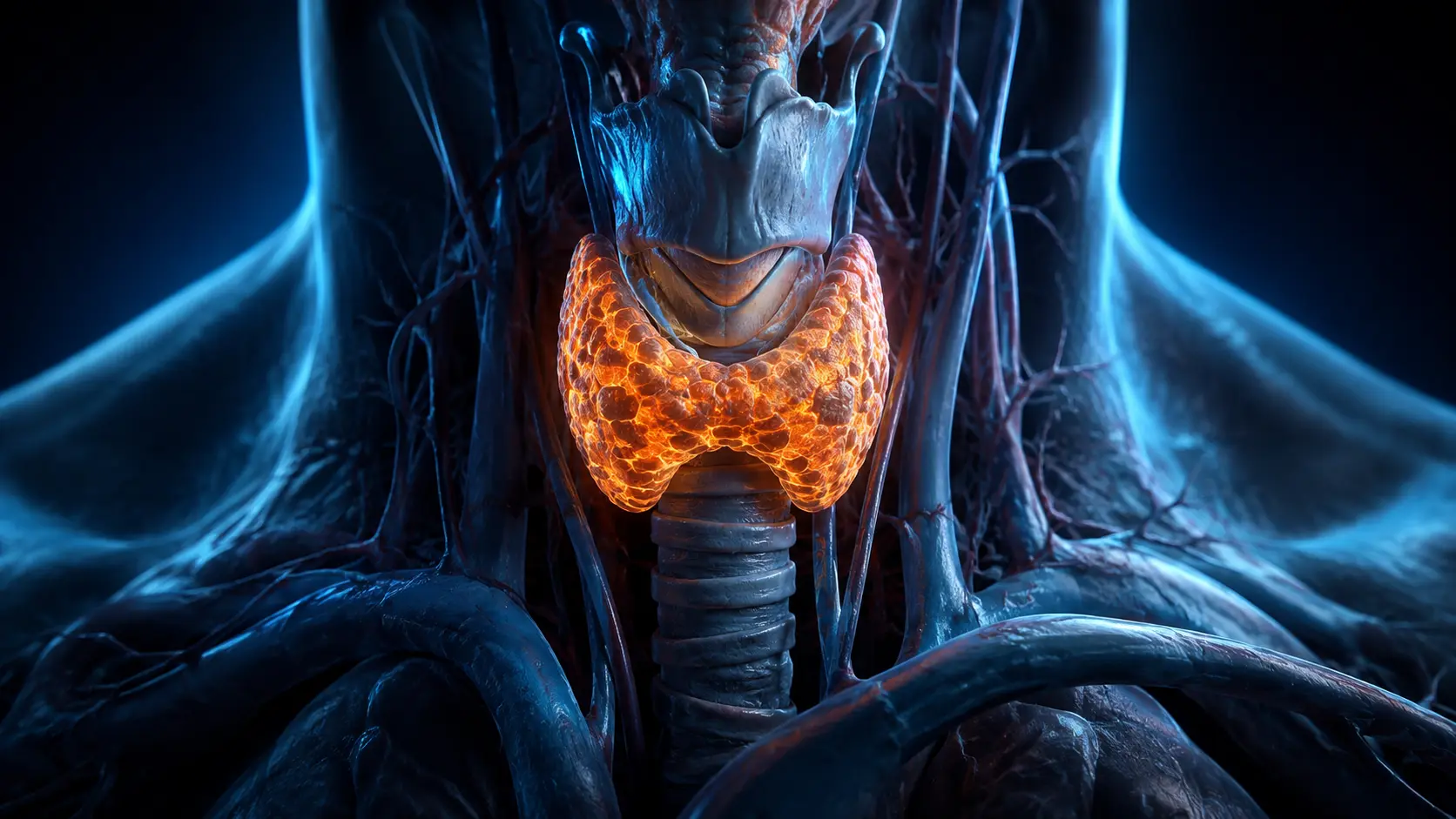
Two lobes of tissue sit low in the front of the neck, joined across the windpipe by a narrow bridge. Their output reaches almost every organ, yet the gland does not directly command a single movement or digest a meal.
The thyroid works more like a pace-setting part of a larger control loop. It builds iodine-containing hormones, stores their precursor inside microscopic follicles and releases mostly thyroxine, or T4. Tissues then convert part of that supply into the more active signal T3.
Follicles build hormone around an iodine scaffold
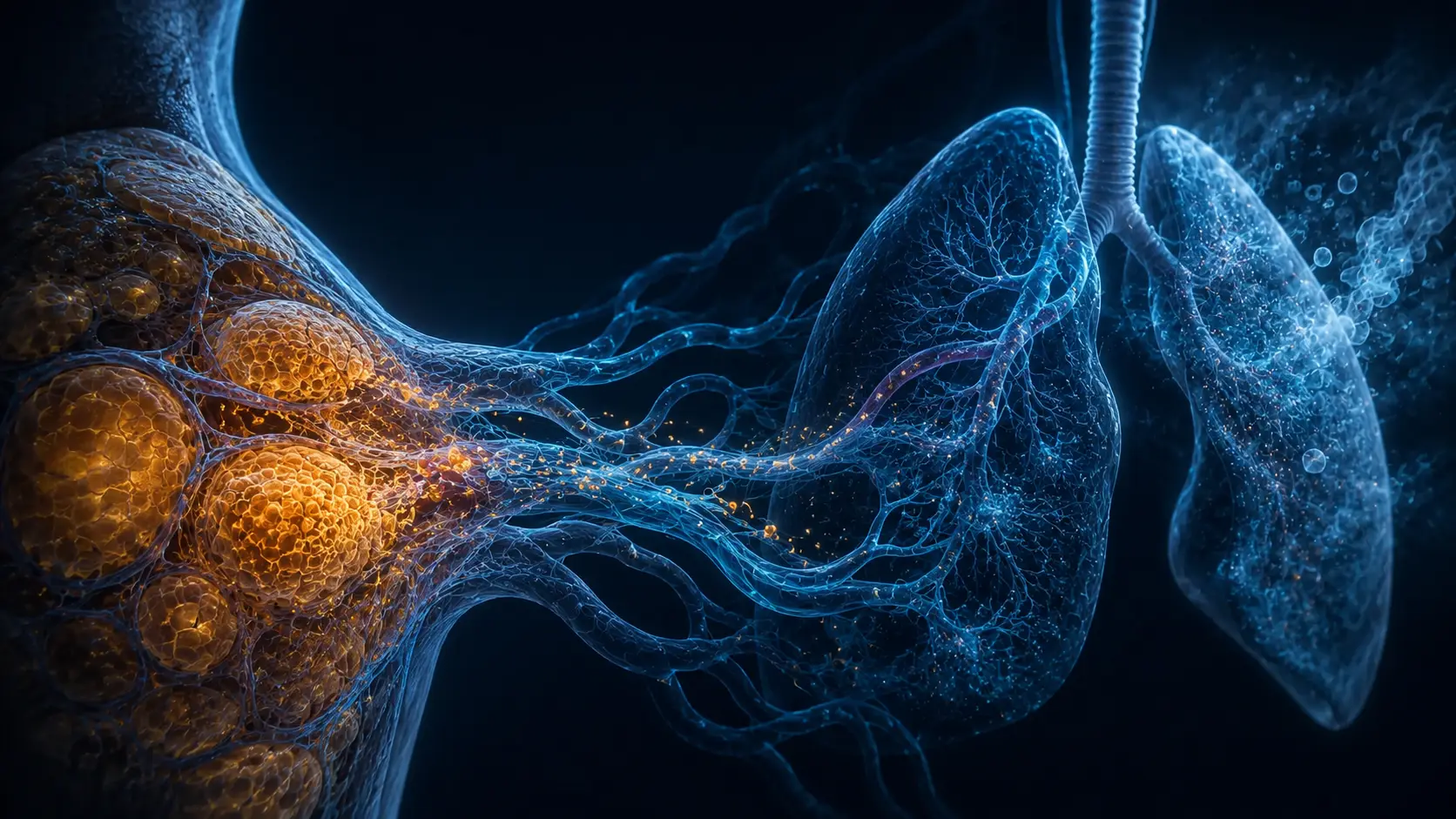
The gland is packed with spherical follicles. Each is lined by follicular cells and filled with colloid containing thyroglobulin, a large protein that serves as both scaffold and storage material. This extracellular reserve distinguishes thyroid hormone production from the way many peptide hormones are stored inside secretory granules.
Follicular cells pull iodide from blood through a sodium–iodide symporter. Thyroid peroxidase helps attach iodine to tyrosines in thyroglobulin and couple them into T4 and T3. When stimulated, the cell retrieves iodinated thyroglobulin, digests it and releases hormone into nearby capillaries.
Iodine is essential, but more is not automatically better. Both deficiency and excess can disrupt thyroid physiology in susceptible people, which is why supplementation should not be treated as a universal metabolism shortcut.
A three-level feedback loop controls output
The hypothalamus releases thyrotropin-releasing hormone, or TRH. That signal prompts the anterior pituitary to secrete thyroid-stimulating hormone, or TSH. TSH binds thyroid cells and supports iodine uptake, hormone synthesis, release and gland growth.
Circulating free T4 and T3 feed back on the pituitary and hypothalamus. When hormone action is sufficient, TSH drive generally falls; when it is inadequate, TSH often rises. This is why TSH is commonly the first blood test used to evaluate the system, followed by free T4 and other tests when context requires them.
The pattern is not a perfect thermostat. Illness, pregnancy, medications and pituitary or hypothalamic disorders can change interpretation. A neck lump or enlarged gland also says little by itself about hormone output; structure and function are related but not interchangeable.
Most active T3 is made outside the thyroid
The thyroid releases predominantly T4 and a smaller amount of T3. Deiodinase enzymes remove specific iodine atoms from T4. One route creates active T3; another creates reverse T3, an inactive metabolite. Liver, kidney, brain, muscle and other tissues contribute differently to this local control.
T3 enters the nucleus and binds thyroid-hormone receptors that regulate gene transcription. The response unfolds over hours to days and depends on tissue, developmental stage and local hormone handling. That is more nuanced than the popular claim that the gland simply 'controls weight.'
Thyroid hormone influences basal energy expenditure and heat production, but body weight is also shaped by appetite, activity, body composition, medicines and disease. A normal fluctuation in weight or fatigue cannot diagnose thyroid dysfunction without clinical assessment and laboratory evidence.
Too little and too much affect many systems
Insufficient hormone can slow heart rate and gut movement, reduce heat production and contribute to fatigue, cold intolerance or dry skin. Excess hormone can increase heat intolerance, tremor, heart rate and energy expenditure. Neither list is specific: many unrelated conditions can produce the same symptoms.
During fetal life and childhood, appropriate thyroid signaling is especially important for growth and nervous-system development. In adults, the same hormones continue to coordinate metabolism and cardiovascular, skeletal and digestive function.
Established physiology explains the core feedback loop well. Researchers are still refining how local deiodinase activity, transporters and receptor subtypes create tissue-specific responses that a single blood value cannot fully describe.
From dietary iodine to a body-wide signal
Follicular cells concentrate iodide and attach it to thyroglobulin inside colloid. TSH promotes retrieval and release of mostly T4 plus some T3.
Blood transports the hormones, tissues convert T4 according to local needs, and nuclear receptors adjust gene expression. Rising hormone then reduces upstream TRH and TSH drive.
Endotext explains that the gland produces mainly T4 while most circulating T3 is generated by tissue deiodination.
Why it matters
The thyroid connects microscopic iodine chemistry to body-wide energy use and development.
Understanding the feedback loop also explains why diagnosis depends on patterns of TSH and thyroid hormone, not a symptom checklist or a supplement claim.
The thyroid sets conditions; it does not run metabolism alone.
Stored T4 and T3 move through a feedback-controlled endocrine loop, and tissues decide how much active signal to generate locally.
Research behind this story
We link to the primary study or an authoritative indexed review wherever possible. Caveats in the text reflect the limits of that evidence.
01