Quick answer
Hair turns gray when pigment-producing melanocytes in the follicle decline or stop supplying melanin to a growing hair shaft. Melanocyte stem cells normally replenish them across hair cycles, but aging, inherited timing and cellular stress can deplete or misdirect that reserve. Individual hairs become gray or white as new unpigmented sections grow; existing hair does not usually lose all its pigment along its length at once.
A first gray hair often looks as if color drained from a strand overnight. In most cases, the change began where the strand was made. The visible hair above the skin is dead keratin and cannot decide to stop producing pigment.
Color comes from melanocytes working inside the hair follicle during the growth phase. Those cells are replenished by melanocyte stem cells. With age and genetics, the pigment system becomes less reliable, so new segments emerge with less melanin or none at all.
Color is installed during growth
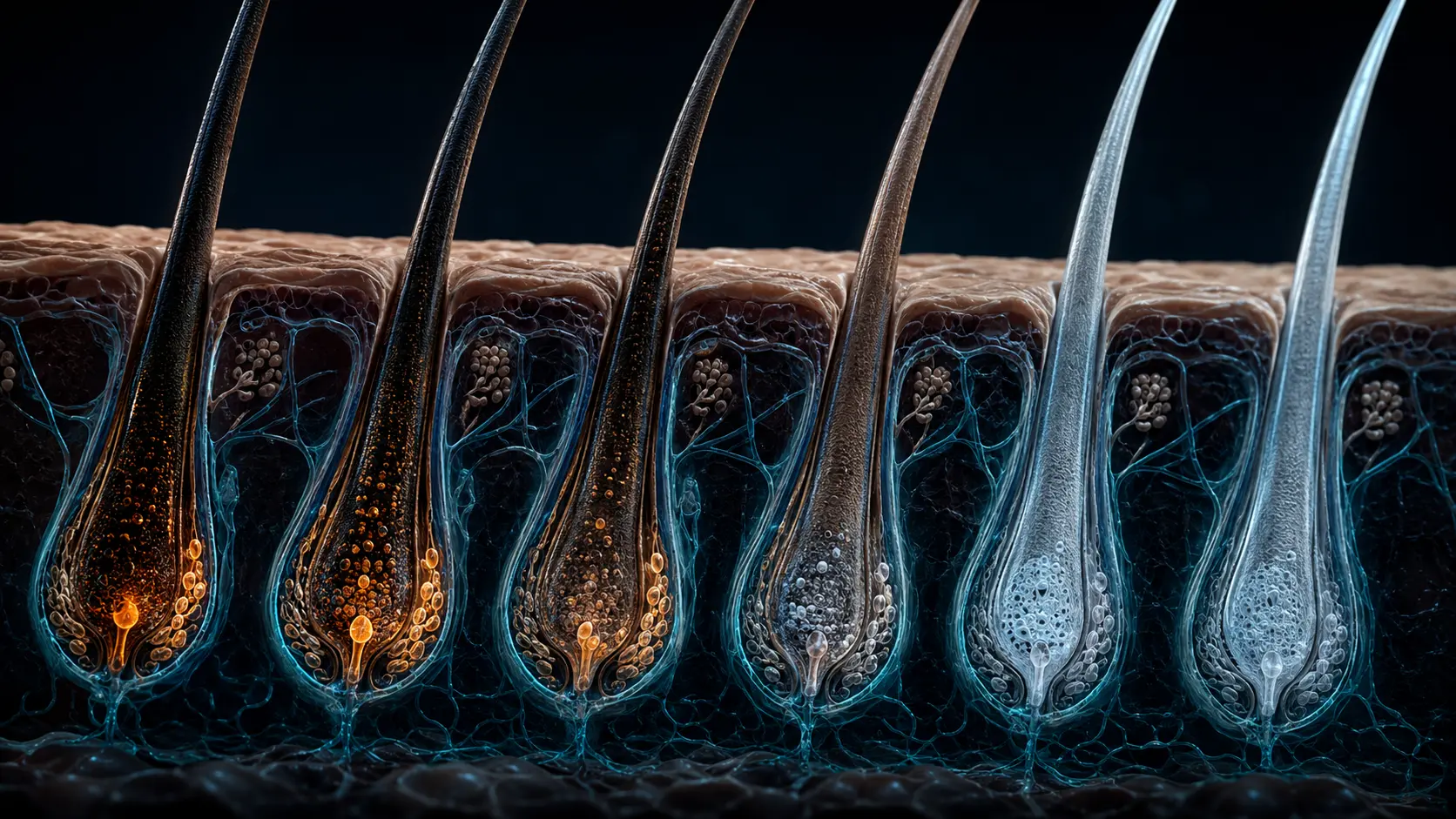
A follicle cycles through growth, transition and rest. During active growth, matrix cells build the hair shaft while neighboring melanocytes transfer melanin granules into those cells. The type, amount and distribution of melanin help determine whether hair looks black, brown, blond or red.
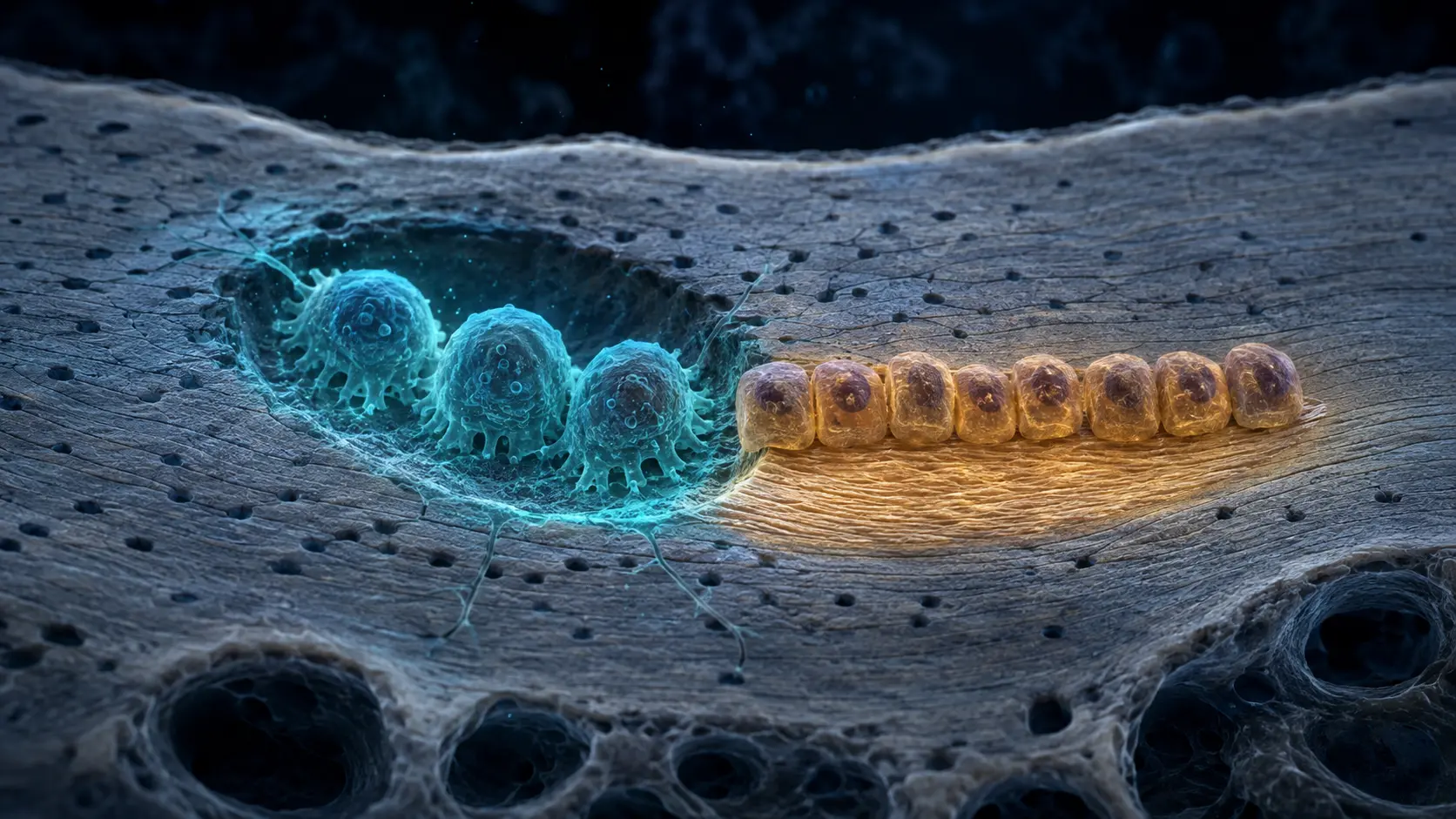
Melanocyte stem cells occupy a specialized follicle niche. At the start of a new growth cycle, some activate and generate pigment-producing descendants. If the stem-cell pool is depleted, becomes trapped in the wrong niche or fails to mature, the next hair can emerge with less pigment.
An unpigmented strand often looks white because it reflects and scatters light. A mixture of pigmented and unpigmented hairs looks gray from a distance. That is why an entire head can appear to shift color even though each strand follows its own follicle cycle.
Why genes set much of the timetable
The age of onset clusters strongly in families and varies across populations. There is no universal birthday when graying becomes normal. Follicles also change independently, producing the familiar salt-and-pepper pattern before pigment loss becomes widespread.
Oxidative stress, DNA damage and changes in the stem-cell niche all appear in research models. A widely discussed mouse study showed that intense stress signaling through sympathetic nerves could rapidly deplete melanocyte stem cells. It demonstrated a biological route by which stress can accelerate graying in mice, not a promise that removing stress will reverse established human gray hair.
Some nutritional deficiencies, autoimmune conditions and medications can be associated with premature pigment change, but most age-related graying is not evidence of a missing supplement. Sudden or unusually early changes should be considered with the person's wider health context rather than treated from appearance alone.
From stem-cell change to silver strand
A new growth cycle begins, but fewer functional melanocytes reach the pigment unit. Less melanin is transferred into the forming keratin cells. The shaft continues to grow normally while its optical appearance changes.
Once the pale segment emerges from the scalp, the boundary between pigmented and unpigmented growth can sometimes be seen along a single strand. The timeline is recorded millimeter by millimeter.
Current reviews identify melanocyte stem-cell depletion and dysfunction as central to graying.
A mouse study demonstrated how sympathetic stress signaling can deplete pigment stem cells.
Try it yourself
Look at a naturally shed hair.
- Use a naturally shed strand rather than pulling one out.
- Compare color near the root end and along the shaft under steady light.
- Remember that dye, sun exposure and weathering can also change the visible strand.
Do not take supplements or treatments for graying without a genuine medical indication. Discuss sudden changes or other symptoms with a healthcare professional.
Why it matters
Hair makes cellular aging visible because each follicle repeatedly rebuilds a structure in public view. The strand becomes a record of what the follicle was doing as it grew.
The science also corrects exaggerated claims. Stress biology can affect pigment stem cells, but one difficult week does not reliably turn an adult head white overnight.
Gray hair begins as a pigment decision inside the follicle.
As melanocyte stem-cell systems falter, new hair receives less melanin. The silver strand is the visible output of that cellular change.
Research behind this story
We link to the primary study or an authoritative indexed review wherever possible. Caveats in the text reflect the limits of that evidence.
01