Quick answer
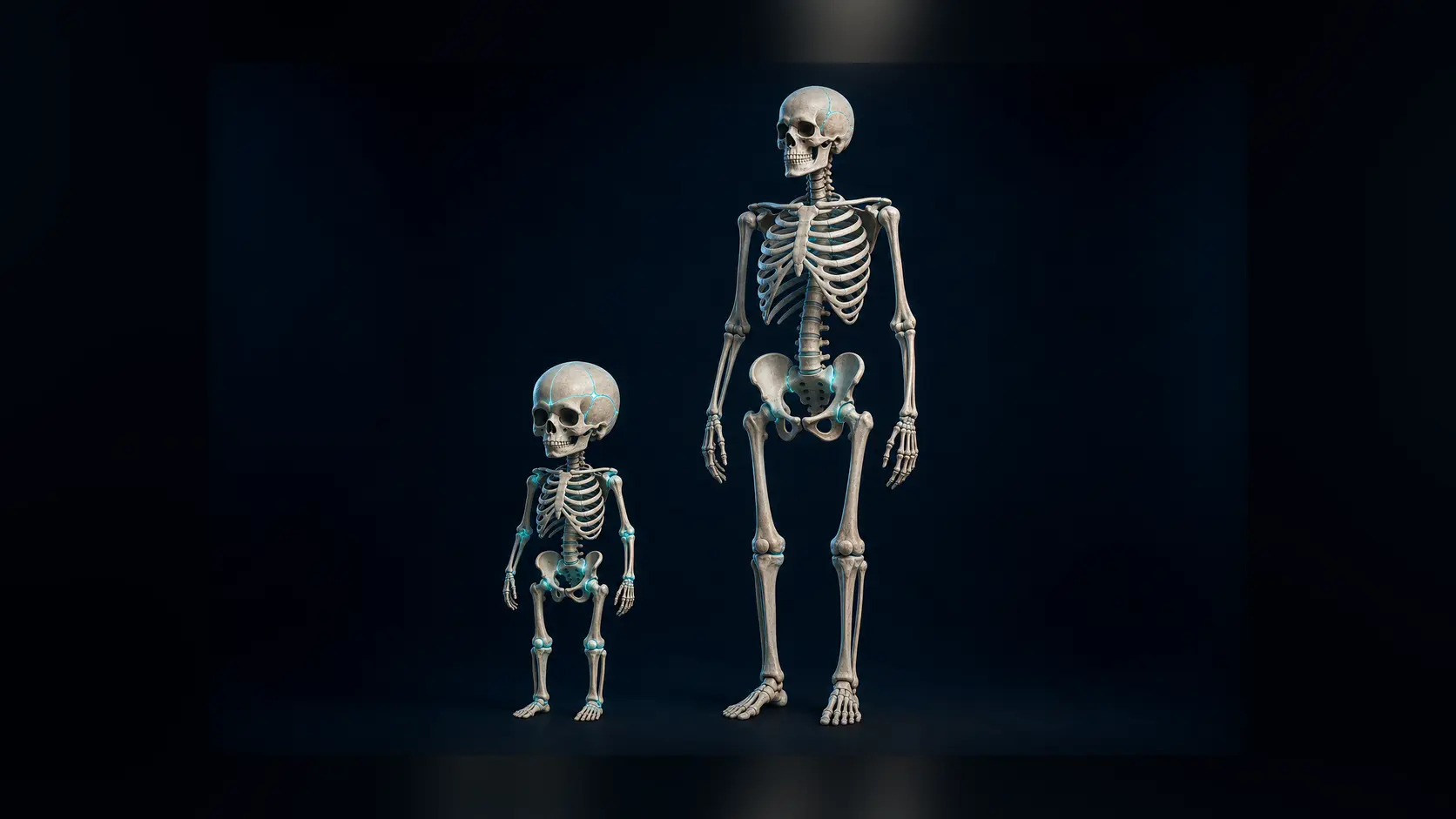
Your skeleton does not disappear and reappear on a seven-year schedule. Bone is remodeled continuously in many small sites. Osteoclasts remove packets of old or damaged mineralized tissue, and osteoblasts refill the space with new matrix that later hardens. Turnover rates differ by bone type, location, age and health, so some material is renewed quickly while other regions persist much longer.
A skeleton feels like the fixed part of a changing body. Yet the tissue inside it is busy: cells sense strain, repair microscopic damage, release or store minerals and replace selected patches of old matrix.
That truth is often compressed into a claim that you get a completely new skeleton every seven or ten years. The real process is more interesting and less tidy. Renewal happens locally, at different speeds, without erasing the architecture that carries your weight.
Bone is a mineralized living tissue
Bone combines a collagen-rich organic matrix with mineral crystals that provide stiffness. Osteocytes live inside the matrix and extend connections through tiny channels. They help sense mechanical conditions and communicate with cells on bone surfaces.
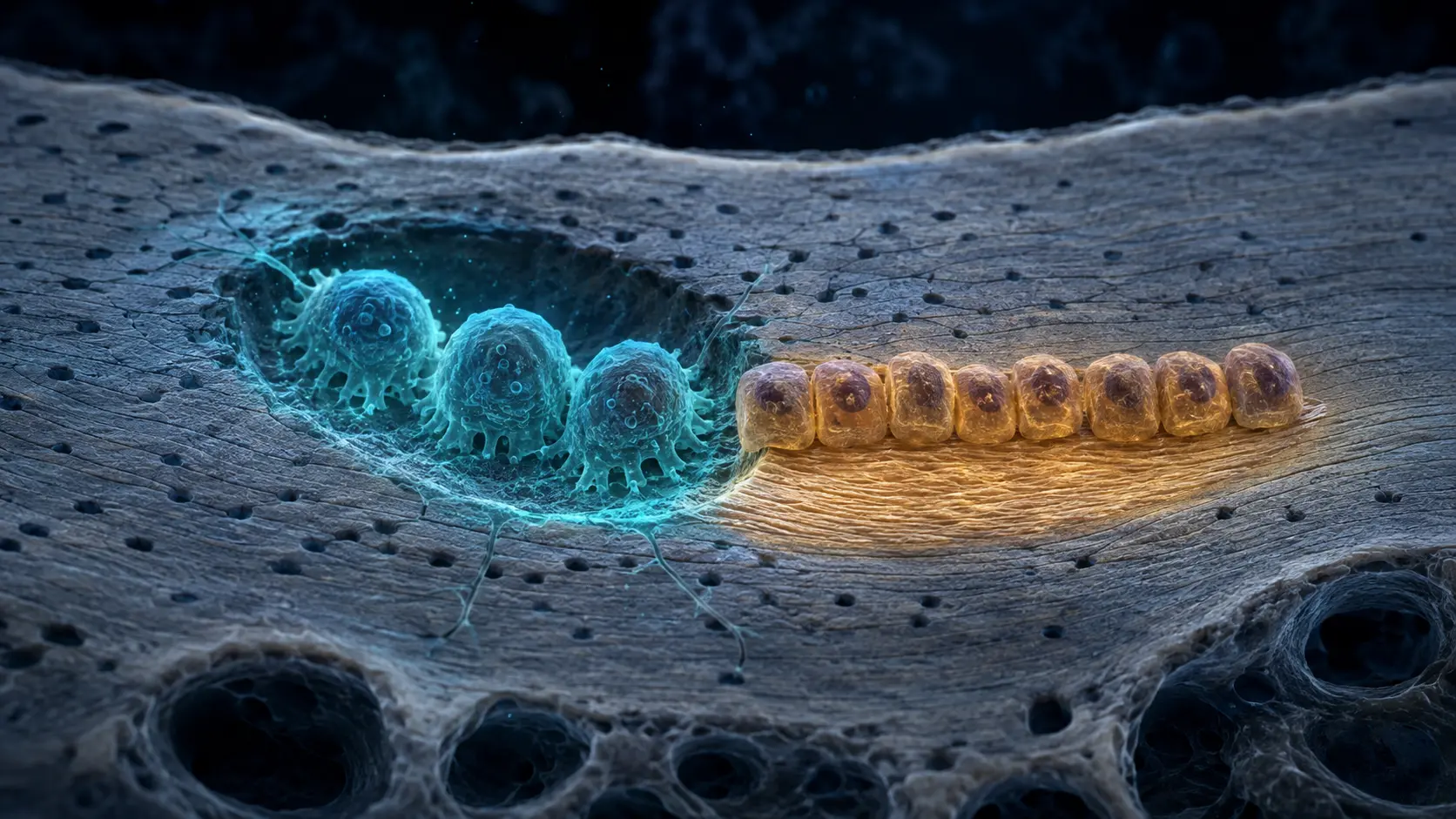
Osteoclasts are large cells specialized for resorption. They attach to a small region, acidify the sealed space and dissolve mineral while enzymes break down matrix. Osteoblast-lineage cells then prepare and deposit new osteoid, which gradually mineralizes.
The cells operate in coordinated groups often called bone multicellular units. A unit moves through phases of activation, resorption, reversal and formation. The result is replacement of a microscopic packet rather than demolition of an entire bone.
Remodeling solves several problems at once
Daily loading creates microscopic damage. Targeted remodeling helps remove compromised tissue before small defects accumulate. Mechanical signals also influence where bone is added or removed, allowing the skeleton to adapt to changing patterns of use.
Bone is also a mineral reservoir. Hormonal signals coordinate calcium and phosphate balance with the needs of nerves, muscles and other tissues. Remodeling participates in that exchange, although its control is more complex than simply releasing calcium whenever the diet is low.
Coupling is essential. If resorption persistently exceeds formation, bone mass and microarchitecture can deteriorate. If formation and resorption are both disrupted in other ways, bone may become unusually dense yet structurally abnormal.
Turnover is not uniform. Spongy trabecular bone exposes more surface and often remodels faster than dense cortical bone. Age, hormones, medications, activity, nutrition and disease all influence the balance. That variation makes a single whole-skeleton replacement date scientifically misleading.
How a microscopic repair cycle works
Signals recruit precursors and activate a remodeling site. Osteoclasts excavate a small cavity, the surface is prepared and osteoblasts refill it with fresh matrix. Mineralization continues after the osteoblasts have moved on or become embedded as osteocytes.
The cycle preserves structural continuity because neighboring bone remains in place. Your skeleton can renew selected material while still supporting every step you take.
NCBI physiology references describe remodeling as the coordinated replacement of old bone by osteoclast and osteoblast activity.
Detailed histology reviews organize the process into activation, resorption, reversal and formation.
Try it yourself
Compare use, not bone hardness.
- Think of one movement you repeat often, such as walking, lifting or playing an instrument.
- Notice which muscles and joints repeatedly carry that load.
- Remember that bone adaptation occurs over weeks and months; it cannot be judged by pressing or tapping the body.
Do not use pain, impact or extreme exercise to test bone strength. Bone health cannot be assessed with a home experiment.
Why it matters
Remodeling explains how a hard material stays responsive across decades. It supports repair and adaptation, but it also creates vulnerability when formation and resorption lose their balance.
The process is one reason bone health depends on the whole system: mechanical loading, hormones, nutrition, age and disease interact rather than acting as isolated switches.
Your skeleton renews itself by patches, not by reset.
Osteoclasts and osteoblasts replace microscopic regions on different schedules, preserving the structure while updating its material.
Research behind this story
We link to the primary study or an authoritative indexed review wherever possible. Caveats in the text reflect the limits of that evidence.
01