
Quick answer
We sweat mainly to control body temperature. Temperature sensors and central circuits, especially in the hypothalamic preoptic area, activate sympathetic nerves that release acetylcholine onto eccrine sweat glands. The glands secrete water and electrolytes onto the skin. When water evaporates, it absorbs heat and transfers that energy to the air, cooling the skin and blood near the surface. Sweat that drips away provides less cooling, and humid air slows evaporation. Emotional sweating uses overlapping control pathways and is often most noticeable on the palms, soles and underarms.
A bead of sweat looks like heat leaving the body, but the droplet itself is only the delivery system. If it rolls off or stays trapped beneath clothing, much of its cooling opportunity is lost. The decisive step is evaporation.
Humans are unusually capable sweaters. Millions of eccrine glands spread watery fluid across largely hairless skin, and a nervous control system adjusts their output with changes in internal temperature, skin temperature, exercise and environment. That system lets sustained activity continue in heat—but it has limits.
Evaporation, not wetness, removes the heat
Liquid water molecules are moving at different speeds. The fastest can escape from the skin into the air as vapor, carrying energy with them. The remaining skin and fluid have less thermal energy, so the surface cools. Blood flowing near that cooler surface can then carry less heat back toward the core.
This is especially important when air temperature approaches skin temperature. Radiation and convection become less effective, leaving evaporation as the principal route for shedding metabolic heat. Exercise generates large amounts of internal heat even on a mild day, so sweating can begin before the environment feels hot.
A visible stream of sweat is therefore not proof of efficient cooling. Wind and dry air favor evaporation. High humidity reduces the vapor-pressure gradient between wet skin and the environment, so sweat accumulates and drips while body temperature continues to rise.
Eccrine glands are coiled pumps controlled by nerves
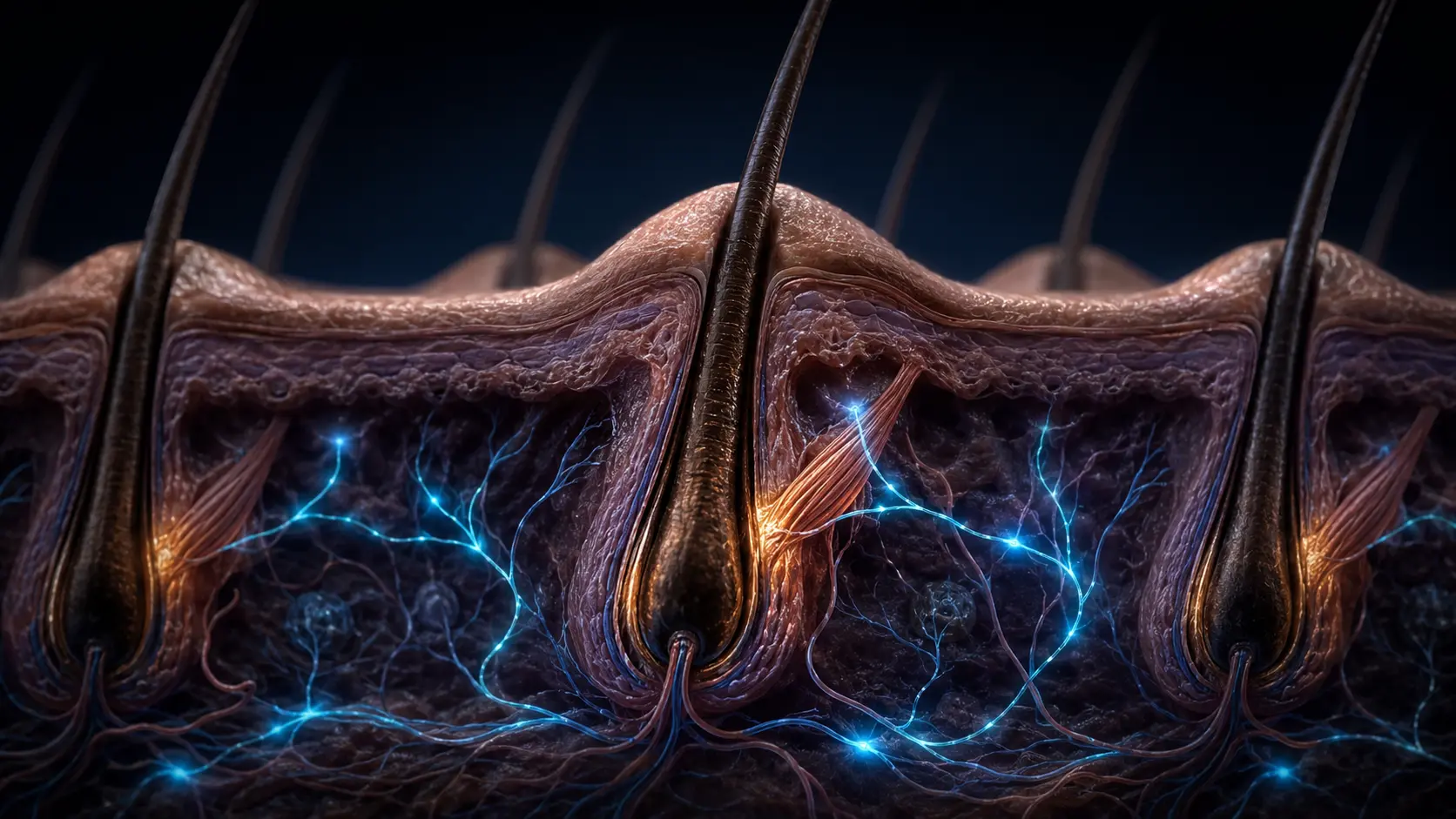
Eccrine glands sit as coiled secretory tubes in the dermis and open directly onto the skin through ducts. They are distributed across most of the body, with particularly high densities on the palms and soles. Apocrine glands in areas such as the armpits are biologically different and are not the main whole-body cooling system.
Thermal sweating is controlled through the sympathetic nervous system, but the final neurotransmitter is mainly acetylcholine rather than the noradrenaline commonly associated with sympathetic nerves. Acetylcholine binds muscarinic receptors on gland cells and drives fluid secretion.
The initial secretion contains water and ions. As it travels through the duct, some sodium and chloride are reabsorbed. The final salt concentration varies with sweat rate, acclimatization, diet and individual gland function, which is why one person's sweat can leave more visible salt than another's.
The brain integrates heat from the core and the skin
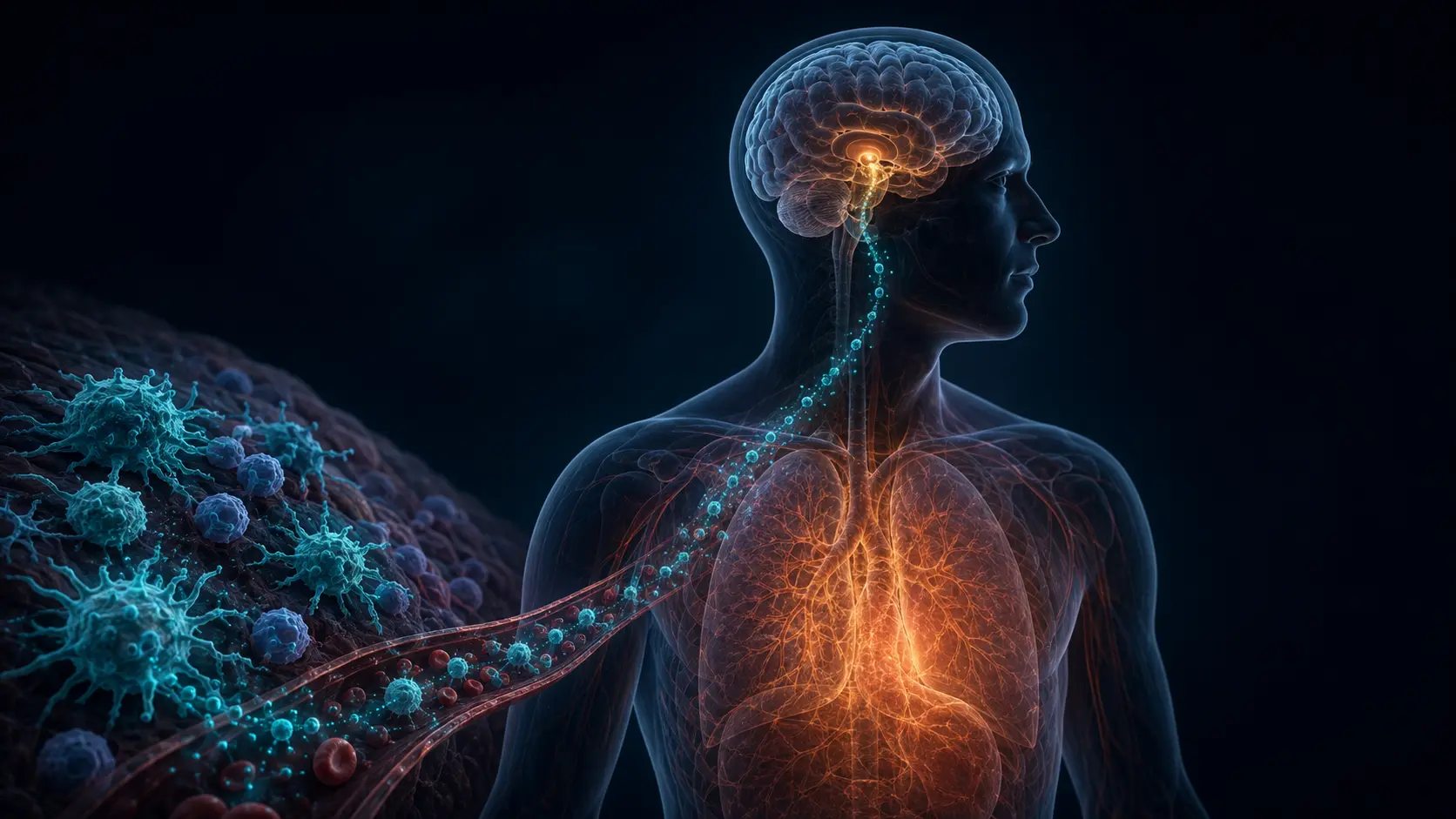
Thermoreceptors in the body and skin send information to central control networks. The preoptic region of the hypothalamus integrates those signals and adjusts heat-loss responses, including sweating and increased skin blood flow. The response has a threshold and a sensitivity rather than a simple on-off temperature.
Exercise can modify sweating before core temperature alone would predict it. Central motor command, signals from working muscles and cardiovascular state contribute to the response. Repeated heat exposure also produces acclimatization: sweating may begin earlier, spread more effectively and conserve more salt.
Emotional sweating is not identical to thermal sweating. Stress, pain and attention can strongly activate glands on the palms, soles, forehead and underarms. The same wet surface can therefore reveal either a cooling response, an emotional response or both.
Sweating has limits and costs
Sweat draws water from body fluid, so prolonged heavy sweating without replacement reduces plasma volume and challenges circulation. Sodium is also lost. Needs vary widely with body size, climate, work rate, clothing and acclimatization; universal replacement numbers can be misleading.
Some medicines and medical conditions can reduce sweating or increase heat risk, while hyperhidrosis produces sweating beyond what temperature control requires. A sudden major change in sweating, overheating, confusion, fainting or other concerning symptoms needs appropriate medical assessment.
During heat illness, the presence or absence of sweat alone does not reliably grade severity. A person with dangerous heat stroke may be sweating. The safer principle is to treat altered mental status and severe heat exposure as an emergency rather than waiting for skin to become dry.
From rising temperature to evaporative cooling
Thermal information reaches the hypothalamus, sympathetic cholinergic nerves activate eccrine glands, and the glands move watery fluid through ducts to pores.
Evaporation transfers heat from skin to air. Skin blood flow helps deliver internal heat to that surface, while hydration and environmental humidity determine how long the system can remain effective.
A comprehensive physiology review explains eccrine gland control and the role of evaporation.
Human thermoregulation research describes the central and peripheral controllers of eccrine sweating.
Try it yourself
Compare wetness with evaporation.
- After ordinary light activity, notice how a damp patch feels in still air.
- Move into safe airflow and notice the stronger cooling sensation as evaporation increases.
- Stop if you feel unwell, overheated or dizzy; this is an observation, not a heat-tolerance test.
Do not deliberately exercise in extreme heat or restrict fluids to test sweating. Heat illness can progress quickly.
Why it matters
Sweating helped humans sustain activity in warm environments by turning a large skin surface into an evaporative heat exchanger.
Its limits explain why humidity, impermeable clothing and dehydration matter: producing more liquid cannot fully compensate when evaporation or circulation is constrained.
Sweat cools only when it can evaporate.
Neural control sends water and electrolytes to the skin; the phase change from liquid to vapor carries body heat into the air.
Research behind this story
We link to the primary study or an authoritative indexed review wherever possible. Caveats in the text reflect the limits of that evidence.
01