Quick answer
The placenta supplies the fetus with oxygen, water and nutrients and carries carbon dioxide and other waste products in the opposite direction. Maternal blood flows around branching placental villi, while fetal blood remains inside capillaries within those villi. Materials cross a thin placental barrier, but the two blood supplies do not normally pour into one shared vessel. The placenta also produces hormones that support pregnancy, helps regulate fetal growth and participates in immune defense. It is selective, not an impenetrable shield, so some infections, medicines, alcohol and other substances can cross or affect it.
During pregnancy, a new organ grows, attaches to the uterine wall, takes over the work of lungs and parts of the gut and kidneys for the fetus, produces hormones, and is then delivered after the baby. That organ is the placenta.
Calling it a filter is too simple. The placenta is a living exchange interface built from fetal tissue and supplied by both maternal and fetal circulation. It has to move selected molecules in both directions, maintain blood flow, signal to the mother's body and manage an unusually close immunological relationship.
Two blood supplies meet without becoming one
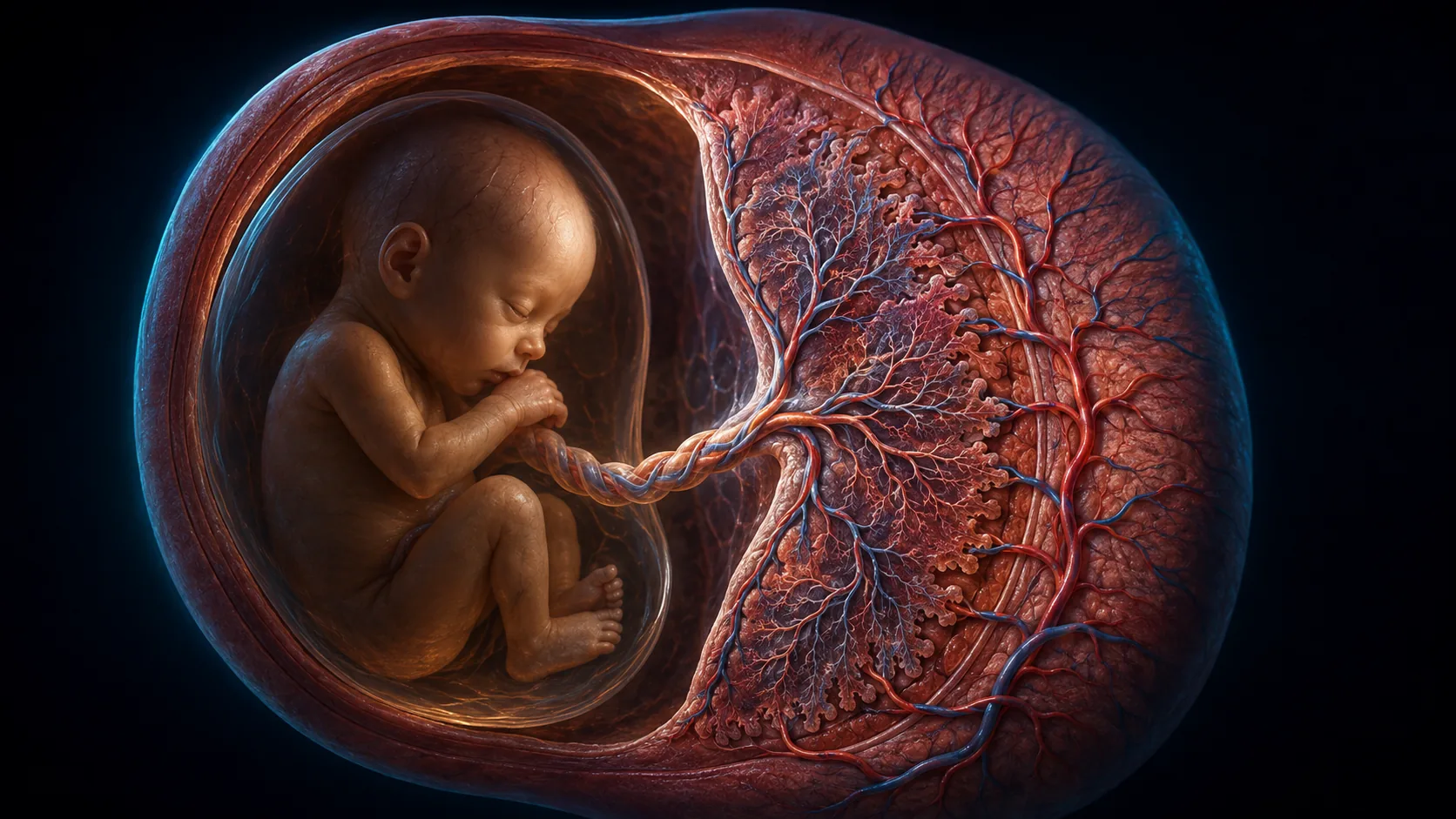
Maternal spiral arteries release blood into spaces around microscopic branches called chorionic villi. Inside each villus, fetal capillaries carry blood that arrived through the two umbilical arteries. A thin tissue interface separates the maternal blood outside from the fetal blood inside.
The arrangement creates an enormous exchange surface. Oxygen moves toward fetal blood while carbon dioxide moves toward maternal blood. Glucose, amino acids, fatty acids, electrolytes and water use different combinations of diffusion, transport proteins and active processes. Waste products such as urea return across the interface for the mother's organs to remove.
After exchange, the single umbilical vein carries relatively oxygen-rich, nutrient-rich blood back to the fetus. The naming can sound reversed because veins and arteries are defined by direction relative to the heart, not oxygen content. Umbilical arteries travel away from the fetal heart; the umbilical vein travels toward it.
How the placenta acts like temporary lungs and more
Before birth, the fetal lungs are fluid-filled and do not exchange gases with air. Oxygen therefore comes from maternal blood across the placenta. Fetal hemoglobin and the organization of fetal circulation help deliver that oxygen to developing tissues, especially the heart and brain.
The placenta also performs transport roles that resemble parts of the digestive and excretory systems. It does not digest a meal or make urine for the fetus, but it transfers nutrients already processed by the mother's body and moves fetal metabolic waste back to maternal circulation.
This exchange is regulated rather than passive plumbing. Placental transporters, blood flow, surface area and the metabolic activity of placental cells all influence what reaches the fetus. The placenta consumes oxygen and nutrients itself because it is a rapidly growing organ with its own biological work.
The placenta is also an endocrine organ
Early placental tissue produces human chorionic gonadotropin, or hCG, which helps maintain progesterone production at the beginning of pregnancy. As pregnancy progresses, the placenta produces progesterone, estrogens, placental lactogen and many other signaling molecules.
These hormones help maintain the uterine environment and adjust maternal metabolism, blood flow and breast development. The signaling is not one-way: maternal physiology, fetal signals and placental sensing interact continuously. The placenta is therefore part exchange organ, part endocrine organ and part communication network.
Its immune role is equally nuanced. Placental and decidual tissues help tolerate fetal cells while still responding to threats. The word barrier can mislead, however. Some antibodies cross beneficially, while certain pathogens and harmful exposures may cross or damage the interface.
What changes when the placenta is delivered
At birth, breathing expands the lungs and blood flow through the fetal circulation changes rapidly. Clamping the umbilical cord ends placental gas exchange, while pressure shifts begin closing temporary fetal pathways such as the foramen ovale and ductus arteriosus.
The placenta separates from the uterine wall and is delivered as the afterbirth. Clinicians examine it because its completeness and appearance can matter for maternal care. Although temporary, it preserves a biological record of the pregnancy and is widely studied to understand fetal growth and pregnancy complications.
Questions about placental position, bleeding, growth or function belong to prenatal care and imaging, not self-diagnosis. This article explains normal physiology and cannot determine whether an individual placenta is working normally.
From maternal blood to fetal tissue
Maternal blood enters the intervillous space and flows around villous trees. Fetal blood passes through capillaries inside those branches. The short distance and large surface area allow gases and selected molecules to cross efficiently.
The umbilical vein returns oxygen and nutrients to the fetus, while the umbilical arteries bring carbon dioxide and waste back toward the placenta. Hormones and immune signals regulate the system around that physical exchange.
A fluid-mechanics review maps maternal and fetal blood flow across placental villi.
NCBI's vascular reference describes the two separate placental circulations.
Try it yourself
Trace two separate circulations.
- Follow maternal blood to the spaces around placental villi.
- Keep fetal blood inside the capillaries of those villi.
- Move oxygen across the barrier, then return fetal blood through the umbilical vein.
This is an anatomy exercise, not a way to evaluate a pregnancy. Individual questions need a qualified prenatal-care professional.
Why it matters
The placenta explains how a fetus can grow without breathing air or eating food. It temporarily connects two bodies while keeping their circulations anatomically distinct.
Understanding its selectivity also corrects a dangerous myth: the placenta reduces some exposures but is not a perfect shield against every medicine, infection or substance.
The placenta is a temporary exchange and signaling organ.
It brings maternal and fetal blood close enough for oxygen, nutrients and waste to cross while keeping the two circulations normally separate.
Research behind this story
We link to the primary study or an authoritative indexed review wherever possible. Caveats in the text reflect the limits of that evidence.
01