Quick answer
Immune cells use blood for fast transport to organs and inflamed tissues. They slow, attach to vessel walls and cross between endothelial cells when local signals call them out of circulation. Fluid and immune material in tissues enter lymphatic capillaries and travel as lymph toward lymph nodes. There, dendritic cells and antigens meet large populations of T and B lymphocytes. Many lymphocytes enter lymph nodes directly from blood through specialized high endothelial venules, then leave in lymph and eventually return to the bloodstream. This continuous recirculation makes immune surveillance possible.
The immune system has no single control room. Its cells are distributed through bone marrow, blood, tissues, lymphatic vessels, lymph nodes, the spleen and other organs. For that scattered network to act as one system, cells and information must keep moving.
Blood and lymph provide complementary routes. The bloodstream moves cells rapidly around the body under pressure. Lymphatic capillaries collect fluid, molecules, antigens and cells from tissues and carry them through lymph nodes. The two routes reconnect near the large veins beneath the collarbones, completing a circulation of surveillance.
Blood is the immune system's rapid transport route
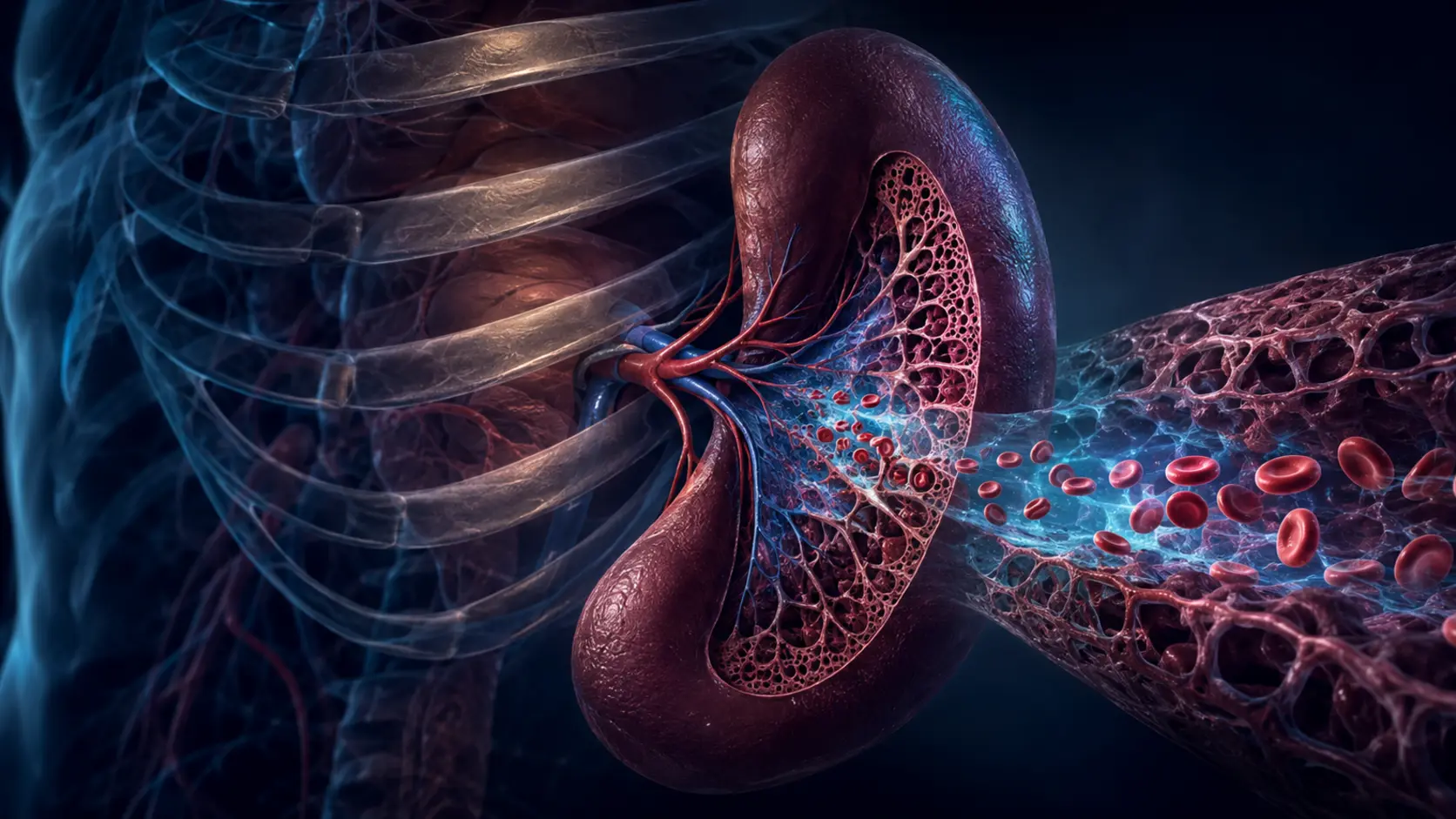
White blood cells circulate among red blood cells and platelets, but they do not simply drift until they hit an infection. Vessel-lining endothelial cells display adhesion molecules and respond to inflammatory signals. Leukocytes can tether, roll, stop and crawl along the vessel wall before squeezing through it into tissue—a sequence often called extravasation.
Chemokines help provide directional information. During infection or injury, local cells release signals that alter nearby endothelium and attract particular leukocyte populations. Neutrophils may arrive quickly, while monocytes and activated lymphocytes follow patterns determined by the tissue and threat.
The bloodstream also carries immune molecules such as antibodies, complement proteins and cytokines. Circulation therefore transports both cells and soluble tools. But immune cells cannot inspect every microscopic space from inside a blood vessel; they need tissue and lymphatic routes as well.
Lymph carries tissue information in the other direction
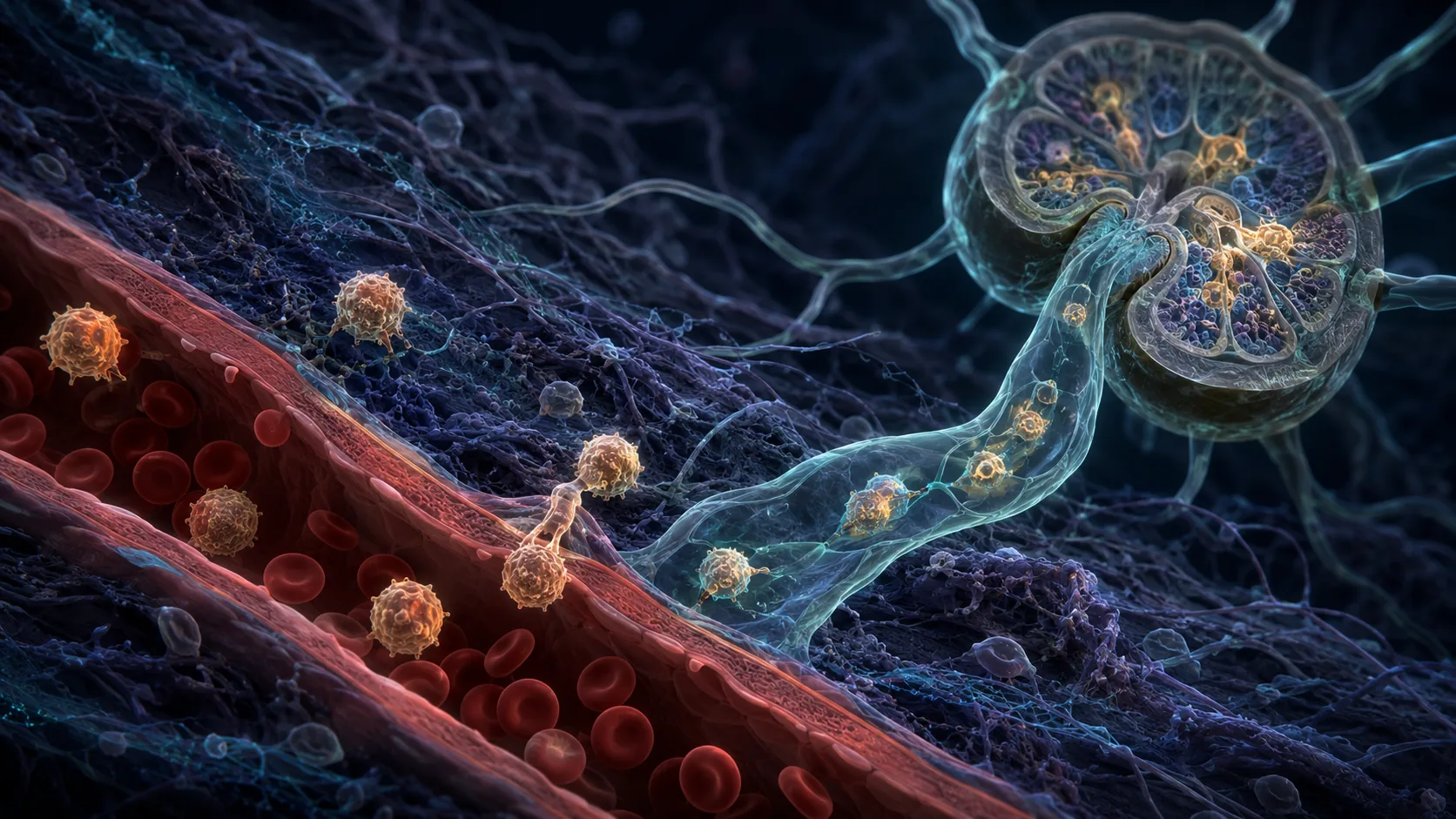
Blood capillaries deliver fluid to tissues, and most of it returns directly to the venous circulation. The remaining fluid enters blind-ended lymphatic capillaries. Once inside this network it is called lymph. It contains water, proteins, cellular debris, antigens and sometimes migrating immune cells.
Lymphatic endothelial cells are shaped to admit fluid and cells when tissue pressure and molecular signals favor entry. Collecting lymphatic vessels then move lymph through valves and rhythmic contractions, aided by surrounding muscle movement. Unlike the blood circulation, the lymphatic system has no central pump equivalent to the heart.
Dendritic cells that have sampled antigens in peripheral tissue can enter lymphatic vessels and travel toward a draining lymph node. Free antigens and inflammatory signals arrive as well. The node receives a compressed report of what is happening upstream in the tissue it drains.
A lymph node is a meeting place, not just a filter
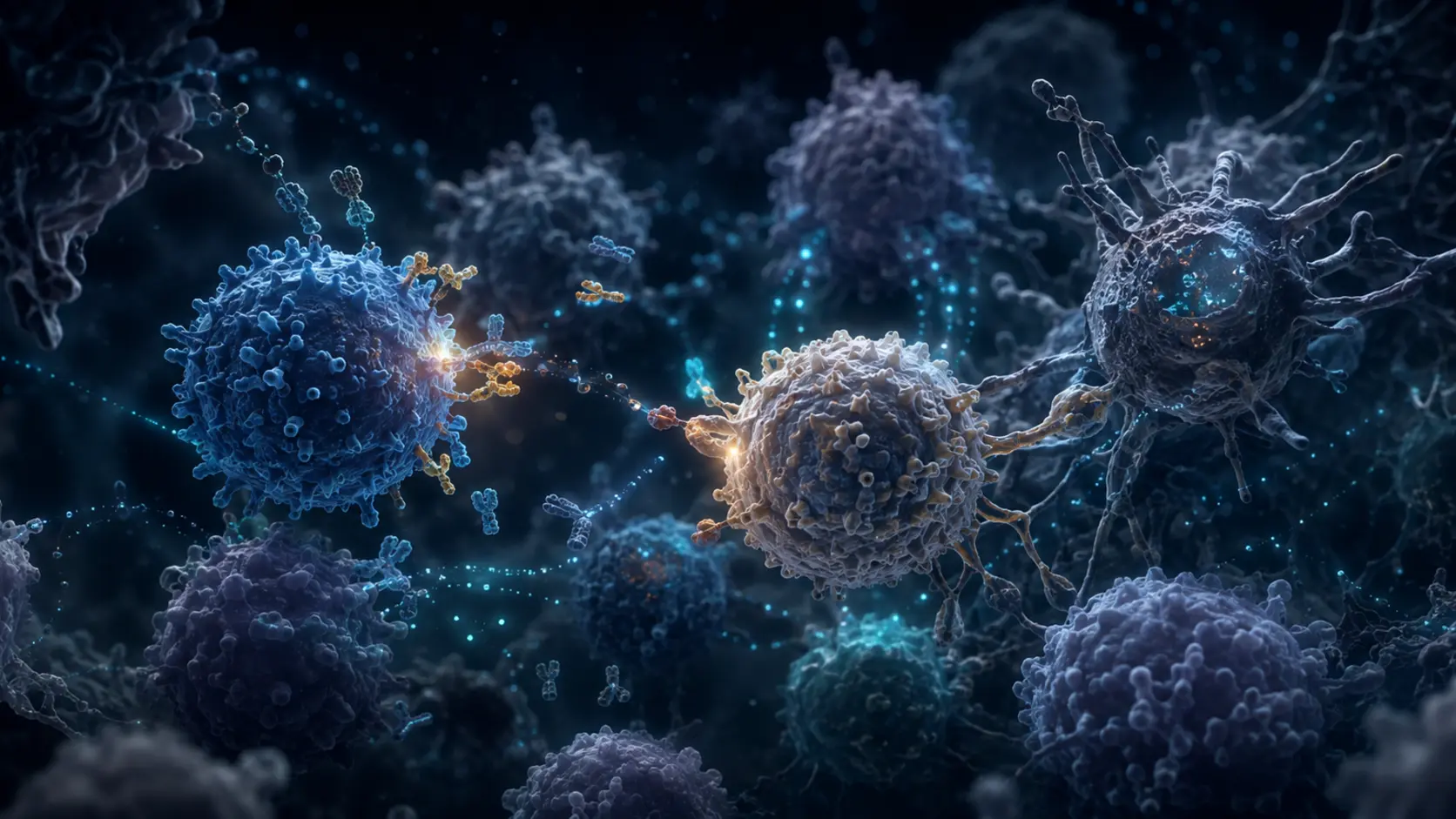
A lymph node is organized into zones that increase the chance of a rare antigen-specific lymphocyte encountering its matching signal. Dendritic cells present antigen to T cells, while B cells survey material in follicular regions. If the required signals align, selected lymphocytes activate and multiply.
Most naïve lymphocytes enter lymph nodes from the blood through specialized high endothelial venules rather than arriving in incoming lymph. They move through the node, search for antigen and, if they do not find it, leave through an efferent lymphatic vessel. Lymph ultimately drains into large veins, returning those cells to blood for another patrol.
An activated lymphocyte follows a different program. Its descendants can leave the node, re-enter circulation and acquire homing properties that guide them toward relevant tissues. Some become memory cells that remain positioned for faster future responses.
Where the spleen and swollen nodes fit
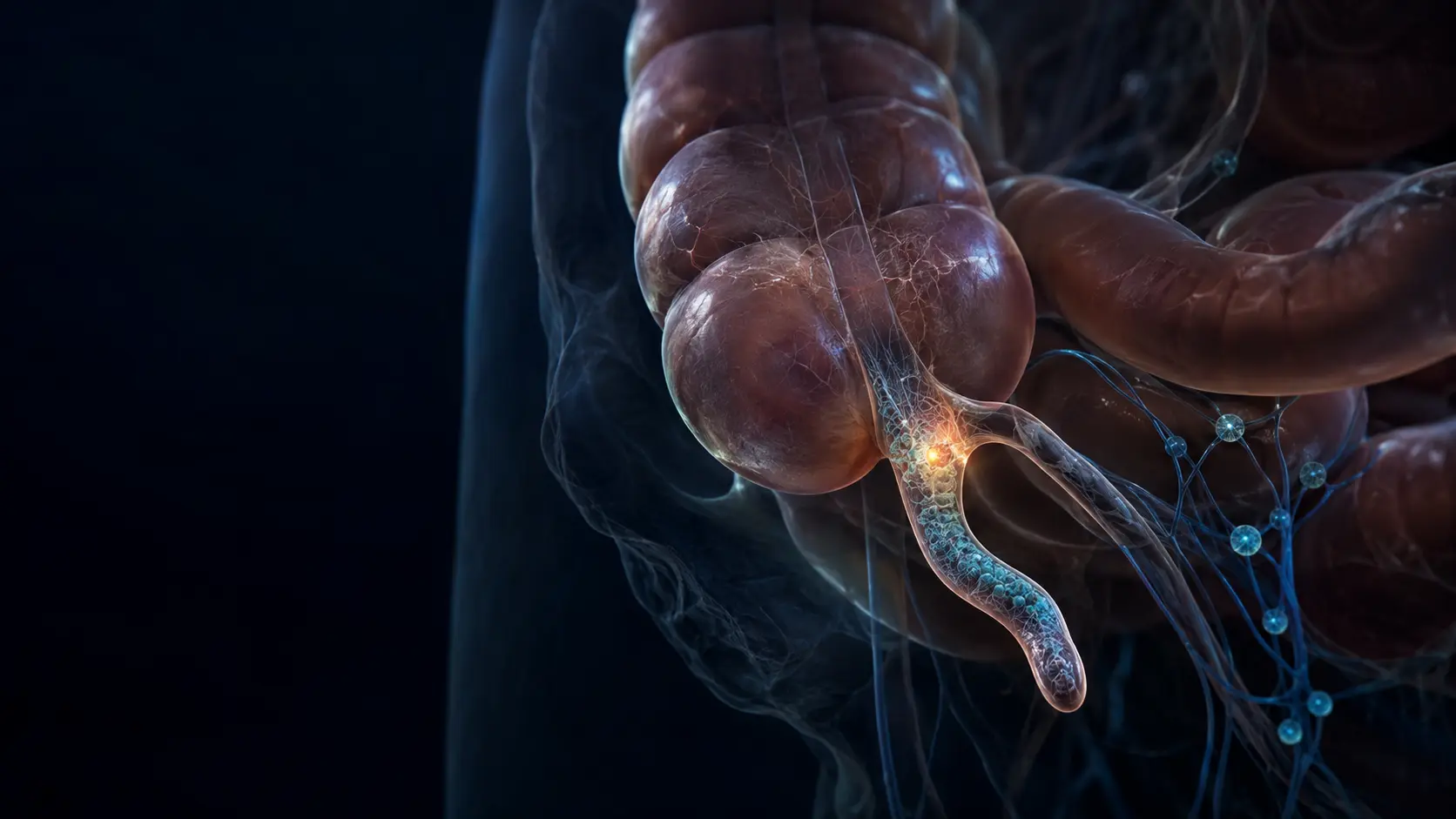
Lymph nodes sample lymph arriving from tissues. The spleen performs a related surveillance role for blood: it filters circulating material, removes aging red blood cells and exposes immune cells to blood-borne antigens. The appendix and other mucosal lymphoid tissues monitor particular interfaces rather than replacing this whole-body transport network.
A lymph node can enlarge when immune cells enter, activate and proliferate, or when inflammation increases local fluid and cellular traffic. Location and context matter; swelling is not proof of one particular infection, and persistent, hard, enlarging or otherwise concerning nodes deserve medical assessment.
Blocked lymphatic drainage can cause fluid to accumulate in tissue, producing lymphedema. That illustrates the system's dual job: it supports immune traffic while also returning tissue fluid and proteins to the circulation. Immune surveillance and fluid balance use the same anatomical roads.
The immune surveillance loop
Lymphocytes circulate in blood and enter lymph nodes through specialized venules. Antigen and dendritic cells arrive from tissue through afferent lymphatics. Inside the node, cells search for a matching signal.
Cells that are not activated leave in efferent lymph and return to blood. Activated cells expand and redistribute toward tissues. The loop repeats continuously, allowing a limited number of antigen-specific cells to survey a very large body.
A major review maps how immune cells and antigens migrate through lymphatic vessels.
Research on vascular gateways explains how lymphocytes enter nodes through high endothelial venules.
Try it yourself
Use anatomy, not repeated pressing.
- Trace the idea from blood to tissue, tissue to lymph, and lymph back to blood.
- Remember that a lymph node samples a drainage area, while the spleen samples blood.
- Do not repeatedly squeeze or massage a swollen or painful lymph node to test it.
A new lump cannot be identified from location alone. Persistent or concerning swelling should be evaluated by a healthcare professional.
Why it matters
The circulation and immune systems are inseparable. Blood supplies rapid distribution, lymph retrieves information and fluid from tissues, and lymphoid organs concentrate rare recognition events.
This route explains why local infection can activate a nearby node, why immune cells can reach distant tissue and why disrupting lymphatic drainage affects both swelling and defense.
Immunity is a circulation of cells and information.
Blood delivers immune cells, lymph carries tissue signals, and lymph nodes bring both together before cells return to circulation or deploy to a target.
Research behind this story
We link to the primary study or an authoritative indexed review wherever possible. Caveats in the text reflect the limits of that evidence.
01