
Quick answer
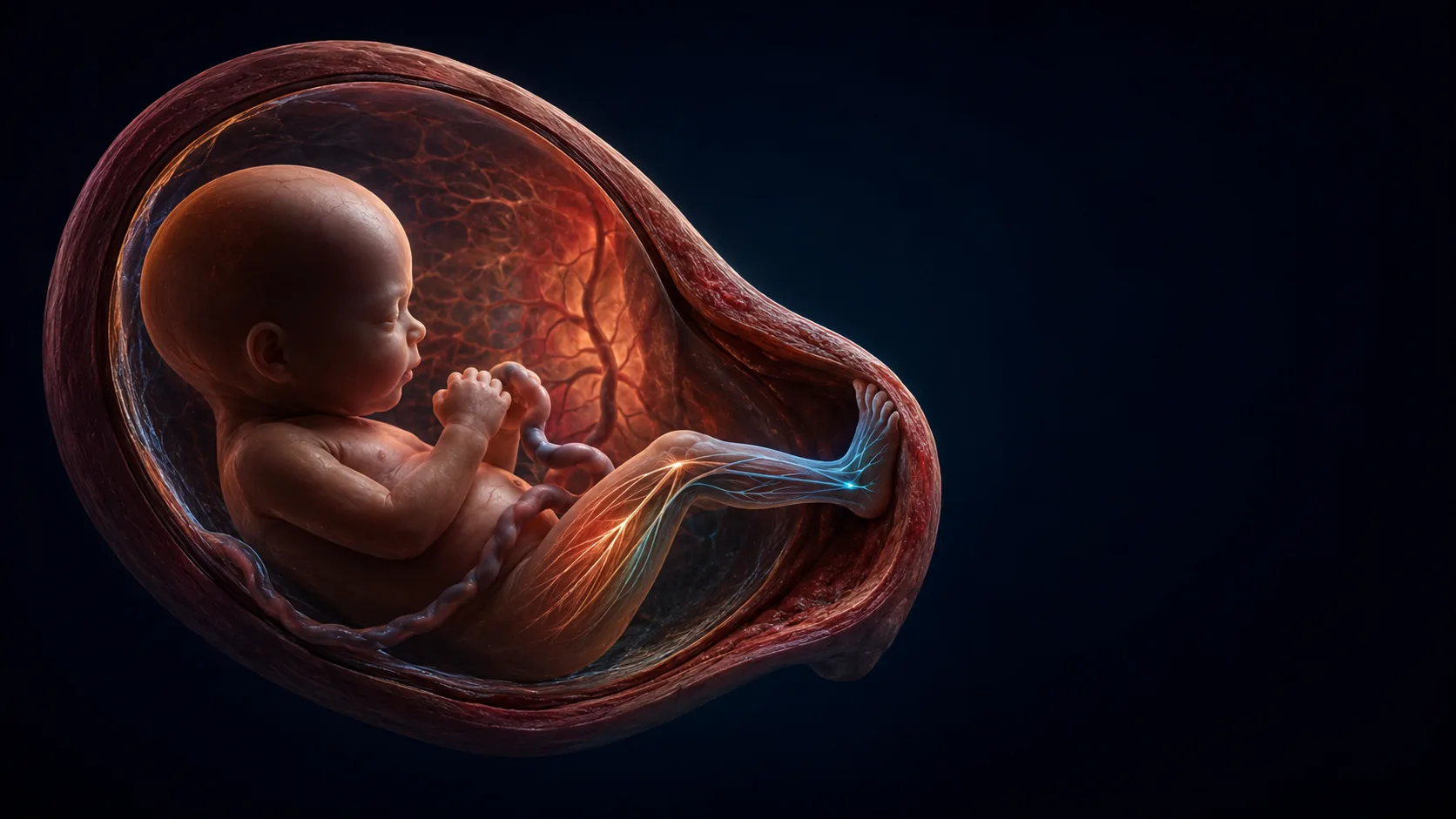
The fetal auditory system develops gradually. Reliable behavioral responses to sound generally emerge around the middle to later part of pregnancy. Research has observed initial responses to some low-frequency sounds from roughly 23 weeks, with broader and more consistent responses during the following weeks; by about 27 weeks, many fetuses in classic studies responded to low tones. This does not mean hearing is adult-like. The uterus filters sound, high frequencies are reduced, and the brain pathways that interpret sound continue maturing before and after birth.
A fetus does not hear the outside world as though it were listening in a quiet room. Voices and music must cross air, the mother's tissues and fluid before reaching a developing auditory system. Low frequencies travel through that route better than high ones, while heartbeat, breathing and blood flow are already nearby.
The answer to when hearing begins is therefore a sequence, not a birthday. Ear structures form, sensory cells become functional, pathways connect with the brain, and measurable responses become more consistent. Different studies use different sounds and response measures, so they produce ranges rather than one universal week.
The ear is built before hearing becomes measurable
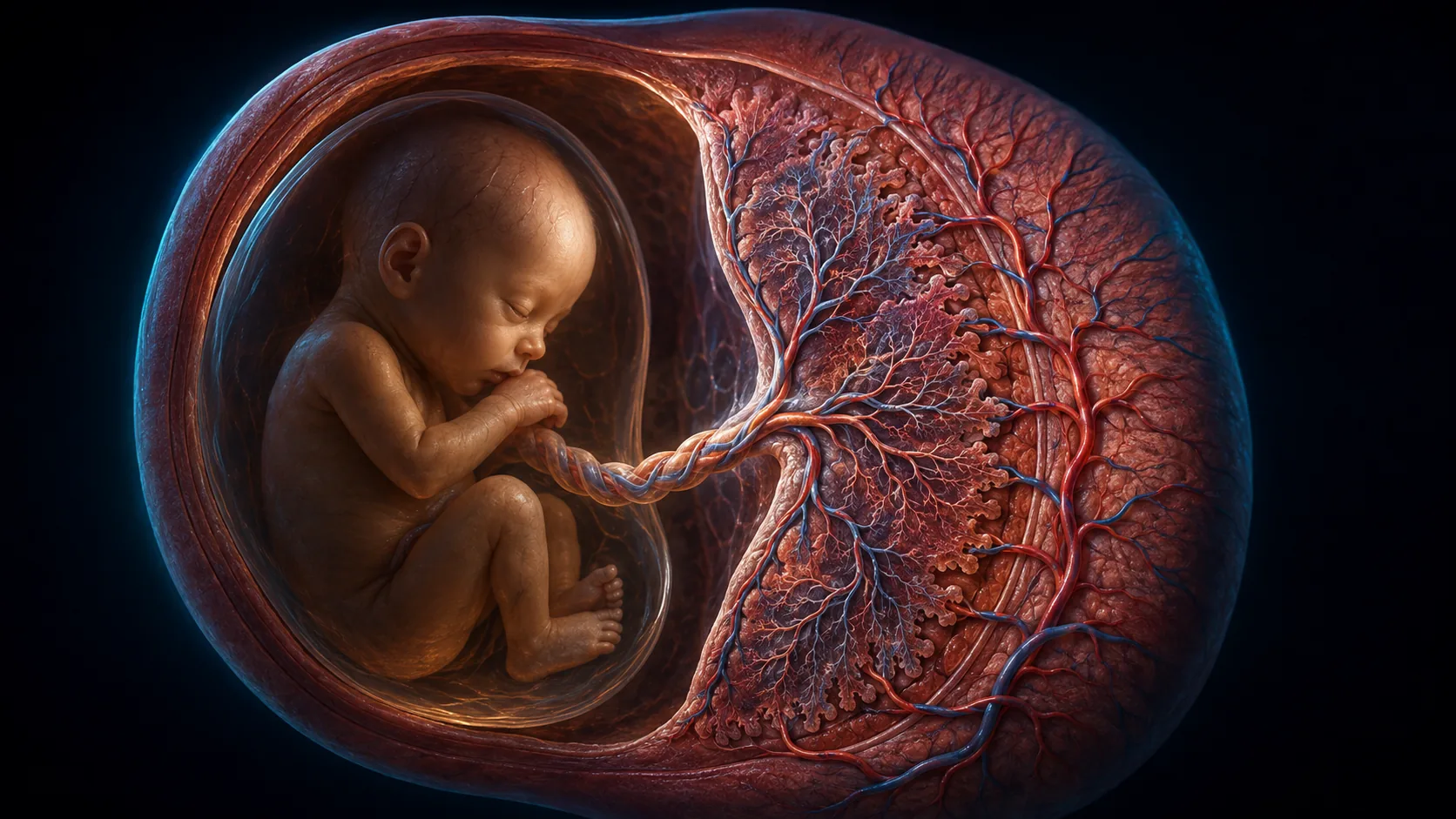
The outer, middle and inner ear arise from different embryonic tissues. Inside the cochlea, sensory hair cells eventually convert mechanical vibration into electrical activity. Connections carry that activity through the auditory nerve and brainstem toward higher auditory regions. A visible ear on an ultrasound therefore does not prove that the complete pathway is already processing sound.
Researchers cannot ask a fetus what it hears. Instead, they look for changes in heart rate, movement or brain activity after controlled stimulation. Each measure captures a different part of the pathway, and a missing response may reflect sleep state, sound intensity or the limitations of the method rather than absolute deafness.
Clinical and research descriptions therefore use phrases such as emerging sensitivity and increasing responsiveness. Development is continuous, and normal variation is expected across pregnancies.
The uterus is a low-pass filter, not a silent chamber
External sound loses energy as it crosses the body wall and fluid. Higher frequencies are attenuated more strongly, while lower-frequency rhythm and intonation travel more effectively. The result is closer to a muffled pattern than a clear recording of speech.
The fetus is also surrounded by internal sound. The mother's voice has both an airborne route and vibration conducted through her body, making it a recurring part of the prenatal environment. Detection is not the same as understanding: a response to rhythm does not prove language comprehension.
Claims that a particular song will make a fetus smarter go beyond current evidence. Studies of newborn preferences suggest basic prenatal learning can occur, but they do not support guaranteed cognitive benefits from special recordings.
Responses become broader and more consistent later
Classic longitudinal research found that fetuses responded earlier to low tones than to higher ones. Around 27 weeks, responses to 250 and 500 hertz were common in that sample, while responses to higher frequencies appeared later. This fits both auditory maturation and the filtering properties of the womb.
Later in pregnancy, changes in fetal heart rate or movement can follow familiar and unfamiliar sounds. These findings show detection and basic learning, not a detailed autobiographical memory of life before birth.
After delivery, hearing still matures. The middle ear adjusts from a fluid-filled environment, neural pathways refine their timing, and months of experience help the brain separate voices, locate sounds and extract language patterns.
Ordinary sound is different from high-intensity exposure
Normal conversation and everyday sound do not require special prenatal training. Placing loud speakers or headphones directly against the abdomen is unnecessary, and consumer devices cannot turn uncertain research into a guaranteed program.
Persistent occupational or recreational noise is a separate question. Concerns about workplace exposure should be discussed with a clinician or occupational-health professional because distance, intensity and duration matter.
The careful conclusion is simple: the fetus gradually gains access to a filtered acoustic world, which helps prepare a still-developing system for the richer soundscape after birth.
From outside vibration to a developing brain
Sound vibration crosses maternal tissue and fluid, moving structures in the fetal ear. Waves in the cochlea bend sensory hair cells, converting motion into electrical signals.
The auditory nerve and brainstem relay those signals. As the pathway matures, responses appear first for stronger low-frequency sound and become broader later in gestation.
A longitudinal study documented responses to tones of different frequencies.
A review found initial responsiveness often begins with low-frequency stimulation around 23 weeks.
Why it matters
A developmental sequence replaces the misleading idea of an on-or-off hearing milestone.
It also separates evidence for basic prenatal detection from marketing claims that recordings guarantee intelligence or language gains.
A fetus enters a filtered sound world gradually.
Low-frequency responses emerge around mid-to-late pregnancy, then sensitivity and interpretation continue developing.
Research behind this story
We link to the primary study or an authoritative indexed review wherever possible. Caveats in the text reflect the limits of that evidence.
01