Quick answer
You have earwax because the external ear canal needs a flexible protective coating. Ceruminous glands and sebaceous glands in the outer canal release watery and oily material that mixes with shed skin cells. The resulting cerumen lubricates the canal, limits water contact, traps dust and carries debris outward as the canal's skin migrates toward the opening. Laboratory studies also find antimicrobial activity, but it varies among samples and organisms, so earwax is not a sterile shield. Most wax leaves naturally. It becomes a medical problem only when it accumulates enough to cause symptoms or prevents examination of the ear.
Earwax is easy to mistake for waste because it eventually leaves the body. Inside the ear canal, however, it is working material: a blend of gland secretions, skin cells and trapped particles that helps maintain a narrow passage exposed to air, water and dust.
Its formal name is cerumen. Healthy ears usually make it in the outer portion of the canal and move it outward without deliberate cleaning, turning the skin itself into part of a slow transport system.
Earwax is assembled from glands and migrating skin
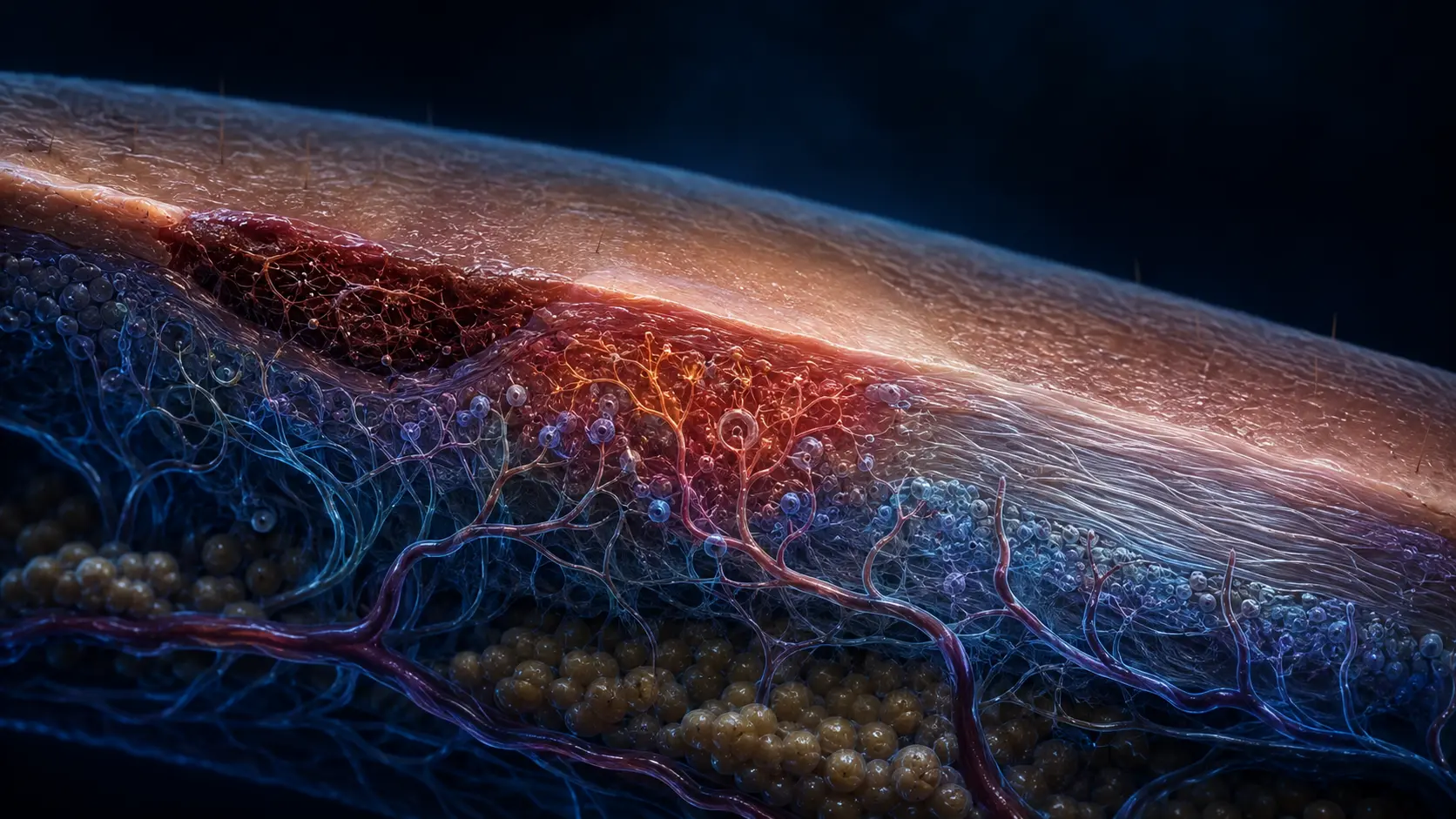
Ceruminous glands are modified apocrine glands located mainly in the cartilaginous outer third of the ear canal. Nearby sebaceous glands release oily sebum. Their secretions mix at the skin surface rather than emerging as a finished block of wax.
Shed keratinocytes—the flattened cells continually leaving the canal lining—become a major structural component. Hair, dust and other particles can join the mixture. Water gradually evaporates and lipids remain, so fresh material can become drier and darker as it travels outward.
The deeper bony canal has thinner, more tightly attached skin and is not built to manufacture the same waxy layer. That geography matters: cerumen belongs mainly near the entrance, before the eardrum, not throughout the middle or inner ear.
The coating protects delicate canal skin
The external canal is a skin-lined tunnel with limited space. Friction, dryness and retained water can irritate it. Lipids in cerumen lubricate the surface and make it less vulnerable to cracking or prolonged wetness.
Sticky wax also captures loose skin, fibers and airborne particles before they travel farther inward. This does not make the canal impenetrable, but it adds a physical layer between the eardrum and the outside environment.
Cerumen contains fatty acids, proteins and other compounds that can inhibit some bacteria and fungi in laboratory tests. Results differ by sample and microorganism, so the evidence supports a contributing defense role rather than a claim that wax prevents every infection.
The ear canal runs a slow outward conveyor
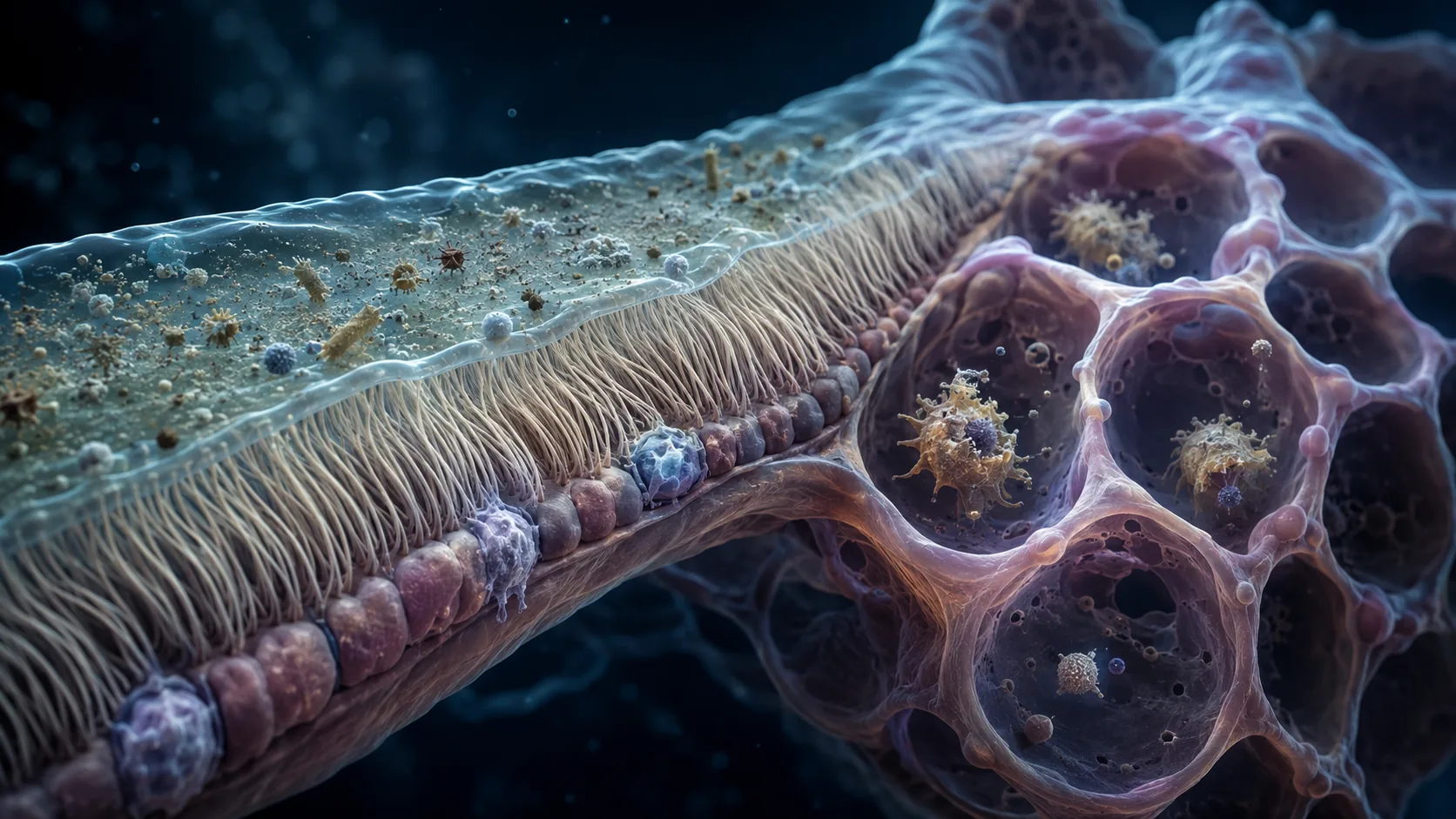
Skin normally renews by producing cells below and shedding them at the surface. On the eardrum and ear-canal wall, that renewal has an unusual direction: surface cells migrate outward toward the opening instead of simply piling up in place.
Cerumen and trapped material travel with that migrating layer. Jaw movement during talking and chewing may assist the final outward motion. Near the entrance, old wax can flake away or wash from the outer ear during ordinary bathing.
This is why a healthy canal usually does not require an object inserted for routine cleaning. A cotton swab can compact wax farther inward, scratch the thin lining or injure the eardrum, working against the same exit route it is meant to help.
Wet and dry earwax are normal genetic variants
Human cerumen commonly appears in a wetter, sticky form or a drier, flaky form. A well-studied variant in the ABCC11 gene strongly influences which type a person produces by changing transport activity in apocrine-type glands.
The dry-associated variant is especially common in East Asian populations, while wet cerumen is more frequent in many other populations. These are population patterns, not rigid categories, and appearance can also change with age, environment and how long wax has remained in the canal.
Neither type is evidence that someone is cleaner. The genetic finding explains a visible difference in secretion chemistry; it does not turn earwax color or texture into a general health test.
A protective material can still become an obstruction
The self-cleaning system sometimes falls behind. Narrow or unusually shaped canals, dense hair, skin conditions, aging, hearing aids and objects placed in the canal can interfere with outward transport. Wax then accumulates instead of exiting.
Clinicians call it cerumen impaction when the buildup causes symptoms or blocks a needed ear examination. Fullness, earache, itching, tinnitus and reduced hearing can occur, but those symptoms also have other causes. Seeing wax near the opening does not prove it explains a hearing change.
Removal methods have different risks depending on the eardrum, previous ear surgery, infection and other factors. Evidence comparing ear-softening drops is limited, and no single product has shown clear superiority across all patients. Persistent symptoms or uncertainty deserve professional assessment.
Pain or sudden hearing change should not be self-diagnosed
A clinician can look through the canal and determine whether wax is actually obstructing it. This is especially important when hearing loss is sudden, one-sided or unchanged after wax has been cleared, because the canal is only one part of the hearing pathway.
Drainage, bleeding, fever, severe pain, dizziness, a possible foreign object or a history of eardrum perforation or ear surgery also changes what is safe. Pushing tools or liquids into an ear without knowing the condition of the eardrum can cause harm.
This article explains normal cerumen biology and common impaction, not an individual treatment plan. Earwax is usually useful; symptoms are the reason to investigate whether that useful material has become a blockage.
How the ear builds and exports its protective coating
Ceruminous and sebaceous glands release water-rich and oily secretions in the outer canal. These combine with shed keratinocytes and captured particles to form cerumen.
Epithelial migration carries the mixture away from the eardrum toward the opening. The cycle maintains a coated canal while older material dries and leaves.
An evidence-based clinical review explains the composition, outward migration and causes of cerumen impaction.
The American Academy of Otolaryngology guideline defines when earwax becomes an impaction requiring clinical attention.
Why it matters
Cerumen shows how a body surface can protect itself with chemistry, friction control and directed tissue renewal at the same time.
Understanding the mechanism also explains the paradox of cleaning: inserting an object can push a self-exporting material back toward the eardrum.
Earwax is maintenance material, not ordinary dirt.
It coats the canal, traps debris and moves outward with renewing skin; it needs attention when that transport fails and symptoms or obstruction appear.
Research behind this story
We link to the primary study or an authoritative indexed review wherever possible. Caveats in the text reflect the limits of that evidence.
01