
Quick answer
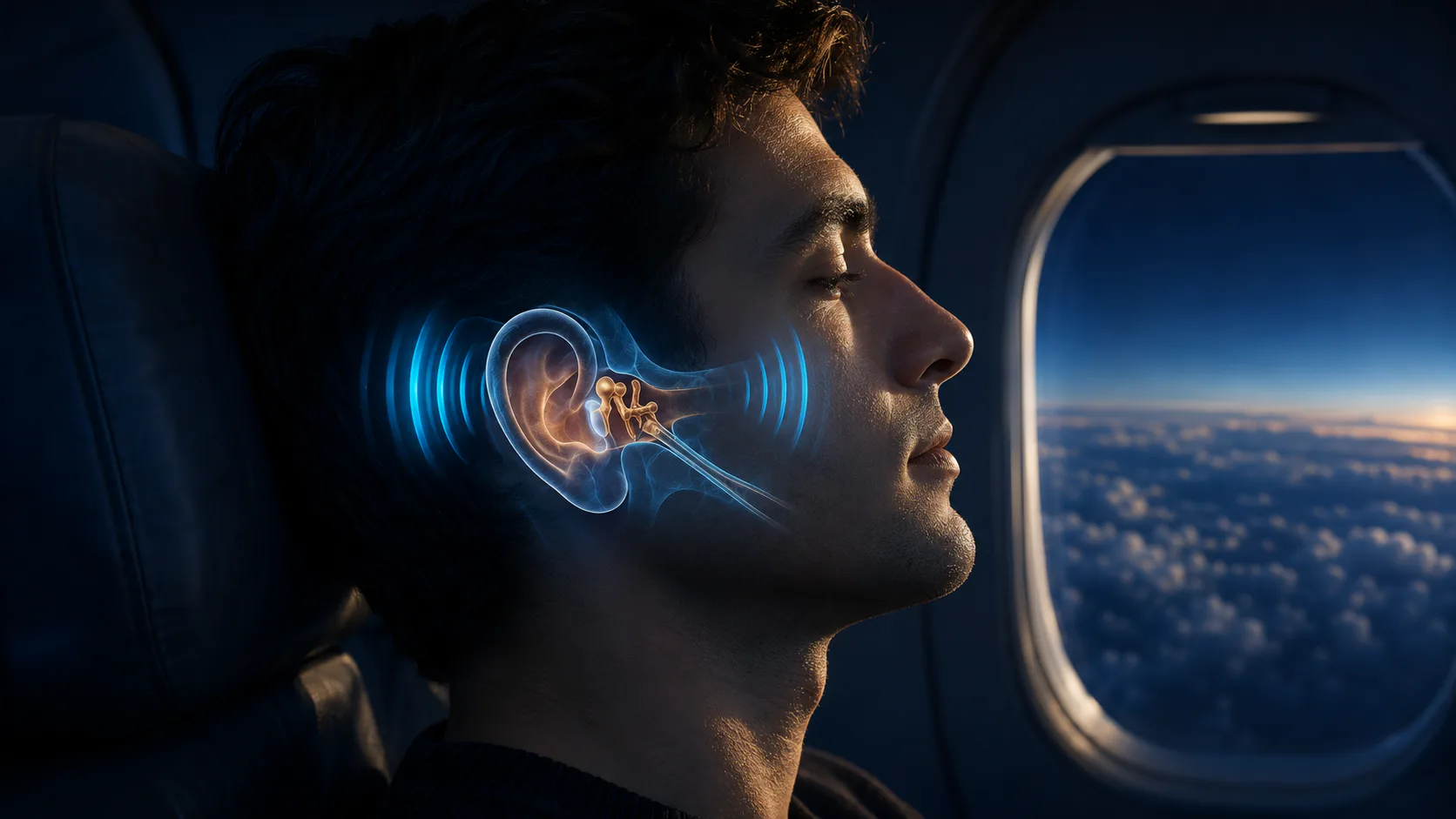
Your ears may seem to ring because the auditory system can generate a sound perception without a matching external sound. Tinnitus often accompanies hearing loss or noise exposure. When input from the inner ear changes, connected brain circuits can adjust their sensitivity, spontaneous firing and synchrony. Those plastic changes are leading explanations for why a tone or noise reaches awareness, but no single neural mechanism explains every case. Earwax, infection, medicines, jaw or neck input and other conditions can also contribute. A heartbeat-synchronous sound, sudden hearing loss, one-sided persistent tinnitus or tinnitus with neurological symptoms needs prompt professional assessment rather than a generic phantom-sound explanation.
A room goes quiet, yet a high tone, hiss or buzz remains. Other people cannot hear it and no device in the room is producing it, but the perception itself is real.
That experience is tinnitus. It is a symptom rather than one disease, and it can emerge when the hearing system changes how it represents sound after altered input from the ear.
Tinnitus is broader than a high-pitched ring
People describe ringing, buzzing, hissing, whistling, humming, roaring or clicking. The sound may feel centered in one ear, both ears or somewhere inside the head. It can remain steady, fluctuate or appear only occasionally.
Most tinnitus is subjective: only the person experiencing it can hear it. In a smaller group, a clinician may detect a bodily sound linked to blood flow or muscle movement. Pulsatile tinnitus, which follows the heartbeat, belongs to a different diagnostic pathway from a continuous high tone.
Brief, isolated tones are common and often fade. Persistent tinnitus matters because it can affect sleep, concentration and mood even when its loudness is modest. Distress and acoustic intensity are related imperfectly; attention and meaning change how intrusive the signal becomes.
Normal hearing begins with a coded nerve signal
Sound waves vibrate the eardrum and middle-ear bones, then move fluid inside the cochlea. Sensory hair cells convert that mechanical pattern into activity in the auditory nerve. Brainstem, thalamic and cortical circuits progressively analyze frequency, timing, location and meaning.
Those circuits are not passive wires. Inhibitory and excitatory connections continually adjust which activity is amplified or suppressed. The brain also combines sound with expectation, attention, movement and signals from other senses.
Damage to cochlear hair cells or their nerve connections can reduce or distort input in particular frequency regions. A standard hearing test does not measure every nerve fiber or frequency, so some people with tinnitus can have an apparently normal audiogram while subtler auditory changes remain possible.
Reduced input can make central circuits turn up their gain
One leading model treats tinnitus as a maladaptive response to missing or altered input. When auditory neurons receive less information from the ear, homeostatic plasticity may increase their sensitivity in an attempt to preserve useful activity—somewhat like raising the gain on a weak signal.
Animal and human research has found changes in spontaneous firing, neural synchrony and the balance between excitation and inhibition at several levels of the auditory pathway. A pattern generated within the system can then be interpreted as sound even though no matching pressure wave entered the ear.
The gain analogy is useful but incomplete. Studies do not reveal one neural signature shared by every person, and tinnitus can occur without obvious hearing loss. Peripheral ear changes, central plasticity and wider attention or emotion networks probably contribute in different proportions across cases.
Silence removes competition and attention adds salience
Environmental sound can partially cover tinnitus or give the auditory system more external information to process. In a quiet bedroom, that competition disappears, so an internal signal can stand out more sharply. Silence does not necessarily make the underlying generator stronger; it changes the contrast.
Attention also matters. Brain networks that select important events can repeatedly check the sound, while worry can label it as a threat. That loop makes tinnitus harder to ignore without proving that anxiety created the original signal.
This helps explain why treatment goals often include reducing distress and attentional capture rather than promising to erase every tone. Cognitive behavioral therapy has evidence for improving tinnitus-related quality of life. Hearing aids can help some people with hearing loss, while evidence for specific sound therapies remains mixed.
The same symptom can begin through different routes
Age-related hearing change and loud-noise exposure are common associations. A concert or explosion can produce temporary ringing, and repeated hazardous sound can damage hearing permanently. Earwax, middle-ear problems, head or neck injury, jaw-joint input and some medicines may also trigger or modify tinnitus.
Because the causes differ, an online explanation cannot identify an individual's source. A clinician may examine the ear canal, review medicines and noise exposure, and arrange a hearing assessment. Imaging is not routine for every symmetrical, non-pulsatile case; history and examination determine when it is appropriate.
No supplement has been shown to cure tinnitus generally. Treating a specific reversible contributor can help when one is found, but many cases are managed by improving hearing, sleep, coping and the brain's response to the sound.
Some patterns need faster assessment
Tinnitus that beats with the pulse can reflect blood-flow sound and needs medical evaluation. Persistent one-sided tinnitus, an asymmetric hearing change or symptoms such as vertigo may also require targeted assessment rather than simple reassurance.
Sudden hearing loss—especially over hours or a few days—is time-sensitive and should be assessed urgently, whether or not tinnitus is present. Emergency help is appropriate when tinnitus follows a serious head injury or arrives with new facial weakness, severe neurological symptoms or an immediate risk of self-harm.
For less urgent persistent tinnitus, primary care, audiology or ear specialists can help identify hearing loss and discuss evidence-based support. This article explains a mechanism; it is not a hearing test or diagnosis.
From altered auditory input to a phantom sound
Noise, aging or another change alters the pattern reaching the auditory pathway. Central circuits adapt their gain, timing and inhibitory balance rather than simply waiting for the old input to return.
Internally generated activity becomes organized enough to enter awareness as a tone or noise. Quiet surroundings increase its contrast, while attention and emotional salience influence whether it fades into the background or remains intrusive.
NIDCD explains the symptom, common causes and the leading idea that changed inner-ear input alters auditory brain activity.
A mechanistic review summarizes evidence for central gain, neural synchrony and reduced inhibition.
Why it matters
Tinnitus shows that hearing is an active neural construction. The ear supplies crucial input, but the percept we call sound is assembled across a changing network.
The distinction between common phantom sound and warning patterns also prevents two mistakes: dismissing a real perception and assuming every ring has the same benign cause.
The sound is real even when the room is silent.
Altered auditory input and brain plasticity can create a phantom signal, but tinnitus has multiple causes and no single mechanism explains every person.
Research behind this story
We link to the primary study or an authoritative indexed review wherever possible. Caveats in the text reflect the limits of that evidence.
01