Quick answer
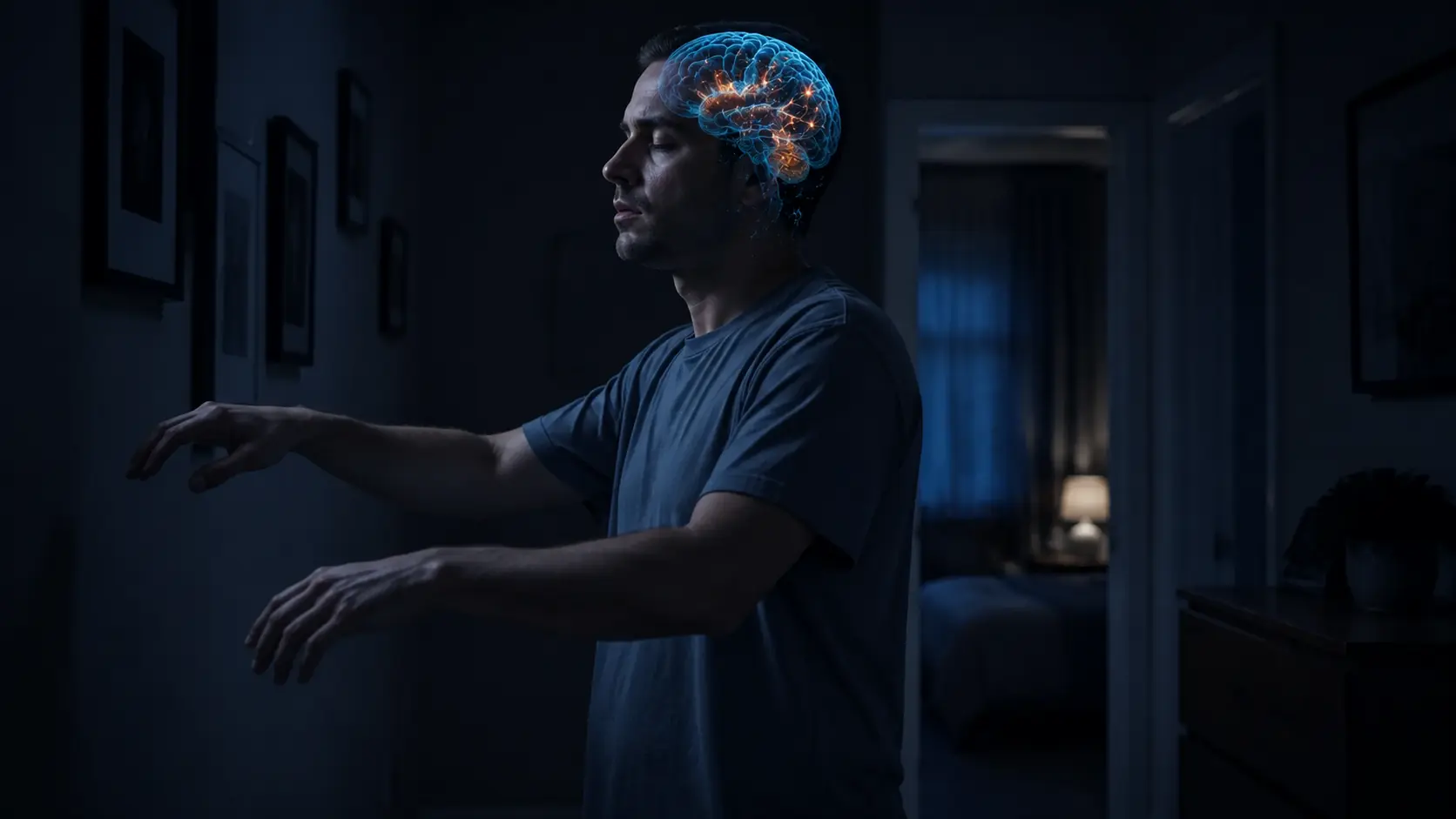
General anesthesia does not shut the brain down. Drugs such as propofol, volatile anesthetics, ketamine and others alter receptors, ion channels and neurotransmission in different ways. At sufficient doses, brain activity often becomes more synchronized locally, less diverse and less effectively connected across long distances, especially among cortical and thalamocortical systems involved in integrating information. Sensory signals may still reach early pathways without becoming a connected, reportable experience. Other medicines contribute analgesia, immobility and amnesia. No single brain region or universal rhythm explains every anesthetic, and unconsciousness is not identical to normal sleep.
Minutes after an anesthetic begins, a person can stop responding, form no accessible memory and remain still while surgery proceeds. The transition looks like an off switch from the outside, but recordings show that the brain continues producing organized electrical activity.
General anesthesia is a controlled physiological state assembled from several effects: altered consciousness, amnesia, reduced movement and modulation of pain responses. Different drugs reach that state through different molecular targets, yet network studies reveal recurring changes in how distant brain regions exchange information.
Anesthesia is a bundle of controlled effects
Everyday language often treats anesthesia as one thing, but clinical general anesthesia combines hypnosis or unconsciousness with other goals. Analgesic drugs reduce nociceptive processing, muscle relaxants can produce immobility, and anesthetics or adjuncts limit memory formation and autonomic stress responses.
Those components can be adjusted separately. Paralysis does not cause unconsciousness, and unconsciousness alone does not guarantee adequate control of every physiological response. Anesthesia professionals therefore monitor the patient, drug delivery, circulation, ventilation and the surgical context together.
This distinction also explains why one molecular mechanism cannot cover the entire state. GABA-enhancing drugs, NMDA-receptor antagonists and volatile anesthetics perturb different cellular targets while converging partly on disrupted conscious access.
Local activity can persist while global integration weakens
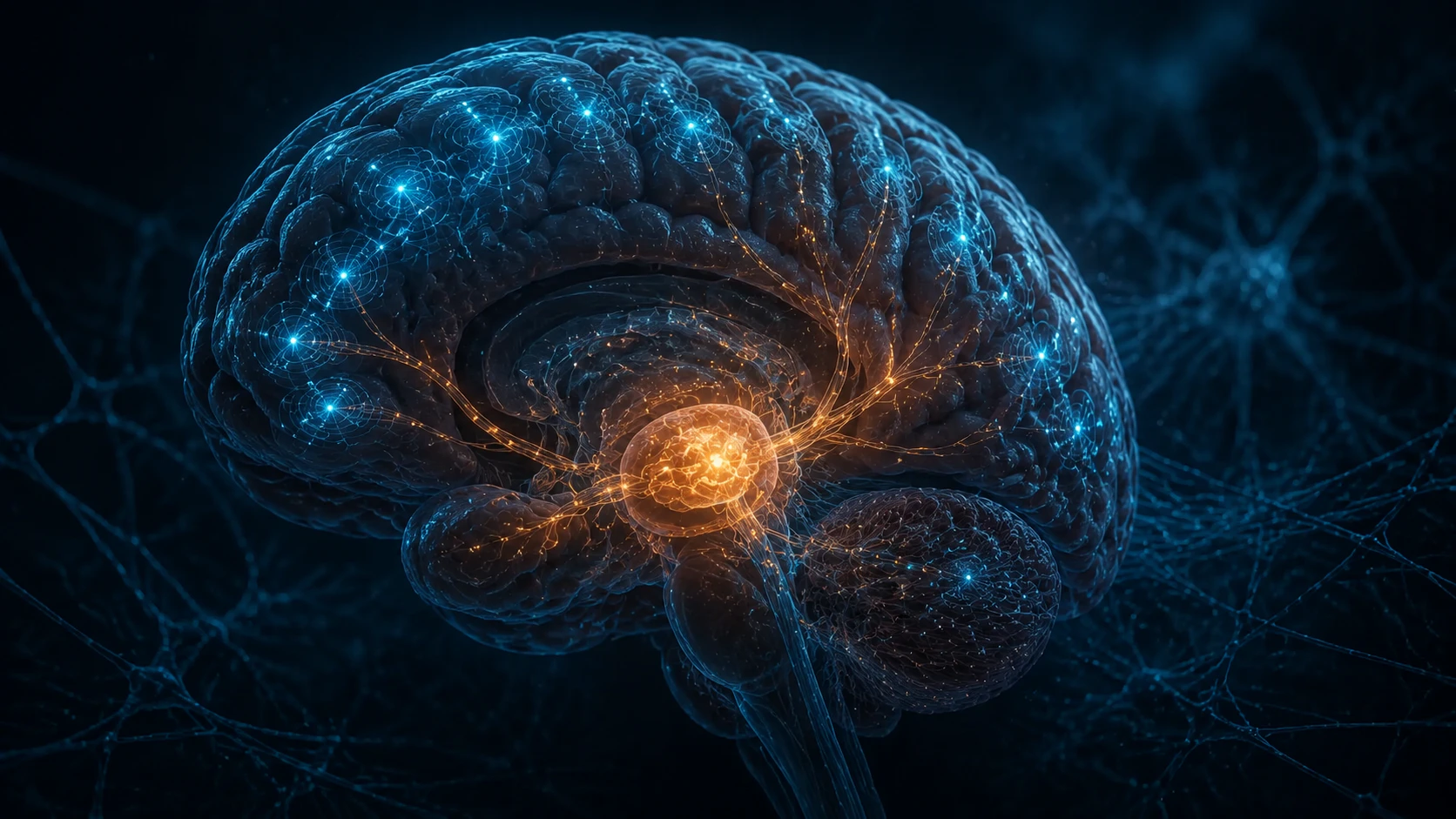
Conscious perception appears to require more than neurons firing. Information must remain differentiated and available across interacting systems. Under several anesthetics, functional connectivity between frontal, parietal and thalamic regions weakens or becomes less flexible, while local slow oscillations can become strongly synchronized.
A highly regular rhythm is not necessarily richer communication. If large populations alternate together between active and silent phases, signals may have fewer opportunities to propagate across the cortex. Measures of complexity and the repertoire of possible network states commonly fall during anesthetic unconsciousness.
The thalamus helps regulate cortical communication and arousal, but it is not a solitary consciousness switch. Brainstem arousal systems, thalamocortical loops and cortical interactions contribute together, with the balance varying by drug and dose.
A signal can enter the brain without becoming an experience
Auditory or somatosensory input can still produce early neural responses during anesthesia. What often fails is later recurrent processing—the exchange through which signals are amplified, compared with context and made broadly available to memory, decision and report.
This is why absence of movement alone cannot prove absence of awareness, especially if neuromuscular-blocking medicine is used. Clinical monitoring combines drug dosing, physiological signs and, in selected settings, processed electrical measures; none provides a perfect direct meter of subjective consciousness.
Accidental awareness during general anesthesia is uncommon but clinically important. Risk depends on the procedure, patient and anesthetic constraints, and concerns belong with the anesthesia team rather than self-interpretation of a monitor or remembered dream.
Recovery is a new transition, not a film running backward
As drug concentration falls, molecular targets recover and network dynamics regain complexity and long-range coordination. Brainstem and thalamocortical arousal systems participate in the return of responsiveness, but recovery can follow a path that differs from induction.
Age, illness, surgery, sleep disruption, inflammation and the drug combination influence the timing and clarity of emergence. Temporary confusion is more common in some patients, while postoperative delirium is a distinct clinical syndrome requiring assessment.
Researchers increasingly use anesthesia to test theories of consciousness because the transition is reversible and measurable. The settled observation is network reorganization; the unresolved question is which changes are causal, which are accompanying markers and how universal they are across agents.
From molecular targets to disconnected experience
Anesthetic molecules change inhibition, excitation and membrane excitability across neural populations. Local rhythms and the probability that signals propagate are altered.
Thalamic and cortical networks lose part of their complexity and effective long-range exchange. Sensory processing may continue in fragments without the integration required for stable conscious access.
A 2024 neurobiology review summarizes evidence that anesthesia reduces complexity and flexible functional connectivity without globally silencing the brain.
Why it matters
Anesthesia demonstrates that consciousness depends on patterns of interaction, not simply the total amount of brain activity.
The distinction between unconsciousness, analgesia, amnesia and immobility also makes surgical safety easier to understand: clinicians actively manage several physiological goals at once.
Anesthesia changes the organization of activity, not just its volume.
Multiple drugs reshape cellular signaling and large-scale communication until the brain can no longer sustain ordinary integrated conscious access.
Research behind this story
We link to the primary study or an authoritative indexed review wherever possible. Caveats in the text reflect the limits of that evidence.
01