Quick answer
Normal urine is yellow mainly because it contains urobilin. Aging red blood cells release heme, which is converted to bilirubin and processed by the liver into bile. In the intestine, microbes reduce bilirubin to colorless urobilinogen. Most related material leaves in stool, but some urobilinogen is reabsorbed, reaches the kidneys and is oxidized to yellow urobilin. Water changes the concentration: more dilute urine looks pale, while less water makes the same class of pigments appear darker. Color alone is an imperfect hydration test, and persistent red, brown, orange or unusually dark urine can have causes that deserve medical assessment.
A glass of water can make urine look almost clear; several hours without a drink can deepen it to amber. The changing shade is mostly dilution, but the pigment being diluted has traveled through several organs before it reaches the toilet.
Its story begins when old red blood cells are dismantled. Heme becomes bilirubin, the liver sends bilirubin into bile, gut microbes transform it, and a small returning fraction ultimately becomes urobilin—the compound that gives ordinary urine its yellow color.
The pigment begins with red-blood-cell turnover
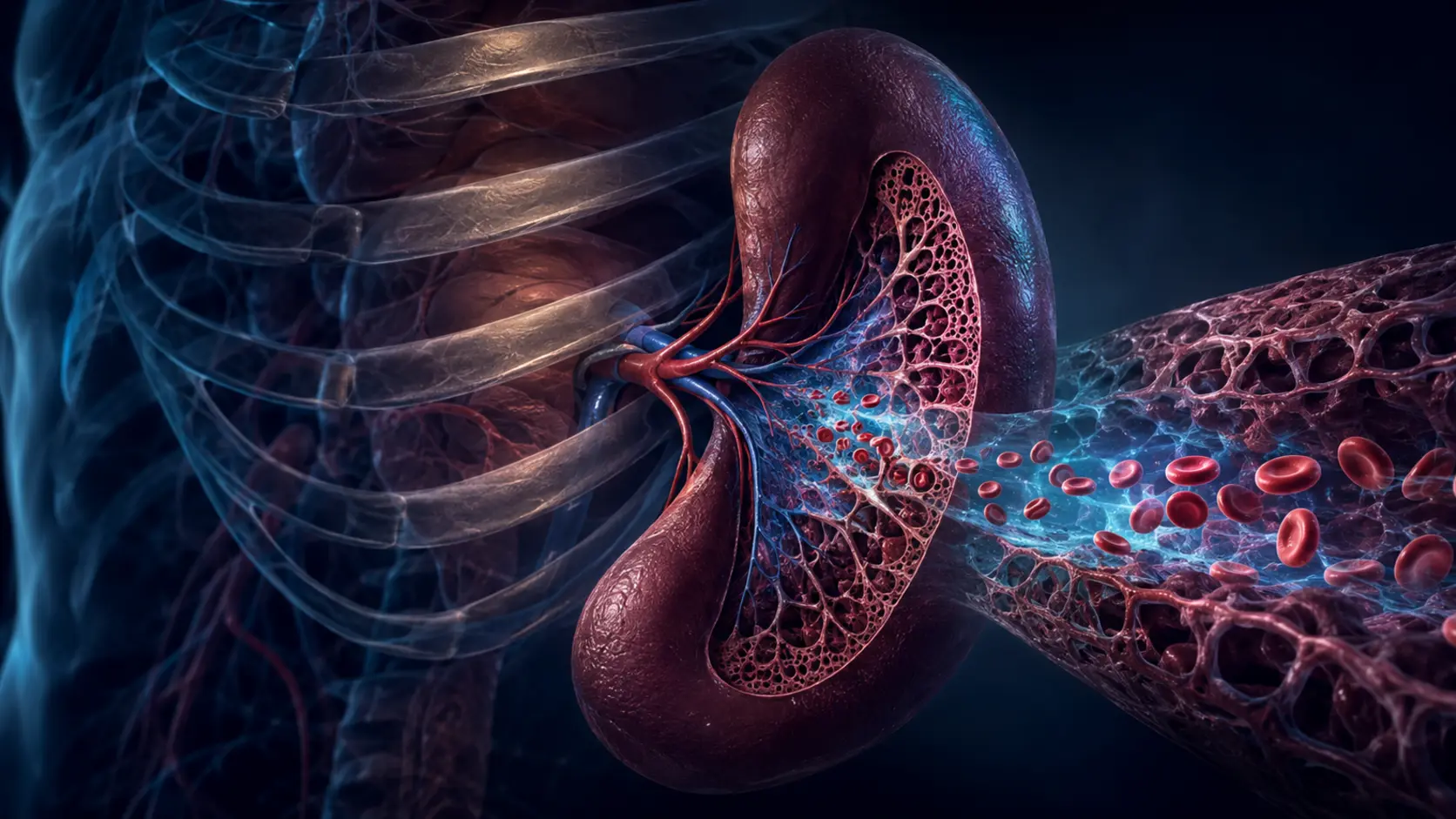
Red blood cells circulate for roughly four months before macrophages, especially in the spleen, liver and bone marrow, remove many aging cells. Hemoglobin is dismantled; iron is conserved for reuse, globin is broken into amino acids and the heme ring follows a pigment-producing route.
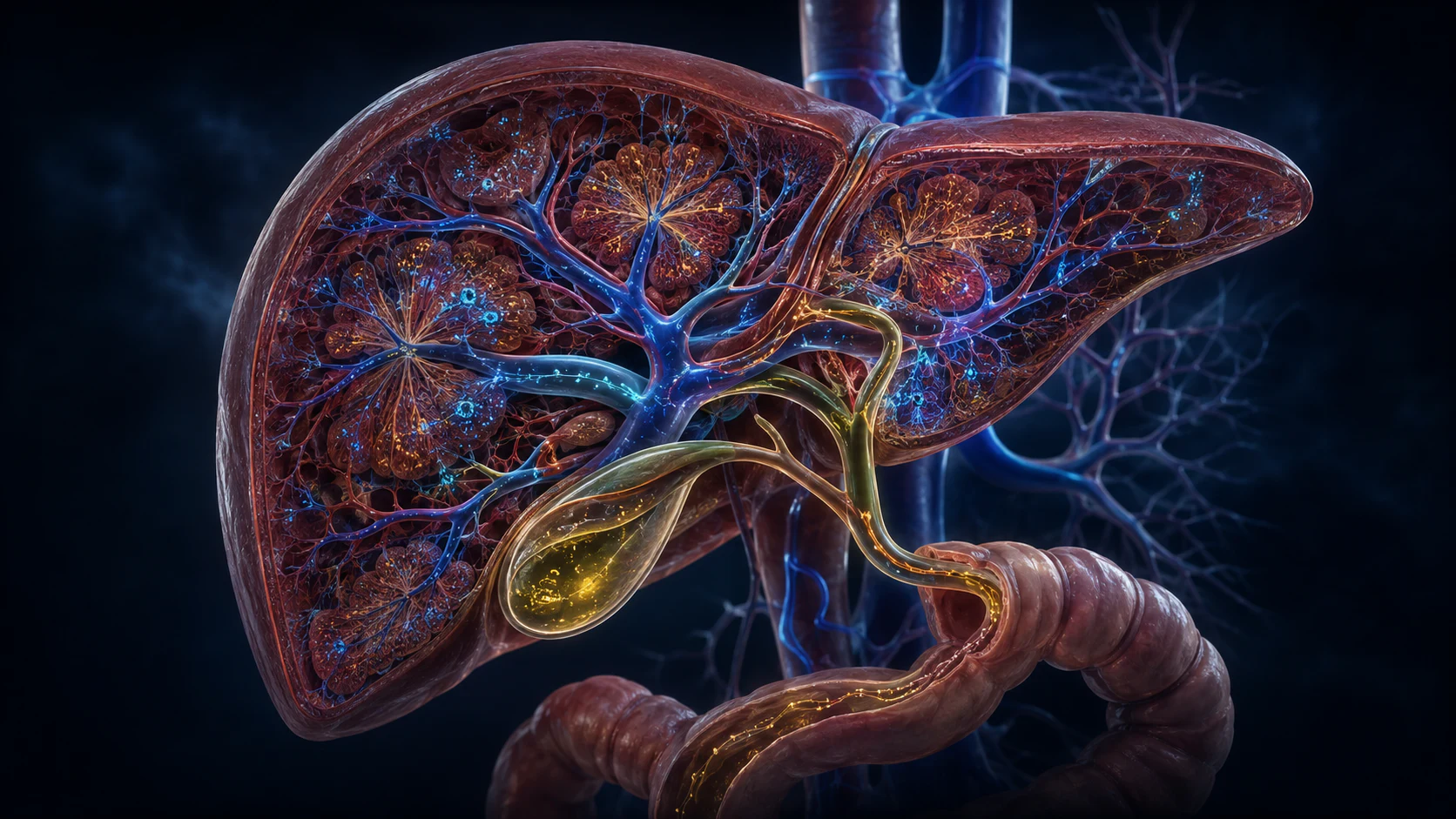
Heme first becomes biliverdin and then bilirubin. Unconjugated bilirubin travels bound to albumin because it is not readily soluble in water. Liver cells take it up, attach glucuronic acid and secrete the conjugated form into bile flowing toward the intestine.
Urine is therefore not yellow because kidneys dye water directly. The kidneys receive a downstream product of a recycling process that has already involved blood cells, macrophages, the liver and the gut.
Gut microbes complete a missing chemical step
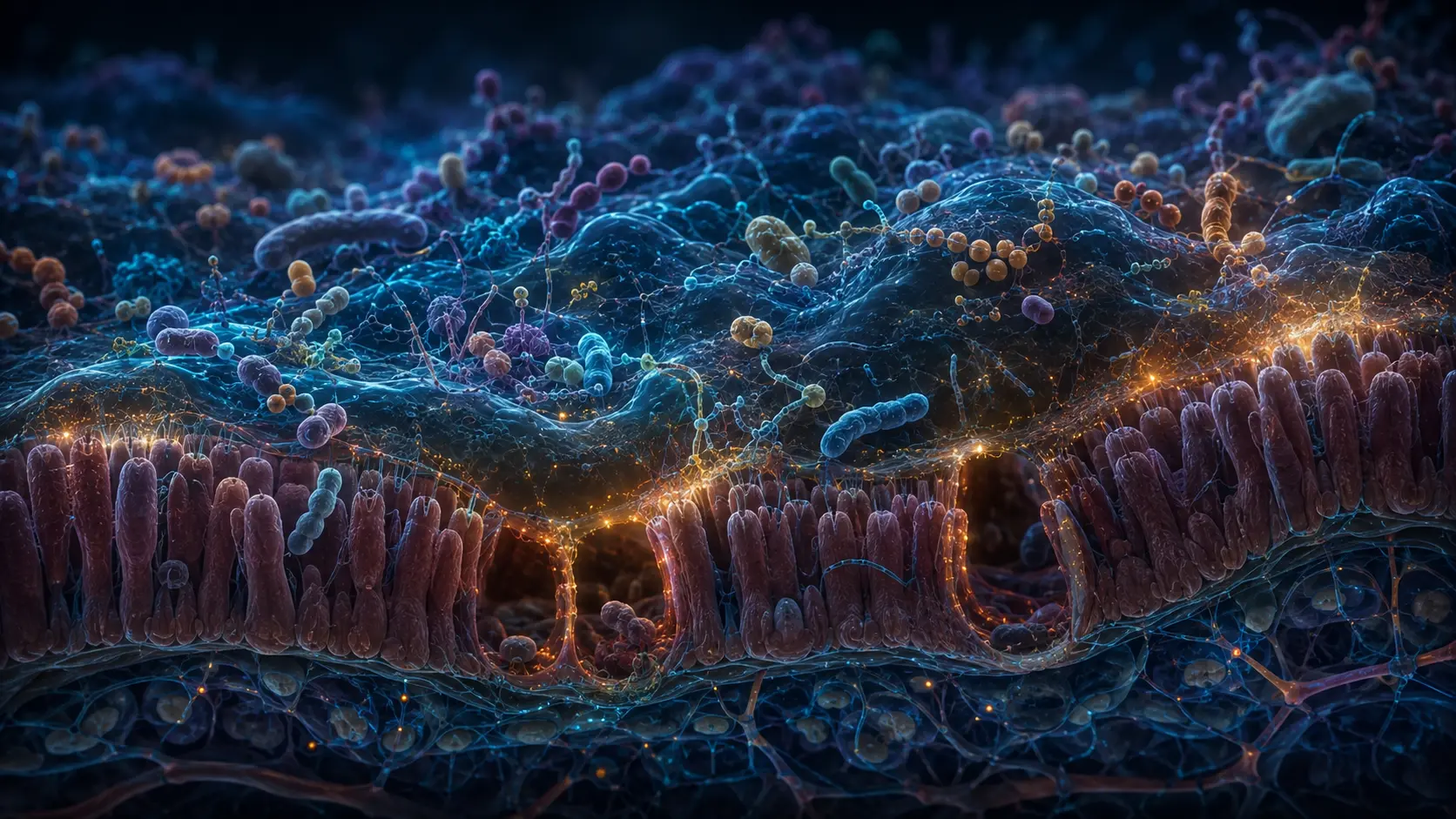
Inside the intestine, bacterial enzymes convert bilirubin into urobilinogen. In 2023, researchers identified bilirubin reductase as the microbial enzyme responsible for that reduction, resolving a biochemical gap that had remained surprisingly uncertain.
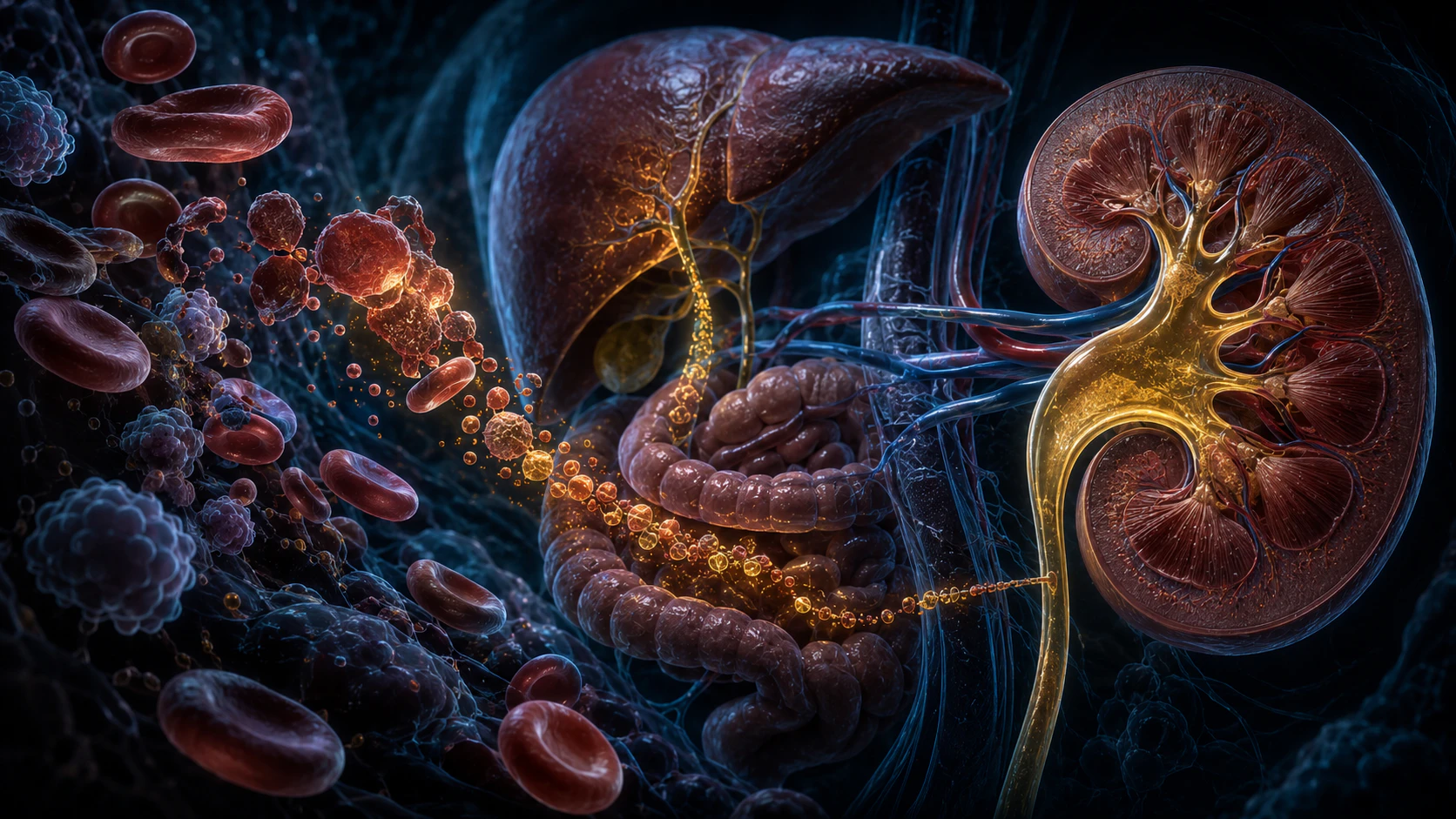
Most pigment products continue through the intestine and contribute to the brown color of stool after further conversion. A smaller amount of urobilinogen is reabsorbed into portal blood. Much of it cycles back through the liver, while a fraction reaches the general circulation and the kidneys.
Urobilinogen is readily oxidized into urobilin, the stable yellow pigment detected in urine. The broad route is established; the abundance of bilirubin-reducing microbes varies with age and health, and researchers are still studying how those differences influence circulating bilirubin in real people.
Water changes the shade more than the pigment's identity
Kidneys continuously adjust how much water remains in the final urine. When the body conserves water, pigment becomes more concentrated and the color usually deepens. After substantial fluid intake, a larger water volume can make urine very pale.
That relationship makes color a rough observation, not a laboratory hydration meter. Foods, vitamins, medicines, exercise, timing and lighting can alter appearance. Some healthy people also produce naturally lighter or darker samples at the same hydration state.
Clear urine is not automatically a health target, and dark urine is not automatically simple dehydration. Persistent red, tea-colored, brown or orange urine—or color change accompanied by pain, fever, jaundice or reduced urination—should be assessed rather than decoded from an online chart.
From heme to yellow urobilin
Macrophages dismantle aging red cells and convert heme toward bilirubin. The liver conjugates bilirubin and releases it into bile entering the intestine.
Microbial bilirubin reductase forms urobilinogen. A small reabsorbed fraction reaches the kidneys and oxidizes to urobilin, whose concentration helps set the final yellow shade.
A 2023 genomic and biochemical study identified the gut microbial bilirubin reductase enzyme.
Why it matters
The color links four systems often taught separately: blood-cell turnover, liver processing, the microbiome and kidney water balance.
It also prevents overconfident self-diagnosis. Ordinary yellow variation is common, but a color chart cannot identify blood, bilirubin, medicines or disease without context and testing.
Yellow urine is diluted evidence of blood-pigment recycling.
Urobilin forms downstream of red-cell breakdown, liver bile and microbial metabolism; kidney water handling determines how strongly the pigment shows.
Research behind this story
We link to the primary study or an authoritative indexed review wherever possible. Caveats in the text reflect the limits of that evidence.
01