Quick answer
A brief head rush after standing happens when gravity shifts blood toward the legs and abdomen faster than the cardiovascular system initially compensates. Less blood returns to the heart, so blood pressure and brain perfusion can dip. Stretch sensors called baroreceptors detect the change and trigger a faster heartbeat plus vessel constriction, usually restoring pressure within seconds. Occasional mild symptoms can follow dehydration, heat, prolonged sitting or some medicines. Repeated, severe or fainting episodes require medical evaluation because many conditions can cause orthostatic intolerance.
You stand, the room narrows at the edges, and a scatter of dark or bright spots crosses your vision. A few seconds later everything is ordinary again. That short transition exposes a circulation problem the body usually solves too quickly to notice.
Gravity does not suddenly switch on, but posture changes where it can hold blood. Moving upright transfers a meaningful volume toward the legs and abdomen before reflexes tighten vessels and adjust the heartbeat.
Upright posture redistributes blood
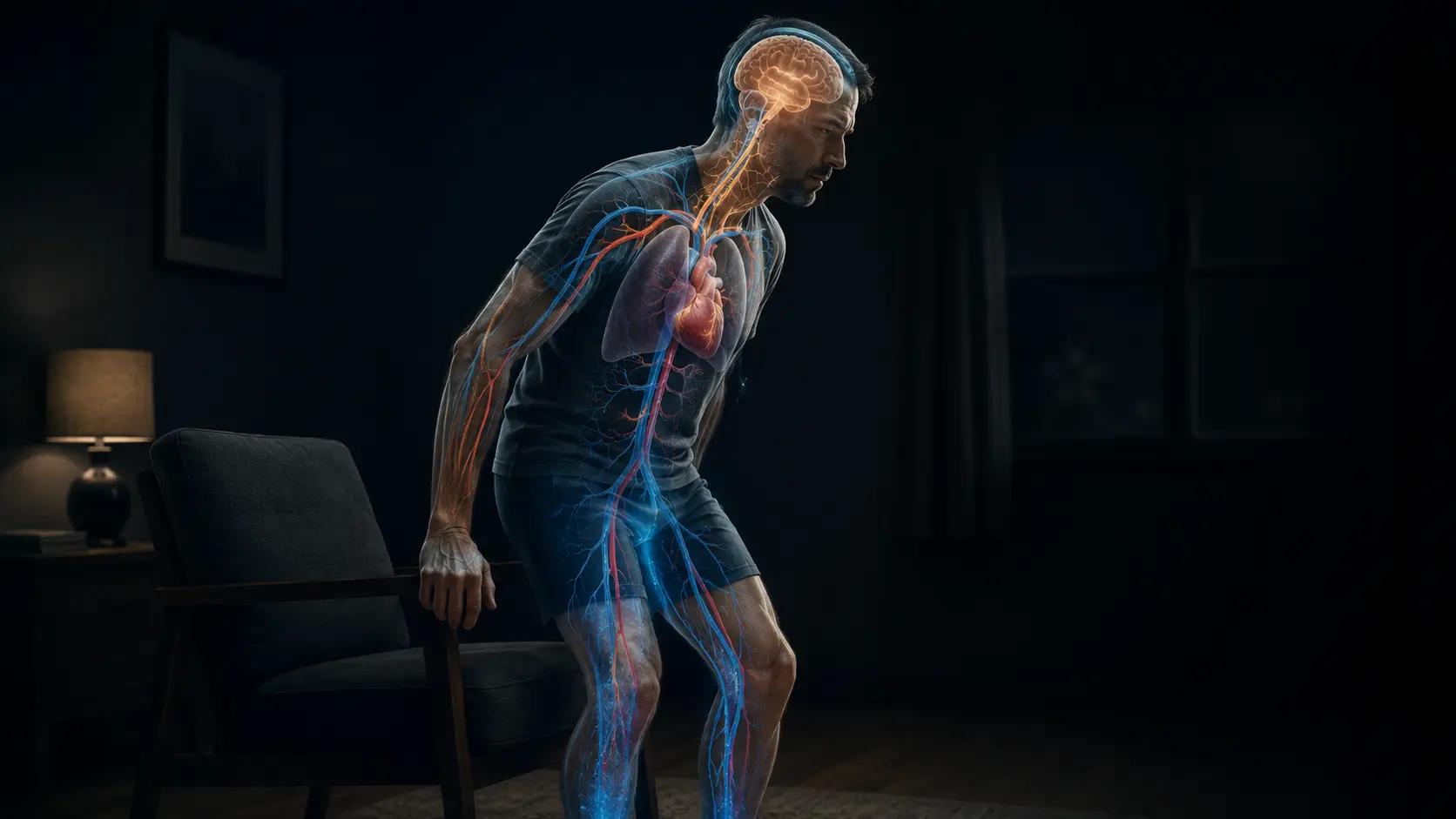
While lying down, the heart and much of the circulation are at similar heights. Standing creates a taller hydrostatic column. Blood distends compliant veins in the legs and lower trunk, temporarily reducing the volume returning through the great veins to the heart.
Lower venous return means the ventricles fill less before the next beat. Stroke volume can fall, and arterial pressure may dip. The brain sits above the heart, making steady pressure especially important during the transition.
Muscle contractions in the legs help squeeze veins and their valves direct flow upward. That muscle pump becomes more useful once you begin walking, but the earliest correction depends heavily on automatic neural reflexes.
Pressure sensors answer within seconds
Baroreceptors in the carotid sinus and aortic arch sense less stretch when arterial pressure falls. Signals through the brainstem alter autonomic output: sympathetic activity rises, parasympathetic influence on the heart falls, the heart rate increases and many vessels constrict.
Constriction reduces the capacity of the vascular system and pushes pressure back upward. Hormonal and kidney responses matter over longer periods, but the baroreflex is the rapid bridge across the first seconds after standing.
The system is adaptive rather than perfectly fixed. Heat widens skin vessels, dehydration lowers circulating volume, alcohol can impair vascular responses and medicines may alter heart rate or vessel tone. Any of these can make the same posture change more noticeable.
Vision often changes before consciousness
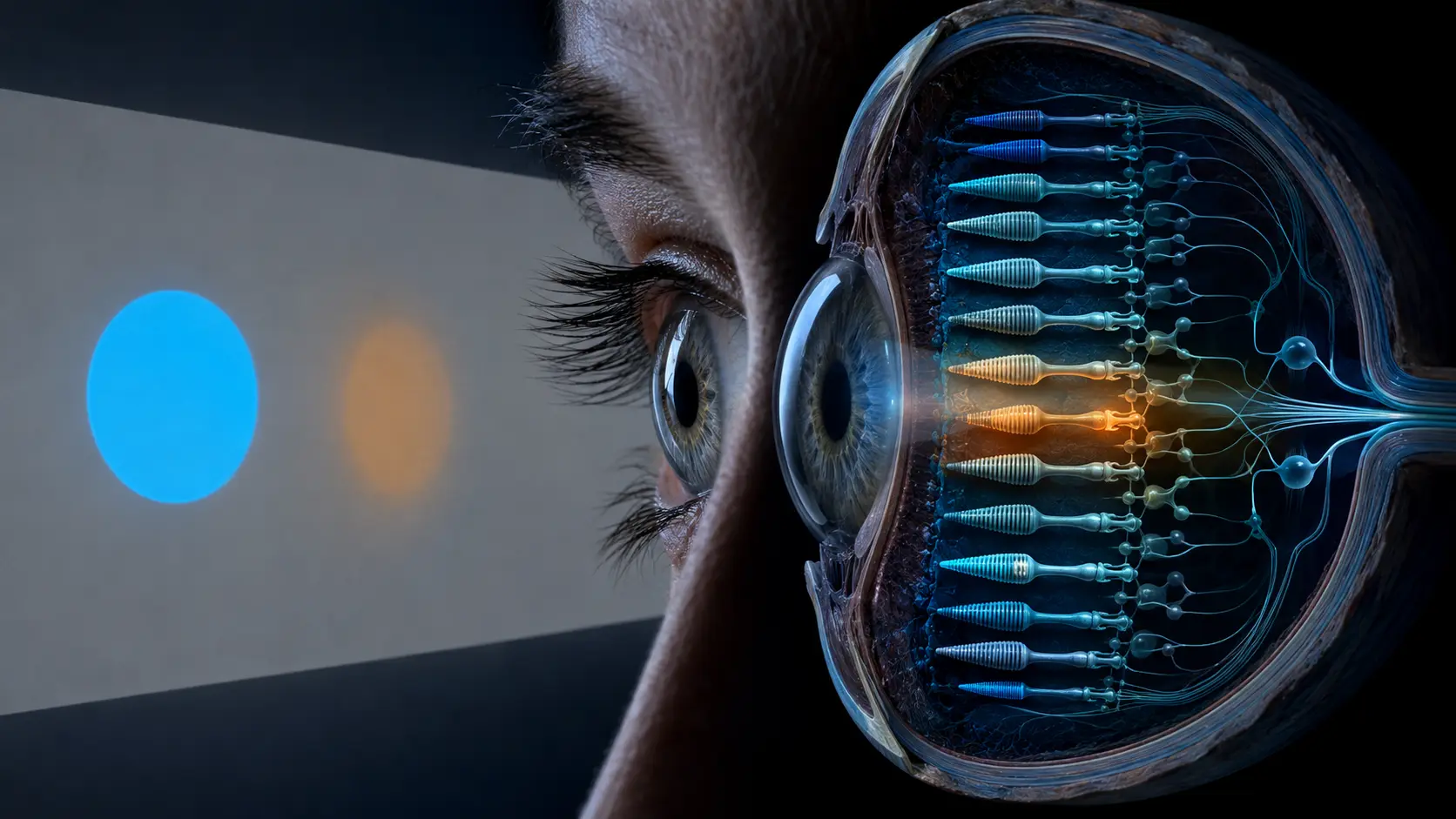
The retina and visual brain depend on continuous oxygenated blood flow. A brief reduction can produce graying, tunnel vision, spots or a near-blackout. These are presyncope symptoms—the warning phase before fainting—not literal stars emitted inside the eye.
Most short episodes resolve when pressure recovers or the person sits or lies down. A true faint is a temporary loss of consciousness and deserves attention, especially with chest pain, palpitations, injury, exertion or a family history of sudden cardiac death.
Clinicians define orthostatic hypotension with measured blood-pressure changes, not with a sensation alone. Orthostatic intolerance also includes other patterns, so an article cannot diagnose which mechanism applies to one person.
How the standing reflex restores pressure
Standing pools blood below the heart, reducing venous return and the amount ejected with each beat.
Baroreceptors signal the brainstem, which raises heart rate and vascular tone. Brain perfusion usually recovers before the transition becomes a faint.
MedlinePlus explains that sudden pressure loss can reduce brain blood flow and cause dimming or loss of vision before fainting.
Why it matters
A head rush makes the autonomic nervous system visible: circulation is actively regulated from beat to beat.
It is also a useful boundary between normal physiology and symptoms that need evaluation; frequency, severity and context matter more than the nickname.
Standing turns circulation into a race against gravity.
A rapid baroreflex normally wins within seconds; the head rush is what you may feel when brain perfusion dips before the correction is complete.
Research behind this story
We link to the primary study or an authoritative indexed review wherever possible. Caveats in the text reflect the limits of that evidence.
01