
Quick answer
A side stitch is short-lived, well-localized abdominal pain during exercise, especially activities with repetitive torso movement. Researchers have tested explanations involving the diaphragm, abdominal muscles, organ-supporting ligaments and the peritoneum—the membrane lining the abdominal cavity. No mechanism has been proven for every episode. A leading model proposes that movement irritates the parietal peritoneum, particularly when a filled stomach presses the membrane's layers together. Large amounts of food or drink shortly before exercise can make stitches more likely in susceptible people. Slowing down, pressing the area, bending slightly forward and breathing deliberately often coincide with relief, but prevention evidence is limited.
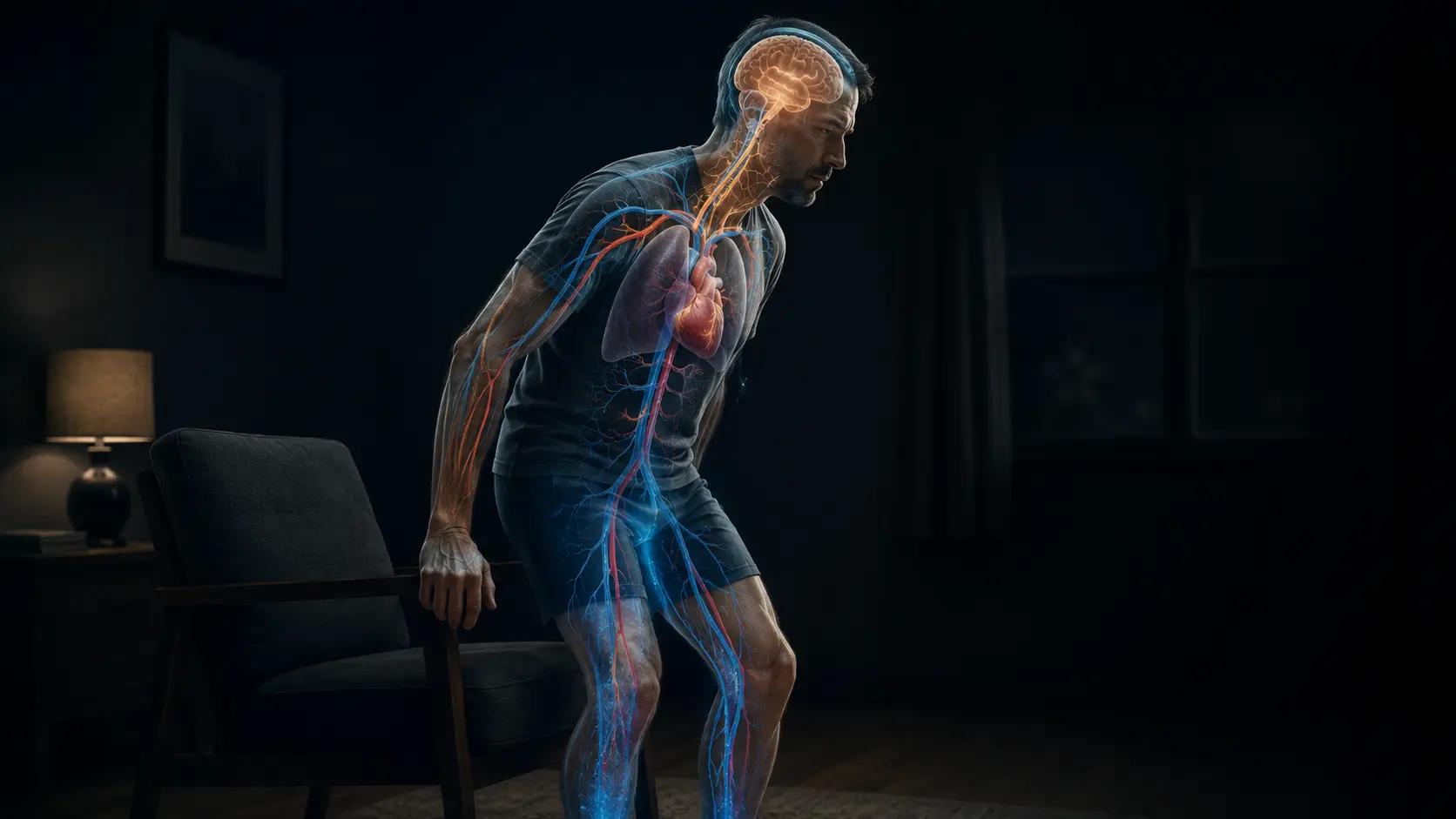
A run can feel smooth until a sharp ache catches just below the ribs. Breathing becomes awkward, one hand moves to the painful spot and the pace drops. Runners call it a side stitch, but researchers use the broader name exercise-related transient abdominal pain, or ETAP.
The pain is common, yet its source is unsettled. Evidence does not support one universal diaphragm cramp. A leading explanation involves irritation of the membrane lining the abdominal wall.
The pattern is more specific than ordinary stomach pain
ETAP can occur in different parts of the abdomen, but surveys most often place it along the lateral middle region. People describe mild episodes as aching or pulling and severe episodes as sharp or stabbing. Some also feel pain at the tip of a shoulder, a referred sensation that may involve the phrenic nerve.
The trigger is movement rather than simply high cardiovascular effort. Running, swimming and horse riding can all provoke it. Their repetitive torso motion is difficult to reconcile with a theory based only on the diaphragm running out of oxygen.
Younger people report stitches more often, while training status and body type do not fully explain susceptibility. Individual patterns still vary.
Several plausible mechanisms have been proposed
The classic explanation is reduced blood flow in the diaphragm. Yet stitches occur with modest respiratory demand, and lung-function measurements during an episode have not shown the pattern expected from a diaphragm unable to work normally.
Tugging on organ-supporting ligaments, abdominal muscle cramp, digestive distension and irritation of nerves near the spine have also been proposed. Each may contribute in some situations, but none explains every location and activity pattern. ETAP is defined by its exercise-linked, transient pattern rather than a confirmed tissue test.
The abdominal lining fits many clues, but remains a hypothesis
The parietal peritoneum is the sensitive membrane attached to the inside of the abdominal wall and the underside of the diaphragm. Irritation there can produce sharp, well-localized pain that worsens with movement. Because the membrane spans the abdominal wall, it could also account for stitches appearing in more than one location.
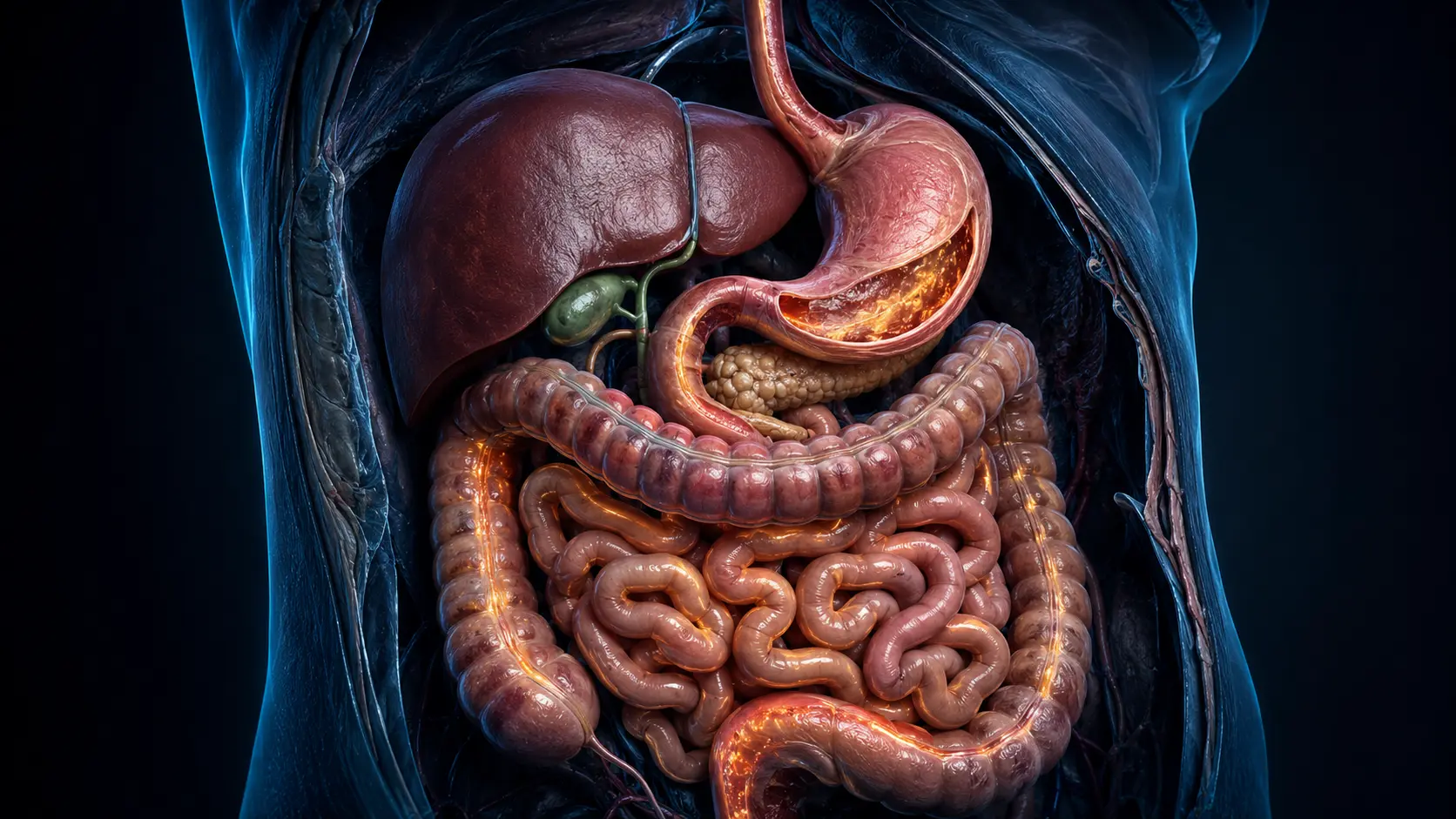
One model proposes friction or pressure between the parietal layer and the visceral peritoneum covering the organs. Repetitive motion could increase contact, while a distended stomach could press the surfaces together. Shoulder-tip pain is also compatible with irritation near the diaphragm and the phrenic nerve.
This model joins several observations, but it has not been directly demonstrated during a routine stitch. Most research relies on surveys, exercise trials and indirect physiological tests. Calling peritoneal irritation the proven cause would therefore go beyond the evidence.
What you consume before exercise can change the odds
People who are susceptible commonly report more symptoms after eating or drinking a large amount close to exercise. In a small treadmill trial, reconstituted fruit juice with higher carbohydrate concentration and osmolality provoked more ETAP and bloating than flavored water, a sports drink or no fluid. The result supports an effect of drink composition, but it does not mean every sugary drink causes a stitch in every runner.
Practical prevention is individualized: avoid unusually large meals and drink volumes immediately before a run, learn what you tolerate and practice the fueling plan needed for longer events. Excessive fluid restriction is unsafe, especially in heat.
Posture may matter too. One observational study linked greater thoracic kyphosis with more ETAP, but correlation does not prove that changing posture will cure it. Evidence for core training, breathing rhythms or a particular foot strike is limited.
Most stitches fade quickly; persistent pain deserves a different frame
Reducing intensity or stopping usually lets the pain settle. People often press the area, bend slightly forward or breathe deliberately, but trials have not established one superior technique.
A familiar stitch that appears only with exercise and resolves soon after slowing is different from abdominal pain that persists, worsens, repeatedly occurs at rest or comes with fainting, fever, vomiting, chest pain, blood in stool or urine, a rigid abdomen or severe shortness of breath. Those features need appropriate medical assessment rather than a side-stitch explanation.
ETAP is a descriptive label, not diagnostic proof. New or unusually severe exercise pain can have unrelated causes. Transient stitches are common and usually benign, while their exact tissue mechanism remains unsettled.
From repetitive motion to a temporary pain signal
A susceptible person begins an activity that repeatedly moves or extends the torso. A recent meal or large drink may add abdominal distension. In the leading model, those conditions increase mechanical irritation of the sensitive parietal peritoneum.
Local sensory nerves then produce a sharp, focused pain signal. Slowing or stopping removes the repeated stimulus, so the sensation often fades quickly. This sequence fits the observations, but the first tissue step has not been proven for every stitch.
A major review summarizes the epidemiology, proposed causes and management evidence for ETAP.
A controlled treadmill study tested how different drink compositions changed side-stitch symptoms.
Try it yourself
Change one pre-run variable at a time.
- Note the timing and size of food and drink before runs that do and do not trigger pain.
- Test a longer interval after a large meal while keeping distance and pace similar.
- During a stitch, slow down and record which simple response coincides with relief.
This is an observation exercise, not a diagnostic test. Do not restrict needed hydration, and stop exercise for severe, unfamiliar or persistent pain.
Why it matters
The uncertainty is useful: it prevents a convenient diaphragm-cramp story from being presented as established anatomy.
Separating a typical transient stitch from warning signs also keeps a common exercise sensation from becoming either unnecessarily alarming or falsely reassuring.
The pain is brief; the mechanism is still being worked out.
Movement, a recently filled stomach and irritation of the abdominal lining fit much of the evidence, but no single cause explains every side stitch.
Research behind this story
We link to the primary study or an authoritative indexed review wherever possible. Caveats in the text reflect the limits of that evidence.
01