Quick answer
Your mouth can water when you see, smell or think about food because sensory and learned cues activate autonomic pathways to salivary glands. Parasympathetic signals through cranial nerves stimulate the parotid, submandibular and sublingual glands, often producing watery secretion. Saliva lubricates food, dissolves molecules for taste, begins starch and fat processing, protects teeth and tissue, and helps form a swallowable bolus. This is part of the cephalic phase of feeding, but its strength varies and does not reliably measure hunger or digestive health.
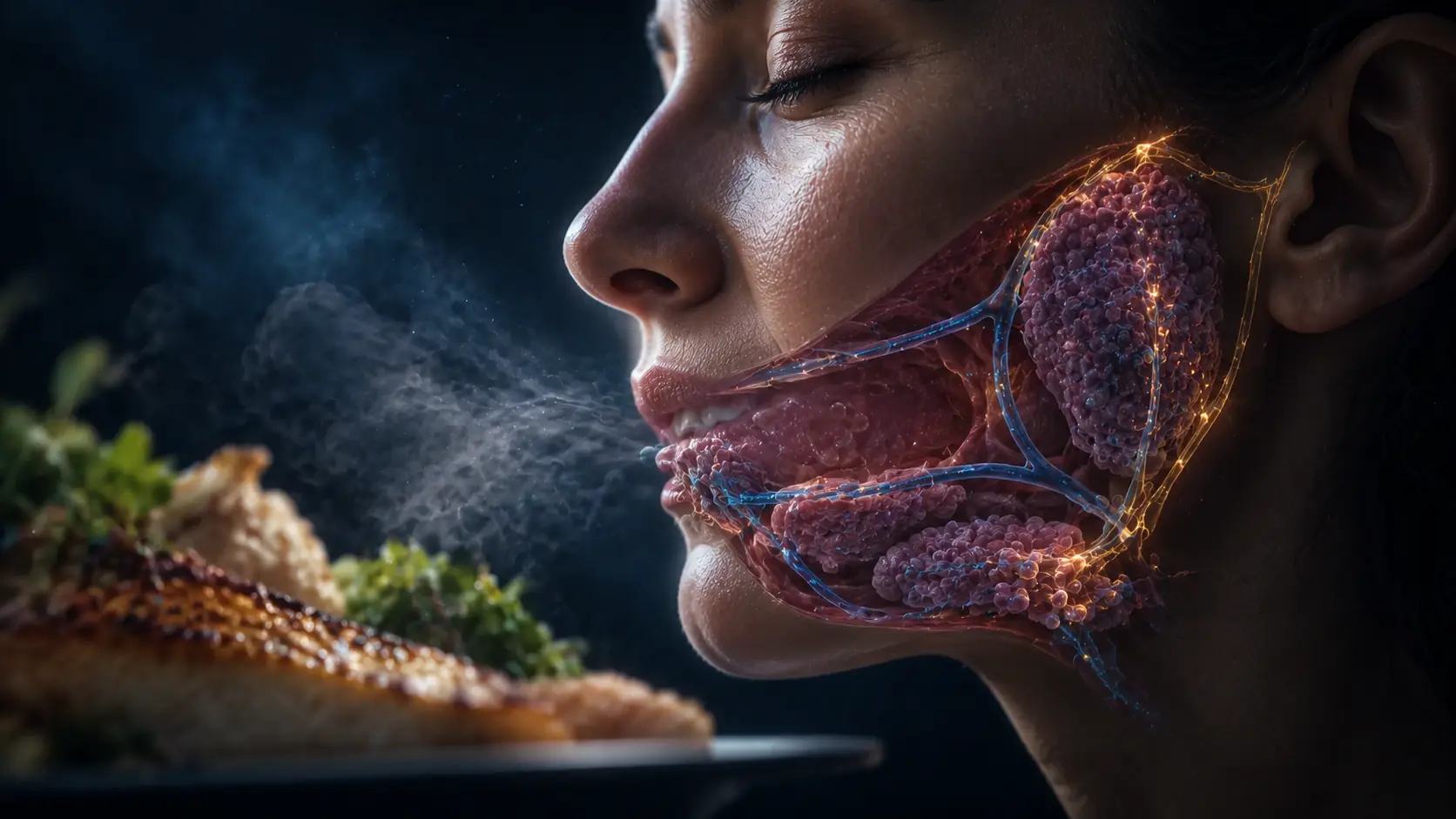
Steam rises from a familiar meal and saliva collects immediately. No food has touched the tongue, yet glands around the cheeks and jaw have changed their output. This is anticipatory biology, not imagination producing a fake symptom.
Vision, smell, sound and memory feed brain circuits controlling salivation. This cephalic phase prepares the mouth and digestive system for likely intake. The reflex is established; its strength depends on hunger, learning, attention and the food.
A food cue becomes an autonomic command
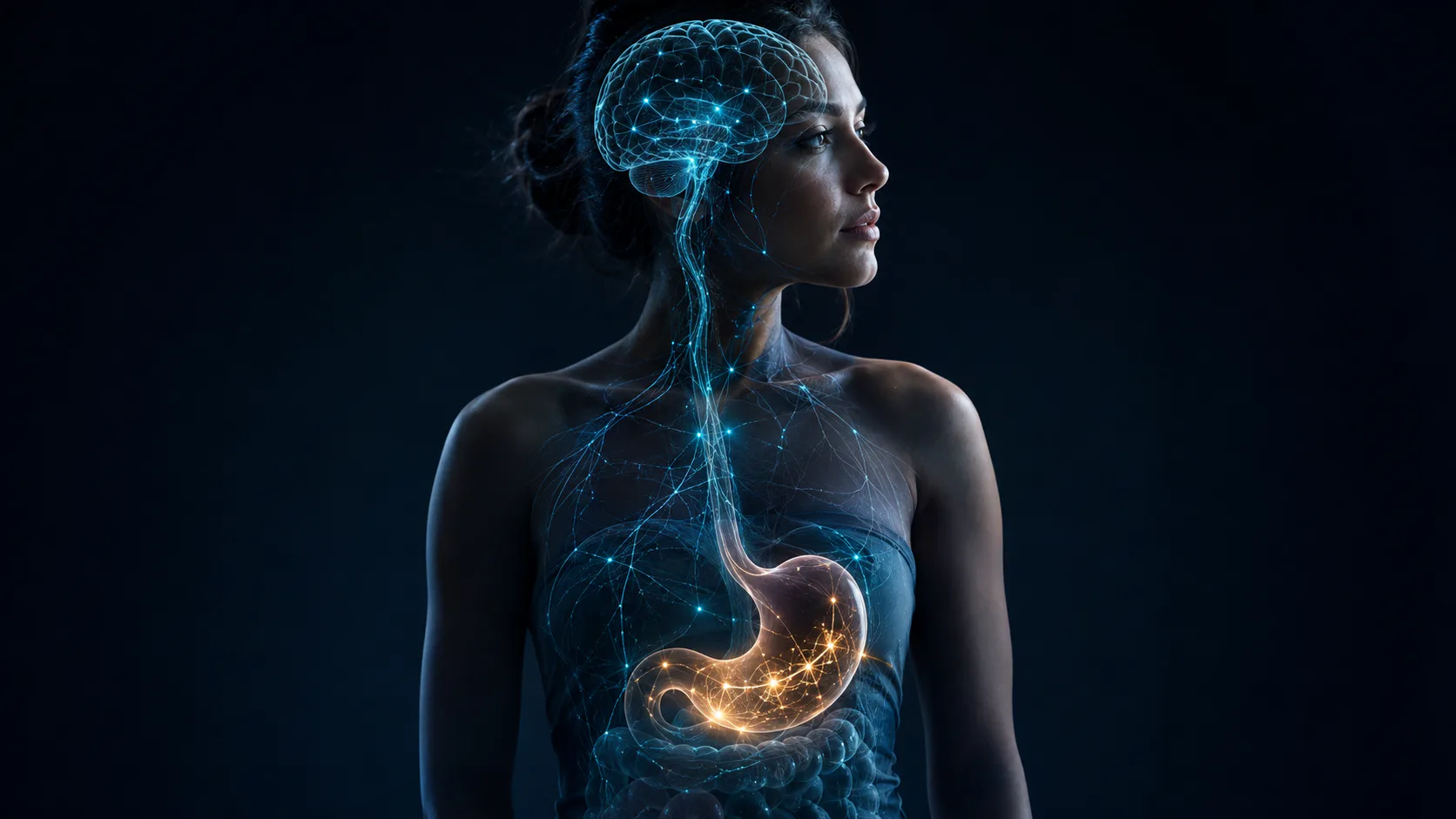
Odor activates olfactory pathways, a visual scene is interpreted in cortex, and past meals give those cues learned significance. Signals converge on hypothalamic, amygdala and brainstem networks that can recruit salivatory nuclei before chewing.
Parasympathetic fibers in the facial nerve help control submandibular and sublingual glands; glossopharyngeal fibers reach the parotid through a relay. Acetylcholine and other transmitters make gland cells secrete and increase local blood flow.
The pathway is not a camera-to-gland wire. Attention, expected reward, nausea, anxiety and satiety change it. A photograph may work when it predicts an appealing meal and do little when the food has become aversive.
Three paired glands contribute different mixtures
Parotid glands near the ears release thin, enzyme-rich fluid by the upper molars. Submandibular glands beneath the jaw provide much unstimulated saliva. Sublingual glands under the tongue contribute a more mucous secretion.
Hundreds of minor glands add fluid across lips, cheeks and palate. Together they produce water, ions, mucins, enzymes and antimicrobial proteins. The mixture changes with flow rate and stimulation.
Autonomic control is more nuanced than a wet-dry switch. Parasympathetic activity strongly drives abundant fluid, while sympathetic activity changes protein secretion and vascular tone. Stress-related dry mouth can occur even though sympathetic signaling is not simply off.
Early saliva makes eating work better
Taste molecules dissolve before reaching many receptors. Saliva moistens food, binds particles into a bolus and reduces friction during swallowing. Alpha-amylase begins starch processing, while lingual lipase contributes to fat digestion.
Bicarbonate buffers acids, calcium and phosphate support tooth mineral balance, and antimicrobial components manage microbes. Those jobs continue between meals, so chronically reduced flow can affect comfort, swallowing and dental health.
The wider cephalic phase may include gastric, pancreatic and hormonal changes. Evidence supports anticipation, but size and necessity vary across experiments. Salivation should not be used to claim the body perfectly predicts a meal's nutrients.
Experience teaches the reflex what to predict
Conditioned salivation is famous, but human eating combines odor, sight, timing and context. A bakery smell, dinner bell or familiar package can gain predictive value through repeated pairing with food.
Hunger often amplifies attention, yet people differ substantially. Studies measuring saliva after odors find variable volume and protein responses. That variability is a genuine biological result, not noise to replace with a universal rule.
Occasional food-triggered watering is normal. Persistent drooling, difficulty swallowing, painful swelling, severe dry mouth or sudden neurological change belongs to clinical assessment. This explains a reflex, not an individual diagnosis.
From aroma to saliva
A sensory cue is recognized and compared with learned expectations about food. Brainstem nuclei integrate that information with current body state.
Autonomic nerves stimulate gland cells and blood vessels, producing fluid for taste, chewing, swallowing and oral protection.
A physiological review describes salivary control and the functions of saliva.
Why it matters
The response shows digestion begins as prediction and preparation, not only after food reaches the stomach.
It reveals saliva as active tissue protection and sensory chemistry rather than leftover water.
Expectation can start a real reflex.
Food cues recruit learned sensory and autonomic pathways, turning on salivary glands before a bite needs lubrication and taste.
Research behind this story
We link to the primary study or an authoritative indexed review wherever possible. Caveats in the text reflect the limits of that evidence.
01