Quick answer
Some babies' eye color changes because melanin production and distribution in the iris continue to mature after birth. A lightly pigmented iris scatters shorter wavelengths and may look blue or gray; more stromal melanin absorbs light and can produce green, hazel or brown appearances. Genetics sets the developmental range through many genes, especially variants near OCA2 and HERC2, rather than a one-gene brown-versus-blue rule. Not all newborns have blue eyes, many eyes do not change, and changes can occur gradually into early childhood. One eye changing suddenly, a cloudy pupil or new redness is not normal color maturation and needs professional evaluation.
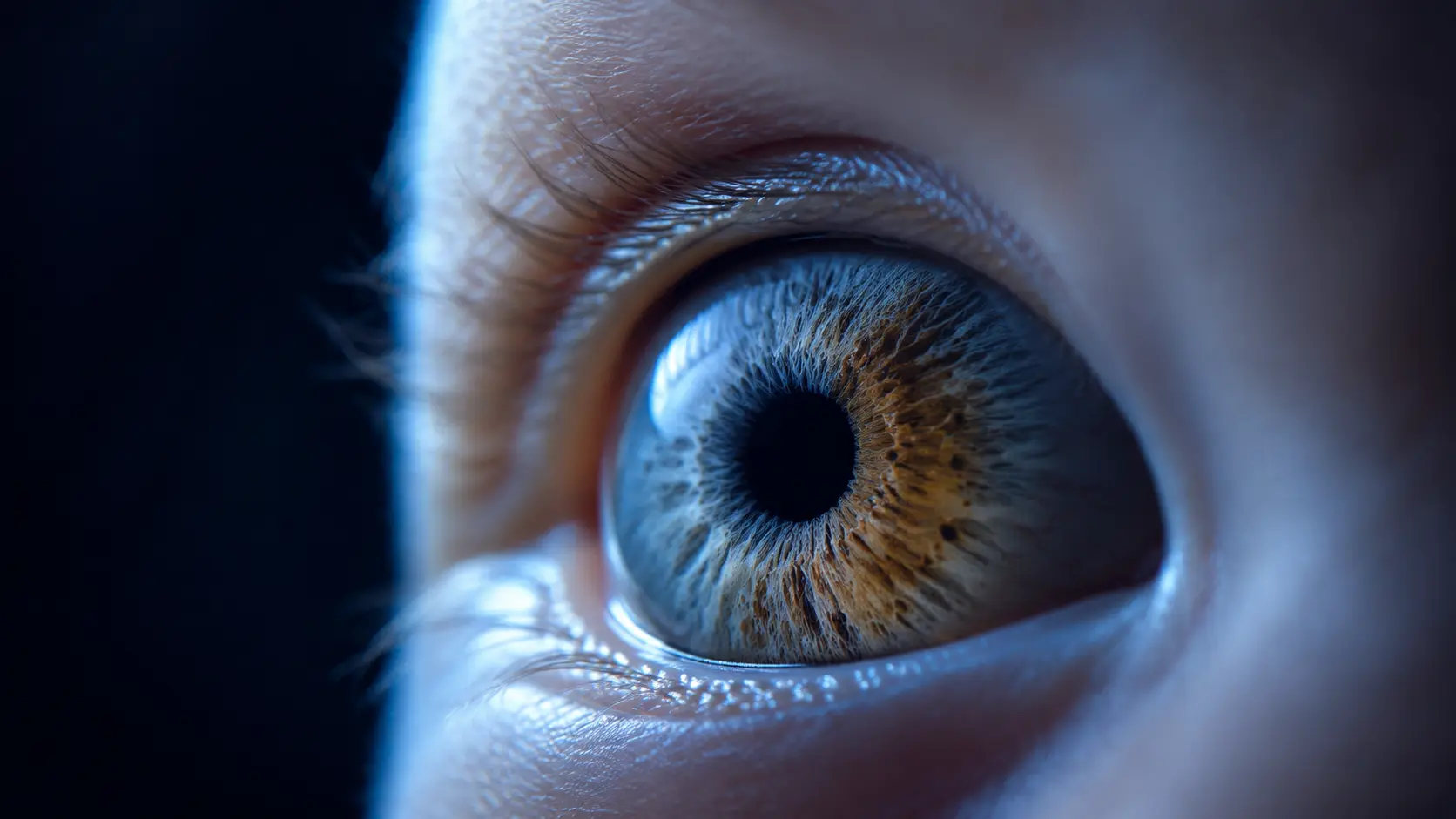
A newborn's iris may not keep exactly the same shade seen in the first photographs. Over months—and sometimes longer—a light iris can darken or its pattern can become more distinct. Other babies begin with brown eyes that remain brown, and many lighter eyes change little.
The explanation is not that blue pigment is being replaced by brown pigment. Human irises mainly vary in how much brown-black melanin they contain, where it sits and how the tissue scatters incoming light. Development can change that balance.
Blue eyes are structural color, not blue pigment
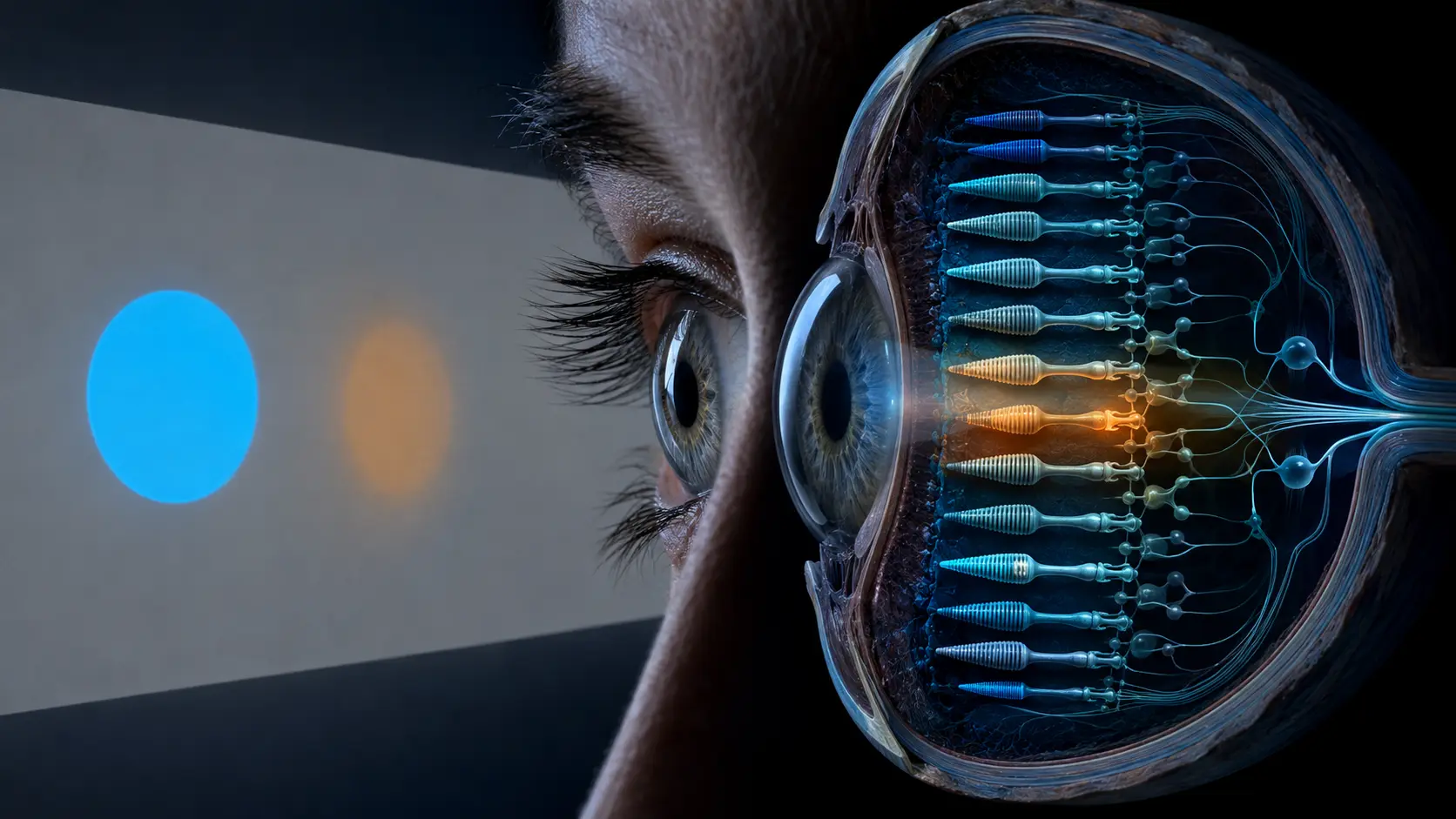
The iris controls how much light enters through the pupil. Its front layers contain connective tissue, vessels and melanocytes, while a dark pigment epithelium lines the back. The density and placement of melanin in the anterior iris strongly influence visible color.
With relatively little stromal melanin, light entering the iris is scattered and shorter wavelengths return more strongly to the observer, producing blue or gray. Greater melanin absorbs more light and supports brown. Intermediate pigment and structure can produce green or hazel patterns.
Lighting, pupil size, clothing and camera processing can make the same iris look different without biological change. True developmental change is gradual and visible across comparable conditions rather than one photograph.
Pigment maturation can continue after birth
Melanocytes are present in the iris, but their pigment production and the visible distribution of melanin can mature during infancy. As pigment increases, some light eyes darken toward green, hazel or brown. An already dark brown iris often shows less obvious change.
A prospective U.S. newborn cohort showed that newborns arrive with a broad distribution of iris colors; the common claim that all babies are born blue-eyed is false. Earlier longitudinal work found that 10% to 20% of children had a recorded color change between three months and six years, while a two-year newborn follow-up also documented change.
Those numbers describe particular cohorts and color scales, not a timetable for every ancestry or child. Eye color is a continuum, observers classify borderline shades differently and modern populations are more diverse than many historical samples.
Many genes shape the amount and placement of melanin
Variants near OCA2 and HERC2 have a large influence on blue–brown variation in many populations. OCA2 contributes to melanosome biology, while a regulatory region in HERC2 can alter OCA2 expression. They are important, but they are not the whole inheritance system.
Additional genes affect pigment synthesis, transport, melanosome properties and iris structure. That polygenic architecture explains why a simple classroom Punnett square cannot reliably predict a baby's exact eye color from two parents' labels.
Ancestry changes how common particular variants and colors are, not whether one color is biologically better. The same visible category can also arise from somewhat different genetic combinations.
Normal maturation is usually bilateral and gradual
Both eyes do not need to be perfectly identical. Stable sectoral or complete heterochromia can be a benign trait, and subtle pattern differences are common. What deserves attention is a new or rapid change, especially in one eye.
Cloudiness, an abnormal white pupil in photographs, pain, marked redness, light sensitivity, injury or a new difference between the eyes can reflect something other than pigment development. Those signs belong with a pediatrician or eye-care professional rather than an online color chart.
The settled science is that iris color combines melanin, structure and polygenic inheritance. The exact trajectory of an individual infant's shade cannot be predicted precisely from birth appearance alone.
How a light infant iris can darken
Genes regulate melanocyte and melanosome activity in the developing iris. With little anterior melanin, iris structure scatters light and the eye may appear blue or gray.
If pigment production increases, more light is absorbed and the visible shade can move toward green, hazel or brown. The change is usually slow, and many irises remain close to their newborn color.
A prospective newborn cohort directly measured the prevalence and diversity of iris colors present at birth.
Why it matters
Eye-color development turns a familiar family observation into an example of structural color, polygenic inheritance and postnatal tissue maturation.
It also draws a safety boundary between slow, ordinary pigment change and a sudden or cloudy eye change that should not be dismissed.
Genes set the range; developing pigment can change the shade.
The iris has no blue dye: melanin and tissue scattering interact, and some—but not all—infant eyes darken as pigmentation matures.
Research behind this story
We link to the primary study or an authoritative indexed review wherever possible. Caveats in the text reflect the limits of that evidence.
01