
Quick answer
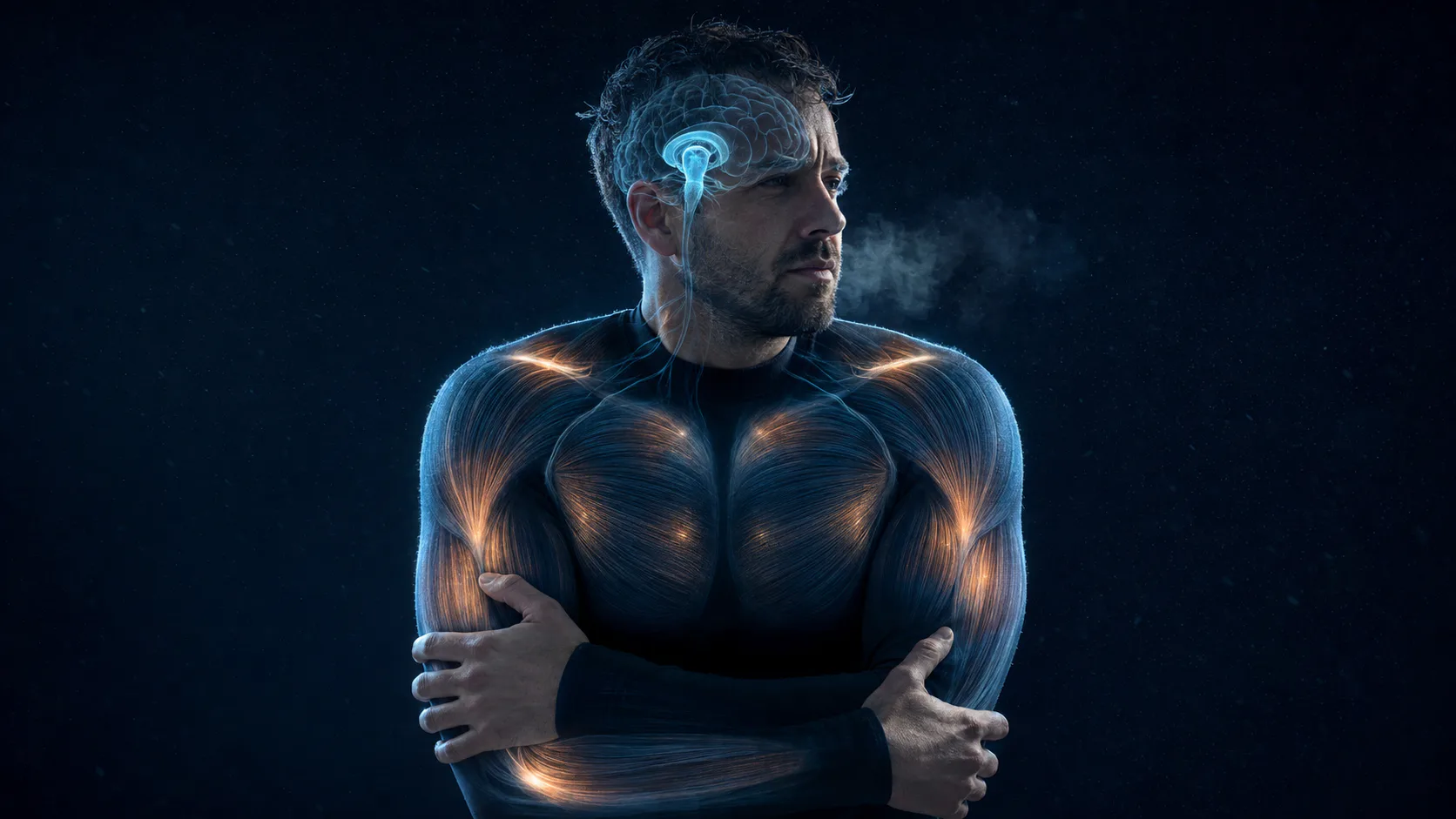
Muscles cramp when motor nerves and the fibers they control enter a burst of involuntary, repetitive activity. During exercise, fatigue may disturb signals that excite and inhibit alpha motor neurons, making a shortened working muscle easier to cramp. Heavy sweating and electrolyte loss can contribute during some long, hot efforts, but dehydration is not a universal explanation. Nighttime, pregnancy, medications and medical conditions have other risk patterns. Gentle stretching often helps the muscle relax, although the exact reflex mechanism is not fully proven. Frequent, severe or persistent cramps—especially with weakness or swelling—deserve medical assessment.
A calf can feel normal for an entire run, then tighten into a painful knot within seconds. The muscle becomes difficult to lengthen and the only useful instinct seems to be stopping and stretching.
That event is a skeletal muscle cramp: a sudden, involuntary and painful contraction driven by repeated electrical firing in motor units. It is different from a brief twitch and from the tenderness that appears a day after unfamiliar exercise. The electrical pattern is recognizable, but the reason it begins is not the same in every person or every setting.
A cramp begins with repeated motor-unit firing
Voluntary movement starts when an alpha motor neuron sends impulses to a group of muscle fibers. Each impulse releases acetylcholine, starts an electrical wave across the muscle membrane and releases calcium inside the fiber. Calcium allows actin and myosin to generate force; relaxation requires the firing to stop and calcium to return to storage.
During a cramp, many motor units fire rapidly without a deliberate command. Electromyography records this activity, and the shortened muscle becomes hard. Pain can come from the forceful contraction and from sensory endings compressed or stretched unevenly.
A twitch is usually a brief discharge in one motor unit and may be painless. A cramp recruits a stronger, sustained burst. Delayed-onset soreness is different again: it develops hours after loading as stressed tissue sensitizes sensory nerves.
Fatigue can tilt the spinal control system toward contraction
For exercise-associated cramps, a leading model centers on altered neuromuscular control. As a muscle works near fatigue—especially while shortened—sensory feedback changes. Muscle spindles can increase excitatory input, while inhibitory input associated with Golgi tendon organs may become less effective. The alpha motor neuron then sits closer to the threshold for repetitive firing.
This model fits several observations: cramps often affect the hardest-working muscles, appear late in competition and become more likely when an athlete exceeds recent training. A prior history also predicts susceptibility, suggesting individual thresholds rather than one universal shortage.
The model is useful, not final. Spontaneous cramps are difficult to reproduce, and electrically induced cramps are only a proxy. Reviews describe exercise cramping as multifactorial: workload, fatigue, muscle length, nervous-system excitability and individual history may interact.
Dehydration and electrolytes matter sometimes—not every time
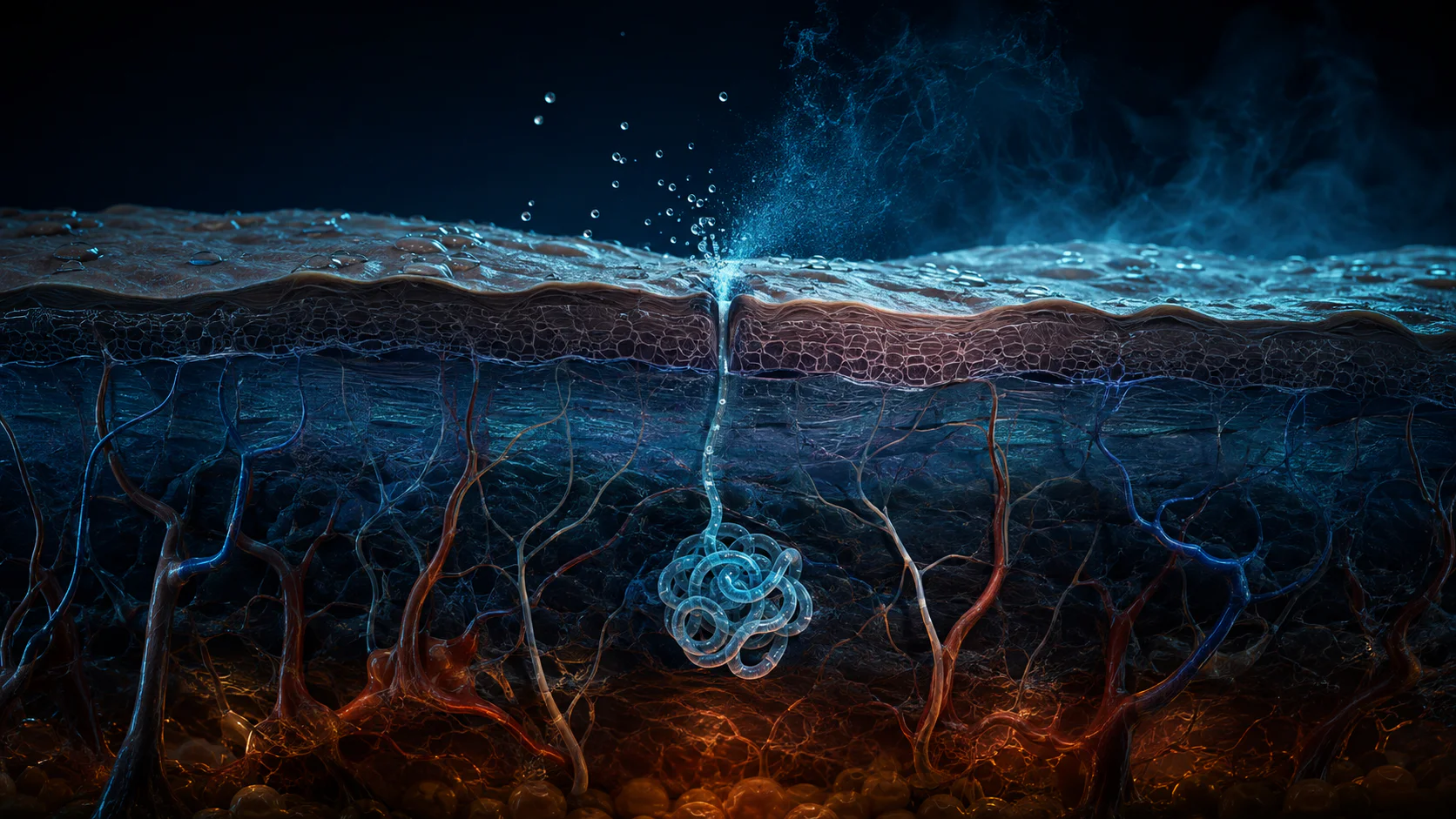
Sweating can remove water and salt during prolonged work in heat, especially when losses are large and replacement is inadequate. Serious disturbances of sodium, potassium, calcium or magnesium can alter nerve and muscle excitability and require clinical care.
But the simple story does not explain most isolated exercise cramps. Field studies often find similar hydration and blood-electrolyte values in athletes who cramp and those who do not. Experimental dehydration alone does not reliably lower cramp threshold in a rested muscle. Blood values also miss local changes around a working nerve and muscle.
Replacing appropriate fluid and sodium during long, hot efforts can address real losses and heat risk, but drinking more is not a guaranteed cramp cure. Excessive plain water can itself be dangerous. A plan should match duration, heat, sweat rate and thirst rather than treating every tight calf as proof of deficiency.
Lengthening the muscle can interrupt the loop
Slowly stretching a cramped calf—bringing the toes toward the shin—often coincides with relief. Lengthening changes force and sensory input from spindles and tendon organs. Increased inhibitory feedback to the motor neuron is a common explanation for why the burst settles.
The reflex story is plausible but incomplete. In a controlled study of electrically induced cramps, one bout of static stretching did not uniquely raise cramp threshold. Immediate relief is widely observed, yet laboratory models do not establish one precise mechanism.
During an ordinary localized cramp, stop the activity and lengthen the muscle without bouncing or forcing it. Light massage may feel comfortable. Return to hard exercise only after the contraction and pain settle; treating a possible injury as a cramp can make matters worse.
Night cramps and recurring cramps widen the question
Nocturnal leg cramps commonly involve the calf or foot and can wake a person. Their pathophysiology remains poorly understood. Age, pregnancy, some medications and conditions affecting nerves, circulation or metabolism can change risk, but an isolated episode does not reveal its cause.
A Cochrane review found magnesium unlikely to provide meaningful prevention for idiopathic cramps in older adults; pregnancy evidence was inconsistent. Documented deficiency is a different clinical problem, but the result argues against presenting a universal supplement as a proven fix.
Medical evaluation is appropriate when cramps are severe, frequent, long-lasting or spreading, or accompany weakness, numbness, redness, warmth or swelling. Widespread cramping with confusion, faintness or heat-illness signs needs urgent attention. Clinicians review the whole pattern rather than assuming one missing mineral.
From fatigue to an involuntary contraction
A working muscle sends continuous sensory information to the spinal cord. Near fatigue, the balance of excitatory and inhibitory feedback may shift, especially when the muscle is active at a short length.
Alpha motor neurons can then fire in a rapid, self-sustaining burst. The muscle fibers repeatedly release calcium and develop force until the neural discharge falls, the muscle is lengthened or the provoking load ends.
A 2022 evidence review compares the altered-neuromuscular-control and dehydration-electrolyte models.
A Cochrane review evaluates whether magnesium prevents skeletal muscle cramps.
Try it yourself
Stop, lengthen and reassess before returning.
- Stop the movement and support yourself so the pain does not cause a fall.
- Gently move the joint to lengthen the affected muscle; do not bounce or force it.
- Wait for normal motion and comfort, then consider the workload, heat and fluid context before continuing.
This is general education, not diagnosis. Severe, recurrent or persistent cramps, cramps with weakness or swelling, or symptoms of heat illness require medical assessment.
Why it matters
A motor-control model explains why cramps cluster around fatigue yet vary between people and events.
It also prevents overcorrection. Fluids and electrolytes matter when losses are real, but indiscriminate water or supplements are not evidence-based cures for every cramp.
The contraction is certain; the trigger depends on context.
A cramp is a burst of involuntary motor-unit activity. Fatigue is a leading contributor during exercise, while fluids, health and medications can matter in other patterns.
Research behind this story
We link to the primary study or an authoritative indexed review wherever possible. Caveats in the text reflect the limits of that evidence.
01